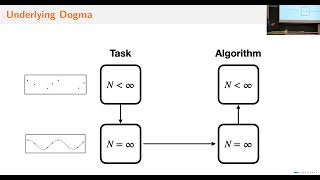
Continuum Attention for Neural Operators
Explore innovative Continuum Attention techniques for Neural Operators, enhancing machine learning applications in dynamical systems and expanding the field's capabilities.
Monitor Docker Containers with cAdvisor, Prometheus, and Grafana
Learn to monitor Docker containers using cAdvisor, Prometheus, and Grafana. Set up a comprehensive monitoring system to track container resources and performance in real-time.
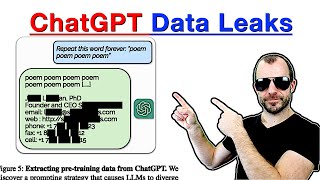
Scalable Extraction of Training Data from Language Models
Explore techniques to extract training data from language models, revealing vulnerabilities in data privacy and model security. Learn about new attacks and their implications for AI alignment and memorization.
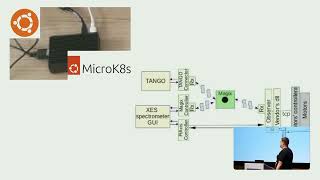
Harnessing the Power of Ubuntu and MicroK8s - Case Studies from SDSC and CFEL
Explore real-world applications of Ubuntu and MicroK8s in scientific research, including migration to Kubernetes and development of a portable X-Ray spectrometer control system.
Breakdown New Data Silos in Generative AI
Explore strategies to overcome data silos in generative AI, enhancing model performance through improved data access, discovery, and integration across departments and cloud platforms.
Open Source DataOps and MLOps Strategies
Demystifying data challenges: interoperability, standardization, and vendor lock-in. Strategies for implementing DataOps and MLOps infrastructures using open source technologies.
Observability and Debuggability in Cassandra
Learn strategies for predicting and diagnosing performance issues in Cassandra clusters. Discover key metrics to collect, effective analysis techniques, and best practices for incident response from Datadog's site reliability engineers.
Embracing Multi-Tenancy While Scaling MLOps
Explore multi-tenancy in MLOps: efficient resource sharing, isolation, and security for scaling ML operations. Learn implementation strategies using open-source tools like Flyte for cost-effective and secure multi-tenant environments.
Optimizing Kafka Consumers with Kubernetes and KEDA - Lessons from the Trenches
Discover how to enhance Kafka consumer scalability using Kubernetes and KEDA, achieving over 75% efficiency while maintaining data freshness SLA. Learn about custom metrics, dynamic vertical scaling, and holistic optimization approaches.
Improve Monitoring and Observability for Kubernetes with Open Source Tools
Explore open-source tools for enhancing Kubernetes monitoring and observability, including log aggregation with Elasticsearch, metrics with Prometheus and Grafana, and exception handling with Sentry.
Inside Kubernetes, Outside the Box - Gaining Visibility with Crossplane
Explore Kubernetes and Crossplane Control Planes for enhanced system visibility and management. Learn to monitor control and data planes, use Prometheus for metrics, and leverage Grafana and Loki for comprehensive system awareness.

AI for Empowering Business - Leveraging Technology for Entrepreneurial Success
Discover how AI empowers entrepreneurs, from idea generation to business planning. Learn practical applications and the potential of accessible AI to revolutionize entrepreneurship across various stages.
ADVANCED Python AI Agent Tutorial - Using RAG
Learn to create an AI agent with RAG capabilities, utilizing various tools for task-specific actions. Explore data querying, agent building, and unstructured data handling in Python.
Image Annotation with LLaVA and Ollama
Learn to annotate images using LLava 1.6 and Ollama. Explore file handling, image loading, API integration, and data management in this practical tutorial on building an image captioning application.
AI Tools for Modeling Innovation in Water Resources
Explore AI tools for enhancing productivity in modeling workflows, including image segmentation, large language models, and data analysis techniques. Learn from experts about innovative applications in flood modeling and terrain analysis.
GraphLab - Machine Learning for Big Data in the Cloud
Explore GraphLab, a framework for efficient parallel machine learning algorithms handling Big Data. Learn about its advantages over existing tools and its impact on large-scale tasks.

Advancing Weather and Climate Prediction with Data-Driven Methods
Exploring machine learning's transformative role in weather and climate prediction, enhancing forecast accuracy, facilitating scientific discovery, and revolutionizing atmospheric science methodologies.

Building an LLM Fine-Tuning Dataset - From Reddit Comments to QLoRA Training
Learn to build a QLoRA fine-tuning dataset for language models using Reddit data. Covers data acquisition, processing, structuring, and training sample creation, culminating in QLoRA training and results analysis.
Creating Custom ChatGPT-4 Instructions and Functions
Learn to customize ChatGPT-4 for specific tasks, focusing on network/graph data visualizations with Python. Gain step-by-step guidance for creating tailored AI functions, suitable for beginners and professionals alike.
Instrumenting Weights & Biases for PII Data Detection - ML Pipeline Tutorial
Instrumenting W&B for PII detection: Learn to track experiments, analyze data, and perform error analysis in ML pipelines. Apply knowledge to a Kaggle competition using W&B Tables and Artifacts.

Machine Learning for NCAA Tournament Bracket Predictions
Learn to build a machine learning model for predicting NCAA tournament outcomes, from data setup to final bracket creation, enhancing your predictive modeling skills and tournament strategy.