Training Deep Learning Computer Vision Models in Pytorch - Part I
Learn to train deep learning computer vision models using PyTorch, covering essential techniques and best practices for developing effective image analysis solutions.
Retinal Imaging in Neurodegenerative Diseases by Dilraj Grewal
Explore retinal imaging techniques for detecting neurodegenerative diseases. Learn about advanced imaging methods and their potential in early diagnosis and monitoring of neurological conditions.
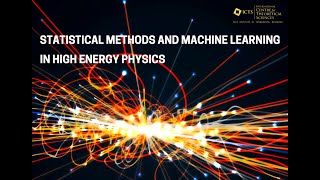
Anomaly Detection with Autoencoder
Learn to detect anomalies using autoencoders in high energy physics data analysis. Explore advanced machine learning techniques for uncovering rare events and potential new physics.
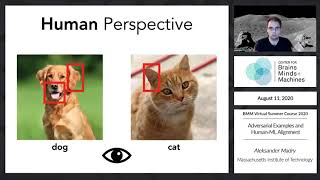
Adversarial Examples and Human-ML Alignment
Explore adversarial examples in machine learning, their impact on human-ML alignment, and strategies for improving model robustness and interpretability.

Transformer Encoder in 100 Lines of Code
Learn to implement a Transformer Encoder from scratch in Python. Explore key concepts like attention mechanisms, layer normalization, and feed-forward networks through hands-on coding.
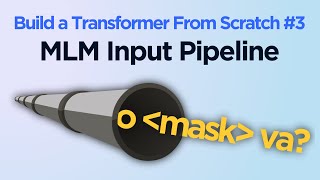
Building MLM Training Input Pipeline - Transformers From Scratch
Learn to create a complex input pipeline for Masked Language Modeling, transforming raw OSCAR data into a DataLoader ready for training transformer models from scratch.
Vector-Based Methods for Similarity Search - TF-IDF, BM25, SBERT
Explore three vector-based approaches for language comparison and document similarity: TF-IDF, BM25, and Sentence-BERT. Learn key techniques for building effective search engines in AI and machine learning.

Training BERT - Train With Next Sentence Prediction
Learn to pre-train BERT models using Next Sentence Prediction (NSP) for improved language understanding in specific domains. Practical implementation with unstructured text data.
Build a Transformer for Language Classification in TensorFlow
Build a transformer-based sentiment classifier using HuggingFace's library in TensorFlow. Learn to download data, tokenize inputs, prepare datasets, define the model architecture, and train for multi-class sentiment analysis.
Scanning IPv4 for Exposed Data and Vulnerable Databases
Exploring IPv4 scans to uncover exposed databases, revealing vulnerabilities in popular key-value stores and the risks of data theft and remote code execution in insecure setups.
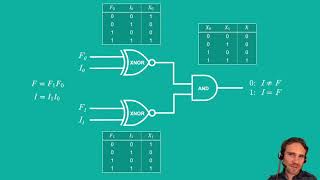
No Data, No Problem - Giving Nuclear Inspectors Better Tools Without Revealing State Secrets
Explore privacy-preserving computation in nuclear safeguards, focusing on garbled circuits for anomaly detection without compromising sensitive information between inspectors and facilities.

Containerization - The Silent Hero of COVID-19 Variant Surveillance Effort
Explore how Docker containers revolutionized COVID-19 variant surveillance by enabling rapid deployment of genomic analysis workflows across diverse computing environments.
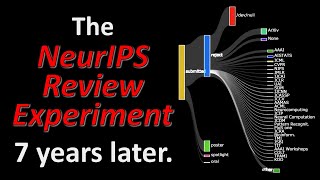
Inconsistency in Conference Peer Review: Revisiting the 2014 NeurIPS Experiment
Análisis detallado del experimento de revisión por pares de NeurIPS 2014, examinando la subjetividad en las evaluaciones y la capacidad de los revisores para predecir el impacto futuro de los artículos.
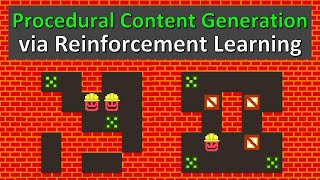
PCGRL - Procedural Content Generation via Reinforcement Learning - Paper Explained
Explore how reinforcement learning can be applied to game level design, framing it as a sequential decision-making process for fast and diverse level generation.

Extractive Q&A With Haystack and FastAPI in Python
Build an extractive Q&A system using Haystack, FastAPI, and BERT transformer. Implement Elasticsearch with BM25 retriever for efficient information retrieval and answer generation from text documents.

Using Semantic Search to Find GIFs
Learn to build a GIF search engine using semantic search, exploring data preparation, vector databases, and querying techniques for more accurate and context-aware results.

Convolutional Neural Networks with TensorFlow 2022
Comprehensive live-coding tutorial on Convolutional Neural Networks using TensorFlow, covering data preparation, model architecture, optimization techniques, and practical applications in image recognition and object detection.

TensorFlow Binary and Multi-class Classification Tutorial
Learn TensorFlow for binary and multi-class classification, covering data handling, model building, optimization, and evaluation techniques for effective machine learning implementations.
TensorFlow Tutorial 2022
Comprehensive TensorFlow tutorial covering tensors, data handling, neural networks, and model building. Learn to create, compile, and evaluate machine learning models using practical examples.

Moderating End-to-End Encrypted Content - Balancing Privacy and Control
Exploring end-to-end encryption challenges, balancing privacy with content moderation needs. Proposes user-centric definitions and analyzes improvement strategies to maintain security while enhancing user experience.
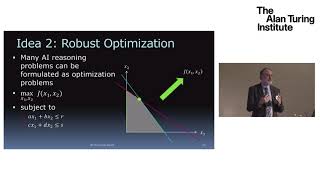
Steps Toward Robust Artificial Intelligence - Thomas G Dietterich, Oregon State University
Explore methods for developing robust AI systems capable of handling known and unknown threats in high-stakes applications, including probabilistic inference, anomaly detection, and causal modeling.