
Build Your First Machine Learning Model in Python
Learn to build a machine learning model in Python using scikit-learn. Covers data loading, splitting, model building with linear regression and random forest, comparison, and visualization.
Machine Learning in R - Repurpose Machine Learning Code for New Data
Learn to adapt machine learning code in R for new datasets. Explore data understanding, visualization, and model building techniques using the DHFR dataset as an example.
SQL Server Reporting Services - Data Analysis Advanced Tutorial
Explore advanced SQL Server Reporting Services techniques for data analysis, including filters, parameters, visualizations, and map creation to enhance your reporting capabilities and meet evolving business needs.
Semantic Search for AI - Testing Out Qdrant Neural Search
Explore semantic search implementation using Qdrant, covering Docker setup, data cleaning, microservice creation, and leveraging sentence embeddings for improved AI-powered search capabilities.
Summarize Product Reviews with GPT-3 - Get Product Insights and Improvements Fast
Learn to leverage GPT-3 for efficient product review analysis, gaining valuable insights and improvement suggestions. Automate the process of summarizing customer feedback and generating actionable recommendations.

AI Jobpocalypse: How Tech Like ChatGPT Will Impact Your Life by 2030 and What to Do About It
Explore AI's impact on jobs by 2030, analyzing historical trends, potential job losses, and philosophical perspectives. Learn strategies to navigate the changing workforce landscape.

Train GPT-3 on Any Corpus of Data with ChatGPT and Knowledge Graphs - SCOTUS Opinions Part 2
Learn to process and analyze Supreme Court opinions using ChatGPT and knowledge graphs. Covers data cleaning, chunking, encoding, and visualization techniques with Python libraries.

Fast Zero Shot Object Detection with OpenAI CLIP
Learn zero-shot object detection and localization using OpenAI CLIP, a multi-modal deep learning model. Implement practical techniques for efficient, domain-flexible computer vision tasks without fine-tuning.
AlexNet and ImageNet Explained
Explore the revolutionary AlexNet CNN and ImageNet dataset, their impact on deep learning, and practical implementation using PyTorch for image classification tasks.
Long Form Question Answering in Haystack
Explore long-form question answering using Haystack, covering setup, data indexing, and generating responses. Learn to implement QA systems for efficient information retrieval in organizations.

Spotify's Podcast Search Explained
Explore Spotify's innovative podcast search system using natural language processing and learn to implement a similar solution with transformer models and vector search techniques.
Question-Answering in NLP - Extractive QA and Abstractive QA
Explore question-answering in NLP, covering extractive and abstractive QA techniques. Learn about semantic search, ODQA, SQuAD format, and various QA approaches for efficient information retrieval and processing.
Fine-Tune High Performance Sentence Transformers With Multiple Negatives Ranking
Learn to fine-tune sentence transformers using multiple negatives ranking loss, improving embedding quality for similarity prediction and outperforming SBERT. Includes PyTorch and sentence-transformers library implementations.

Fine-Tune Sentence Transformers the OG Way - With NLI Softmax Loss
Explore fine-tuning sentence transformers using NLI softmax loss. Learn preprocessing, PyTorch implementation, and Sentence-Transformers library usage for improved sentence embeddings in NLP applications.
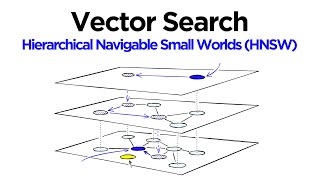
HNSW for Vector Search Explained and Implemented with Faiss - Python
Demystifying HNSW algorithm for vector similarity search, explaining its foundations, implementation with Faiss, and optimization techniques for top-performing indexes in approximate nearest neighbor searches.
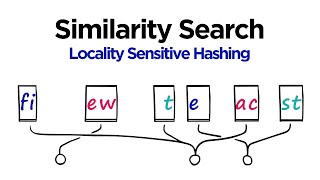
Locality Sensitive Hashing for Search with Shingling + MinHashing - Python
Learn efficient similarity search using Locality Sensitive Hashing (LSH) with shingling and MinHashing techniques in Python. Explore implementation steps, from data preprocessing to LSH tuning, for approximate nearest neighbor search.
SQL Server Reporting Services - Data Analysis Expert Tutorial
Comprehensive tutorial on SQL Server Reporting Services, covering data summarization, report sharing, and administration. Learn to create interactive reports, implement caching, set up subscriptions, and monitor performance.
Hugging Face Workshops - Pretraining Language Models & CodeParrot
Explore pretraining language models and CodeParrot, a code-writing AI. Learn data transformation, batching, evaluation, and tackle coding challenges in this hands-on workshop.
QA Chat with a Website - OpenAI Embeddings Tutorial: Use GPT-3 API and OpenAI ADA-2 Embeddings
Learn to create a QA chatbot using OpenAI embeddings and GPT-3 API. Convert website content for similarity search, set up the environment, and implement the system step-by-step.
OpenAI Embeddings Explained With Code Examples - How to Use OpenAI GPT-3 ADA Vectorized Embeddings API
Explore OpenAI's ADA vectorized embeddings API for advanced NLP, search, and machine learning applications with practical code examples and visualizations.
Develop Successful Deep Learning Projects with This 10 Steps Formula
Learn a 10-step formula for successful deep learning projects, covering problem definition, data preparation, model selection, training strategies, regularization, augmentation, interpretability, and deployment.