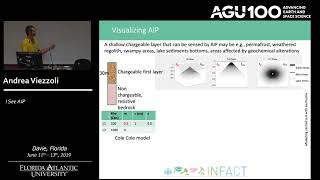
More Insights in Airborne Induced Polarization
Explore advanced insights in Airborne Induced Polarization (AIP) techniques for geophysical exploration and data interpretation.
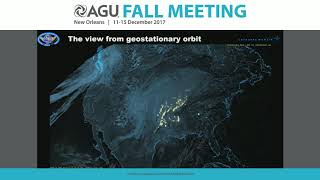
A New Era of Lightning Observations from Space
Explore cutting-edge space-based lightning detection technologies and their impact on atmospheric research, meteorology, and climate studies. Insights from leading experts in the field.
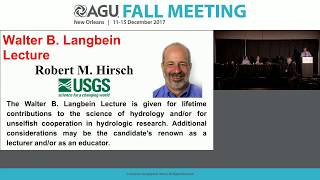
The Walter B. Langbein Lecture - 2017 Fall Meeting
Explore water resource challenges and innovative solutions with Robert M Hirsch in this AGU Fall Meeting lecture, focusing on critical hydrological issues and advancements in the field.
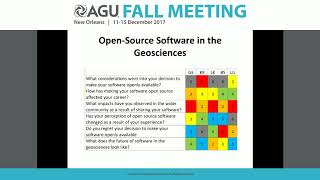
Open-Source Software in the Geosciences - 2017 Fall Meeting
Explore cutting-edge open-source software applications in geosciences, featuring expert presentations on innovative tools and methodologies for advancing research and data analysis in the field.
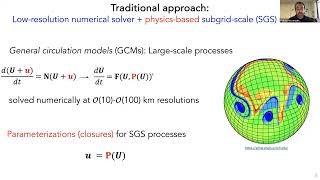
Integrating Physics, Data and Scientific Machine Learning to Predict Climate Variability and Extremes
Explore cutting-edge approaches combining physics, data analysis, and machine learning to enhance climate variability and extreme event predictions with Prof. Pedram Hassanzadeh.
Cracking the Code: Using Data Analysis to Engineer Stronger and Tougher Glasses
Explore data analysis techniques for engineering stronger glasses. Learn how topological data analysis and machine learning accelerate the discovery of fracture-resistant glass compositions.
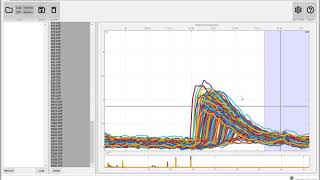
PARADISe 5.7 Beta for Untargeted GC-MS Analysis
Explore the revamped PARADISe 5.7 beta for enhanced untargeted GCMS data analysis, offering improved information extraction and advanced features for comprehensive analytical insights.
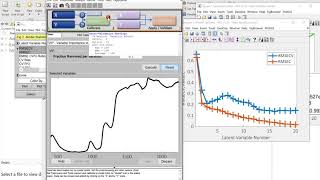
Variable Selection in PLS_Toolbox - Part 3
Explore advanced techniques for variable selection in PLS_Toolbox, enhancing your data analysis skills and improving model performance.
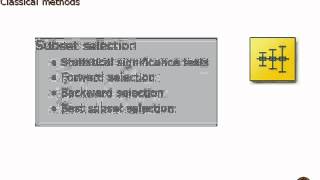
Variable Selection in Chemometrics: Advanced Methodologies - Part 2
Advanced methodologies for variable selection in chemometrics, including genetic algorithms, jack-knifing, and iPLS, building on fundamental concepts.
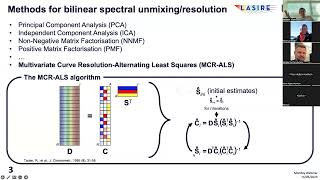
The Black Hole Effect in MCR with Raffaele Vitale
Exploring the black hole effect in Multivariate Curve Resolution, its impact on data analysis, and strategies to overcome this phenomenon in chemometrics and machine learning.

Improvements in Clinical Interpretation of Copy Number Variants (CNVs)
Explore advancements in clinical interpretation of Copy Number Variants (CNVs), addressing challenges and showcasing how unified guidelines can enhance consistency and quality in genomic diagnostics.

Integrating Functional Studies into Variant Interpretation
Explore DNA and RNA functional data integration in ACMG classification, evaluating assay quality and weighting in variant interpretation, with insights from recent ClinGen SVI recommendations.

Reanalysis and Reclassification of Diagnostic Exome Sequencing
Explore the evolving landscape of diagnostic exome sequencing, focusing on reclassification reasons, rates, and how new gene-disease discoveries enhance diagnostic success in Mendelian diseases.

Ambry's Translational Genomics Lab: Understanding Variants of Uncertain Significance
Overview of Ambry's Translational Genomics Lab services for assessing variants of uncertain significance, focusing on RNA protocol for splicing variants to improve diagnostic yield and guide patient treatment.
Exome Testing - An Evidence-Based Approach to Accurate Diagnosis
Explore Ambry's evidence-based approach to clinical exome sequencing, including their proprietary scoring system for linking genes to diseases, leading to higher diagnostic yields and improved patient care.
The Truth About Next Generation Sequencing (NGS)
Explore Ambry's findings on the necessity of Sanger confirmation alongside NGS for optimal genetic testing accuracy, and learn about potential consequences of less rigorous procedures.
Clinical Diagnostic Exome Sequencing - Addressing Clinical Utility and Cost-Effectiveness
Explore clinical diagnostic exome sequencing's utility and cost-effectiveness with experts discussing its role in the diagnostic process and impact on patient care.
New Horizons in Extreme Event Science - 10.25.2023
Explore cutting-edge advancements in extreme event science, examining innovative approaches to understanding and predicting catastrophic natural phenomena.
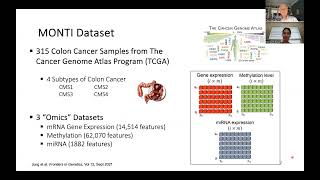
TUSCA: A Method for Tucker3 Modeling with ASCA+ - Webinar
Explore TUSCA, a novel method combining Tucker3 and ASCA+ for analyzing multi-way datasets from designed experiments, enhancing interpretation and visualization of complex data structures.
Understanding the Human Genome: Data Mining in the World of DNA
Explore state-of-the-art human genomics research and how machine learning mines information from publications to link genes, mutations, and diseases using VarSome's bioinformatics solutions.
The Gap in Cartographic Methodology That Hurts Our Communities
Exploring the impact of unequal mapping resources on communities, this talk highlights how disparities in cartographic data collection affect infrastructure, environmental change, and regional planning.