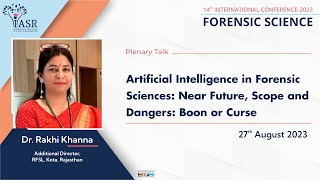
Artificial Intelligence in Forensic Sciences - Boon or Curse
Exploring AI's impact on forensic sciences: opportunities, challenges, and ethical considerations. Discusses potential benefits, risks, and the need for responsible development and implementation.

Theory Status of Quark TMDs - Extraction from Data by Alessandro Bacchetta
Explore quark transverse momentum distributions (TMDs) in hadron structure, their theoretical foundations, and methods for extracting them from experimental data.
What Do We Want to Know and How Will a Connectome Help Us Know It?
Explore the potential of connectome analysis in neuroscience with Gwyneth Card, discussing its applications, limitations, and future directions in understanding brain function and behavior.
Inferring and Characterizing Neuronal Connectivity with Deep Geometry and Topology
Exploring novel geometric and topological methods to decode neural connectivity rules in C. elegans, revealing insights into embryonic development and nervous system architecture.
Beyond Greenwashing - Embracing Impact-Based Innovations for Climate Action
Legal Technologist explores impact-based innovations to combat climate crisis, emphasizing legal frameworks, technology, and sustainable practices for genuine environmental sustainability.
Probabilistic Models for RNA Splicing Analysis
Exploring probabilistic models for RNA-seq data analysis, focusing on alternative splicing quantification and predicting splicing from DNA sequence to improve rare variant interpretation.
Hurricanes - Rainfall Patterns and Geospatial Analysis
Explore hurricane rainfall patterns and geospatial analyses with UF expert Corene Matyas in this engaging discussion at a local brewery, blending science and socializing.
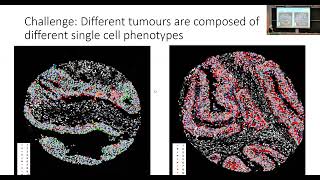
Exploring Cancer Progression: From Static Imaging Data to System Dynamics
Discover innovative approaches to analyze cancer progression using machine learning and dynamical systems, bridging static imaging data with dynamic biological processes.
Insight of Connected Compute in Vehicles
Explore connected computing in vehicles with insights from industry expert Masa Yoshida, covering latest trends, challenges, and future developments in automotive technology.
Communicating Climate Science: Innovative Strategies and Social Media Engagement
Innovative climate communication strategies using stories, metaphors, and multimedia to counter misinformation and promote clean energy solutions. Explores effective outreach methods through TV, live events, and social media.
Designing a Road Map for Workflow Cyberinfrastructure in the Geosciences - 2012
Explore geoscience workflow cyberinfrastructure advancements, from metadata standards to community modeling frameworks. Learn about innovative tools and approaches for managing big data and enhancing scientific research efficiency.
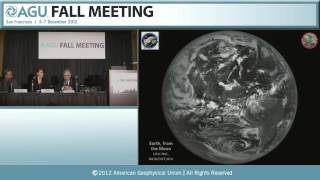
Apollo Lunar Samples at 40 - New Data and Discoveries
Discover how Apollo lunar samples continue to reveal new insights 40 years later, with digitization uncovering lost data and LRO missions providing context for our evolving understanding of the Moon.
Using Historical Information to Improve Seismic Data Processing Methods I
Explore innovative seismic data processing techniques, including Bayesian methods, machine learning, and waveform cross-correlation, to enhance earthquake monitoring and location accuracy.
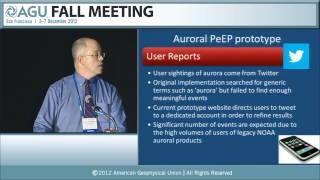
Near Real-Time Data Uses for Earth Science and Space Weather Applications
Explore innovative applications of near real-time data in Earth science and space weather, including media outreach, social media integration, and data correlation techniques for enhanced scientific insights.
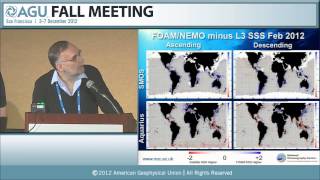
Science Results From the Aquarius and SMOS Ocean Salinity Missions - Fall 2012
Explore cutting-edge findings from Aquarius and SMOS ocean salinity missions. Gain insights into measurement techniques, algorithm improvements, and impacts on ocean systems understanding.
The Importance of Studying Clouds - NASA Cloud Science and Classroom Inquiry
Explore cloud science with NASA experts, covering topics like the water cycle, phase changes, and radiant energy. Engage in hands-on activities and learn to use NASA data for classroom projects.
The Climate Canary: Measuring Change on Antarctica's Pine Island Glacier
Explore Antarctica's Pine Island Glacier, its role as a climate indicator, and methods for measuring glacial change. Learn about ice dynamics, mass balance, and global implications through expert insights and hands-on activities.
Using Scientific Field Campaigns to Learn About Climate Science
Explore climate science through scientific field campaigns. Analyze atmospheric data, understand climate models, and engage in hands-on activities to enhance understanding of Earth's climate system.
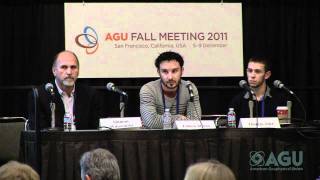
Weather's Influence on Earthquakes - Press Conference
Explore the intriguing connection between weather patterns and seismic activity, featuring insights from experts on monsoons, icecap retreat, and their potential impact on earthquake occurrence.
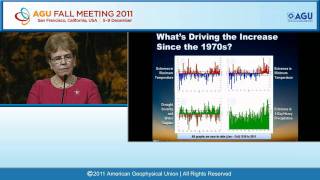
Predicting and Managing Extreme Weather and Climate Events - Fall 2011
Explore extreme weather prediction and management with NOAA's Jane Lubchenco. Learn about challenges in forecasting, monitoring, and mitigating impacts of various environmental events to enhance community resilience.
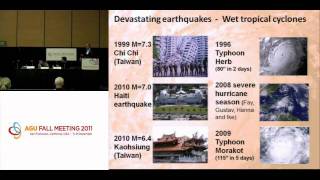
Weather's Influence on Earthquakes and Volcanoes
Exploring connections between weather patterns and seismic/volcanic activity, revealing how surface phenomena can influence underground events and potentially impact eruption timing.