The Spins of Binary Black Holes Following LIGO and Virgo's Third Observing Run
Explore binary black hole spins after LIGO and Virgo's third observing run, featuring insights from MIT experts on gravitational wave detections and their implications for astrophysics.
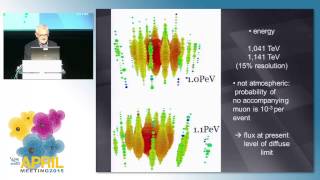
IceCube and the Discovery of High-Energy Cosmic Neutrinos
Explore the groundbreaking IceCube project, its detection of cosmic neutrinos, and implications for understanding the non-thermal universe and hadronic accelerators in compact objects.
LGBT and Women in Physics: Social Network Analysis on Career Persistence
Explore how women and LGBT physicists build professional networks and overcome challenges in their careers through qualitative Social Network Analysis, focusing on experiences that contribute to their persistence in the field.
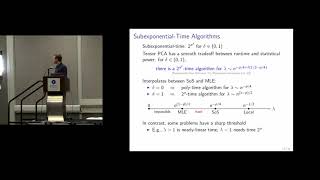
The Kikuchi Hierarchy and Tensor PCA
Explore the Kikuchi Hierarchy and its applications in Tensor PCA, delving into advanced statistical methods for data analysis and dimensionality reduction.
Machine Learning and AI for Data-Driven Materials Development and Design - Part 2
Explore machine learning's role in materials research, covering its application in experimental and theoretical materials science and discussing future impacts on the field.
From Physics to Machine Learning and Back
Explore the fascinating intersection of physics and machine learning, uncovering how these fields influence and enhance each other's methodologies and discoveries.
Exploring the Universe with Gravitational Waves
Discover the fascinating world of gravitational waves with Nobel laureate Rainer Weiss, exploring key concepts, detection methods, and recent breakthroughs in this cutting-edge field of physics.
CDF Measurement of the W Boson Mass - Precision Analysis and Standard Model Implications
Precise W boson mass measurement from CDF data challenges Standard Model predictions, potentially indicating new particles or interactions in particle physics.
A Mathematical Introduction to the Molecular Biology of the Cell
Explore the intersection of mathematics and molecular biology in this insightful lecture, unveiling how mathematical concepts illuminate cellular processes and mechanisms.
Enabling Transformative Space and Earth Science - Four Case Studies
Explore four case studies in space science, Earth science, and STEM education, covering suborbital ballooning, Arctic research, sensor technology, and educational initiatives for diverse audiences.
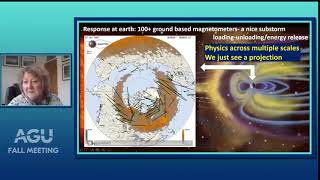
Multiscale Nonlinear Space Physics: From Fundamental Physics to Quantifying Risk - Ed Lorenz Lecture
Introduction to nonlinearity, complexity, and scaling in earth science processes, focusing on solar system plasmas. Explores challenges and progress in applying nonlinear physics concepts to space weather and magnetospheric dynamics.
Science and Society Dialogues - Community and Citizen Science
Explore the intersection of community engagement and scientific research through citizen science initiatives, fostering collaboration between researchers and the public.
Climatological, Meteorological and Environmental Factors in COVID-19 Pandemic - Day 3 Part 1
Experts discuss environmental and meteorological factors in COVID-19 forecasting, addressing challenges in communicating predictions and informing decision-makers amidst uncertainty.
Urban Heat Island Effect: The Silent Killer in Your Urban Backyard
Explore urban heat islands: their causes, impacts, and how data-driven research informs local climate change mitigation efforts to combat this silent urban threat.
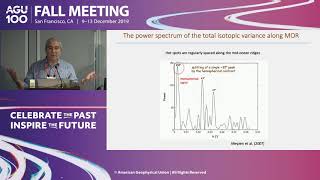
A Century of Earth and Space Science - Technological and Societal Influences on Research
Explores the evolution of Earth and space research over 100 years, highlighting technological advancements, data collection methods, and societal impacts on scientific practices and global understanding.
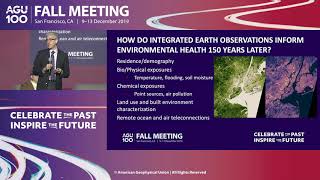
Earth Science Data Access and Integration at the Nexus of Science, Policy, and Society
Explore Earth science data integration with socio-economic and health data for transdisciplinary research. Learn about challenges and opportunities in data access, harmonization, and analysis frameworks.
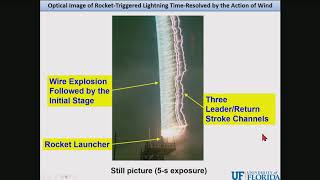
Rocket-and-Wire Triggered Lightning
Explore the fascinating technique of rocket-and-wire triggered lightning, its applications, and scientific implications in atmospheric research and lightning protection studies.

The Future of Earth, Environmental, and Space Science - Who Are the Future Scientists?
Exploring the evolving landscape of Earth, environmental, and space sciences, addressing challenges, societal impacts, and the need for a diverse, collaborative workforce to tackle future scientific endeavors.

Big Data, Biomechanics, and the New Science Behind Personalized Training
Explore how data, technology, and biomechanics are revolutionizing sports training, injury prevention, and athlete performance optimization for professionals and amateurs alike.
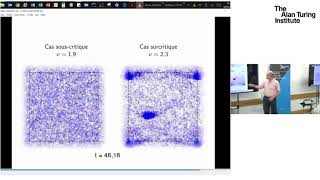
From Micro to Macro in Collective Dynamics
Explore methods for modeling collective dynamics, from microscopic to macroscopic scales. Learn techniques for analyzing complex systems in various scientific fields.
Are DNA Testing Kits Good? - Benefits and Concerns
Explore the science, accuracy, and ethical implications of at-home DNA testing kits with experts in genetic genealogy, evolutionary genetics, and scientific publishing.