
Exercise with Root - Lecture 3
Hands-on ROOT exercise exploring data analysis techniques in high-energy physics, led by expert Tommaso Dorigo. Practical application of statistical methods for particle physics research.
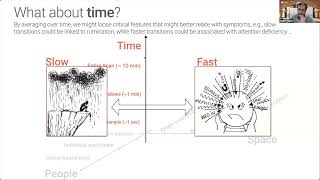
Precision Dynamical Mapping to Characterize Brain Activity Fluctuations
Exploring Topological Data Analysis to map brain activity fluctuations in psychiatric disorders, overcoming neuroimaging limitations and enhancing understanding of neurobiological underpinnings.

Human-AI Symbiosis and the Quest for Neurorights
Explore ethical challenges of human-AI integration through neural interfaces. Discover the importance of neurorights in shaping a future where technology enhances human capabilities without compromising fundamental freedoms.

CFP Consortium Webinar- Research Toward Precision Home Visiting
Explore precision home visiting research to tailor services for families based on their unique needs, strengths, and risks. Learn innovative methods for evaluating and improving home visiting programs.

Elements of Effective Crime Scene Investigation
Explore key elements of effective crime scene investigation, including evidence management and documentation, with insights from a global expert in forensic science.

Interpretation of Evidence Using Fundamental Physics in Forensic Science
Explore how fundamental physics principles and instrumentation contribute to forensic evidence analysis, from microscopic DNA to large-scale crime scene elements.
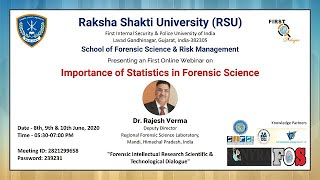
Importance of Statistics in Forensic Science - Dr. Rajesh Verma
Detailed analysis of data presentation and variable correlation in forensic science, with case studies. Builds on Session 1's coverage of uncertainty in scientific evidence and basic statistics.

Significance of DNA Evidence: Crime Scene to Conviction
Explore the crucial role of DNA evidence in criminal investigations, from crime scene collection to courtroom conviction, with insights from real-case experiences shared by an expert in forensic science.

Is Quality Compromised in Forensic DNA - Preventing Contamination and Working with Imperfect Specimens
Explore measures to prevent forensic DNA contamination and techniques for working with imperfect specimens, ensuring the integrity of crucial evidence in criminal investigations.

The Use of 3D Printing in Humanitarian Forensics
Explore 3D printing's innovative applications in humanitarian forensics for identifying the deceased, including antemortem data collection, DNA sampling, and dental record analysis.
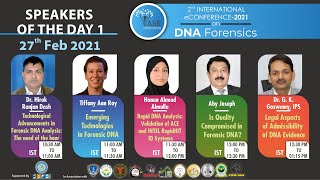
DNA eConference - Day 1
Explore cutting-edge DNA forensics research and applications in this international eConference, featuring expert presentations on the latest advancements in forensic science.
Building New Tools for Gravitational Wave Astronomy
Explore cutting-edge techniques and innovations in gravitational wave detection with experts, enhancing our understanding of cosmic phenomena and astrophysical events.
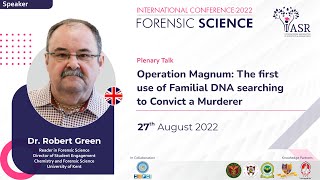
Operation Magnum - First Use of Familial DNA Searching to Convict a Murderer
Dr. Robert Green explores the groundbreaking use of familial DNA searching in Operation Magnum, leading to the conviction of the Saturday Night Strangler, Joseph William Kappen, for his 1973 crimes.

The New Advances in Forensic Science
Renowned forensic scientist Dr. Henry Lee discusses recent advancements in forensic science, drawing from his extensive experience in high-profile cases to illustrate the field's evolving role in criminal justice.
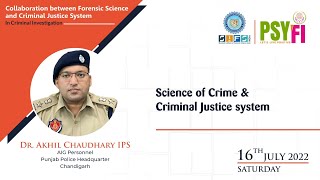
Science of Crime and Criminal Justice System
Explore scientific approaches in crime-solving and criminal justice with insights from Dr. Akhil Chaudhary IPS. Learn how forensic evidence aids police investigations and judicial processes.
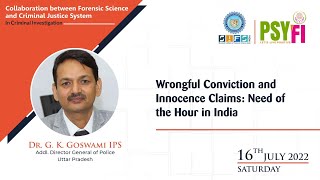
Wrongful Conviction and Innocence Claims in India - The Role of Forensic Science
Exploring forensic science's role in sexual offense investigations, wrongful convictions, and the Innocence Project's importance in India's criminal justice system.

The Neuroscience of Perception - How Digital Can Unite Us
Explore the intersection of neuroscience, behavioral science, and design thinking to gain a fresh perspective on perception and digital connectivity.

DNA Disruption - What Genomics Needs Next
Explore the future of genomics with industry experts, discussing advancements, challenges, and potential breakthroughs in DNA research and its applications.

Designing Decarbonization: Strategies for a Net-Zero Future
Explore strategies for achieving net-zero emissions, including data collection, private sector initiatives, and policy measures like carbon tax, while addressing environmental justice and biodiversity concerns.

Clinical Trials Thrive on Speed and Diversity
Exploring strategies to enhance clinical trials through improved accessibility, diversity, and data collection efficiency, leading to faster development of therapies for a broader population.
Solving Molecular Analysis of Cancer: From DNA to Proteins
Explore molecular cancer analysis using open-source networking for real-time data sharing. Learn about high-speed data flows, optimized databases, and privacy considerations in precision medicine.