Capturing Turbulent Dynamics and Statistics in Experiments Using Exact Coherent States
Explore turbulent dynamics using Exact Coherent States, revealing coherent structures in experiments, forecasting turbulent evolution, and providing a geometric description of transient turbulence.
Microbial Communities - From Modelling to Understanding Ecological Organization
Explore microbial communities' complexity, diversity, and ecological significance. Discover insights into early life, species coexistence, and community assembly through interdisciplinary research and advanced modeling techniques.
OpenFold - Lessons and Insights From Rebuilding and Retraining AlphaFold2
Insights from rebuilding AlphaFold2: OpenFold's optimized implementation, training process analysis, and implications for protein structure prediction and broader applications in structural biology.
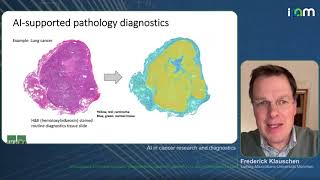
AI in Cancer Research and Diagnostics - IPAM at UCLA
Explore AI's impact on cancer diagnostics, focusing on pathology applications, explainable methods, and multi-modal data integration for research and clinical use.
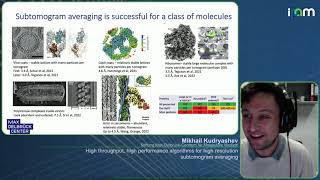
High Throughput, High Performance Algorithms for High Resolution Subtomogram Averaging
Explore high-performance algorithms for subtomogram averaging in cryo-electron microscopy, focusing on tools like TomoBEAR and SUSAN to enhance throughput and resolution in structural biology.
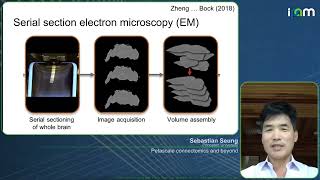
Petascale Connectomics and Beyond - IPAM at UCLA
Explore petascale connectomics, its advancements in brain mapping, and future exascale projects. Learn about automated image analysis techniques and their impact on understanding neural structures and brain function.
Learning to Untangle Genome Assembly Graphs - IPAM at UCLA
Explore deep learning techniques for untangling genome assembly graphs, improving accuracy and efficiency in DNA sequencing without manual intervention.
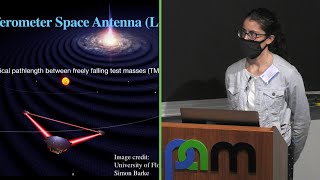
LISA and the Global Analysis of Galactic Binary Gravitational Wave Signals
Explore LISA's role in detecting galactic binary gravitational waves, including data analysis challenges, global fitting techniques, and future prospects for multi-source gravitational wave detection.
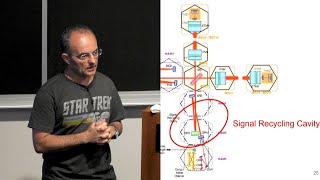
Characterization of Ground-Based Gravitational-Wave Detector Data - IPAM at UCLA
Explore techniques for distinguishing gravitational wave signals from noise in detector data, including traditional methods and innovative approaches to improve data quality and reduce search backgrounds.
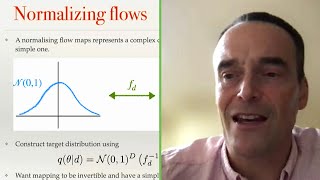
Rapid and Robust Parameter Estimation for Gravitational Wave Observations
Explore rapid parameter estimation techniques for gravitational wave observations, focusing on machine learning approaches like DINGO that use normalizing flows to efficiently analyze data from future detectors.
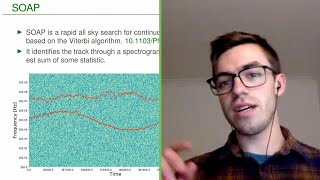
Rapidly Searching for Continuous Gravitational Waves
Explore challenges and solutions in detecting continuous gravitational waves from neutron stars, focusing on SOAP's rapid search method using neural networks for signal identification and parameter estimation.
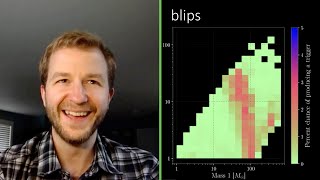
Nobody Likes a Glitch - IPAM at UCLA
Explore transient noise artifacts in gravitational wave astronomy, their impact on signal detection, and innovative approaches for understanding and mitigating these glitches in data analysis.
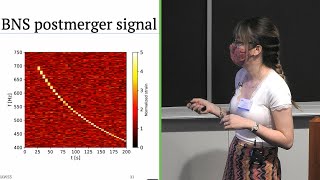
Power Spectral Density Uncertainty and Gravitational-Wave Parameter Estimation
Explore power spectral density uncertainty in gravitational-wave parameter estimation, its impact on Bayesian analysis, and methods to incorporate this uncertainty for more accurate results in compact binary coalescence detection.
Elchanan Mossel: Combinatorial Statistics and the Sciences
Explore combinatorial statistics, broadcasting on trees, and their applications in biology and network analysis, with insights into phylogenetic inference and community detection.
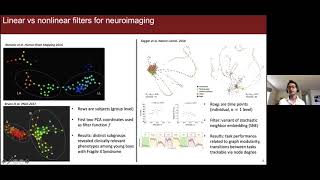
Exploring Brain Dynamics During Ongoing Cognition Using Mapper
Exploring brain dynamics using Mapper: analyzing fMRI data with geometric techniques to reveal whole-brain activity patterns and predict task performance in multitask paradigms.
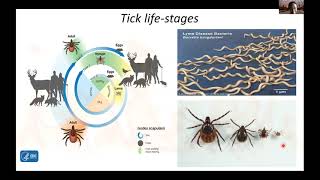
Ticks and Fire - Exploring the Effects of Prescribed Fire on Tick-Borne Disease
Explore the impact of prescribed fire on tick-borne diseases through mathematical modeling, data analysis, and spatial considerations in this seminar on ecological disease management.
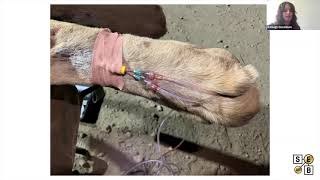
Comparison of the Cardiovascular Effects With Three Different Drug Combinations in African Lions
Explore cardiovascular effects of immobilization drug combinations in free-ranging African lions, examining research findings and implications for wildlife conservation.
Cosmology - DM Halo - Local Group - Risa Wechsler (Stanford)
Explore cosmology, dark matter halos, and the local group with Stanford researcher Risa Wechsler. Gain insights into cutting-edge astrophysical concepts and their implications for our understanding of the universe.
Modeling Dwarf Galaxy Formation with UniverseMachine - Richie Wang (Stanford)
Explore dwarf galaxy formation using UniverseMachine, a statistical tool for modeling galaxy evolution in cosmological simulations. Learn about abundance matching, multiresolution simulations, and future research directions.
Molecular Dynamics Simulations with Gromacs - Beginner Tutorial Session 2
Learn MD simulation steps, RMSD/RMSF graph generation in Windows using Gromacs. Covers system preparation, energy minimization, equilibration, and analysis for molecular dynamics simulations.
Introduction to Next-Generation Sequencing - Galaxy Web
Learn the theory behind Next Generation Sequencing analysis pipeline and its revolutionary impact on genomics and molecular biology studies using Galaxy Web platform.