
Robust, Interpretable Statistical Models - Sparse Regression with the LASSO
Explore sparse regression and LASSO algorithm for building interpretable, robust models with minimal variables. Learn key concepts and applications in data science and machine learning.

Excel 2021 Power User Full Course
Comprehensive tutorial for advanced Excel users covering powerful functions, pivot tables, data analysis techniques, and XLOOKUP. Develop skills to solve complex problems and streamline data processing efficiently.

Effortless Data Analysis and Cleaning with Data Wrangler in VS Code
Explore Data Wrangler in VS Code: Boost productivity with code-centric data cleaning, automated Pandas code generation, and insightful visualizations for efficient data analysis.

Workshop on Parameter Estimation with Bilby by Greg Ashton
Learn parameter estimation techniques for gravitational wave analysis using bilby software, focusing on Bayesian inference and practical applications in astrophysics.
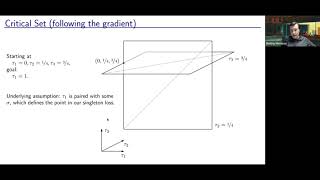
Topological Optimization with Big Steps
Explore persistent homology for optimization, using cycles and chains to prescribe gradients. Learn about a linear-time algorithm for special cases and its practical benefits in reducing optimization steps.

Minimal Cycle Representatives in Persistent Homology Using Linear Programming
Explores optimization techniques for selecting minimal cycle representatives in persistent homology, comparing effectiveness and computational costs of various algorithms using linear programming methods.
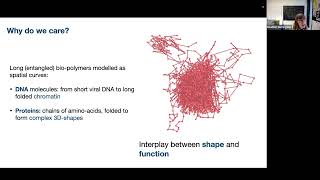
Shape of Data in Biology - Extending the PH Pipeline
Exploring spatial structure in biological data using topological data analysis, with focus on knotted proteins and introducing hyperTDA for interpretable, automated analysis of complex systems.
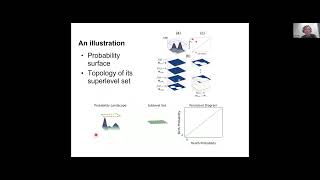
Non-Diffusive Vortexes at Transition State of Activated Process by Persistent Homology
Exploring non-diffusive dynamics in molecular transitions using persistent homology, revealing reactive vortexes and rotational fluxes at transition states of alanine-dipeptide isomerization.
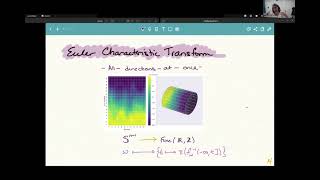
The Directional Transform
Explore the directional transform in topological data analysis, its applications in understanding complex structures, and its potential for enhancing machine learning models and data shape quantification.

A Topological Study of the Space of Planar Pentagons
Exploring topology of planar pentagons as a model for molecular conformation spaces, using topological data analysis for dimensionality reduction and visualization.
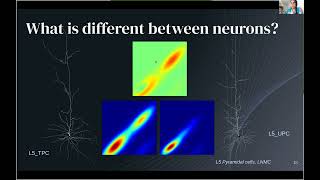
A Topological Understanding of Neuronal Morphologies
Exploring topological data analysis for neuronal morphologies, from single cells to networks. Highlights applications in classification, clustering, and solving inverse problems in neuroscience.
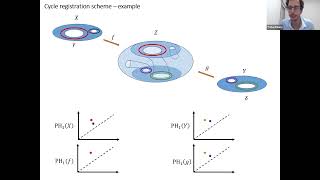
Persistent Cycle Registration and Topological Bootstrap
Novel approach for comparing persistent homology representations, utilizing spatial placement of persistent cycles. Demonstrates application in topological inference to differentiate signal from noise in point cloud data.
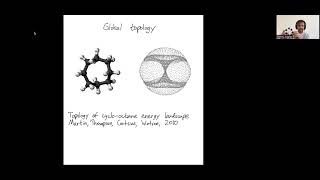
Henry Adams - Topology in Machine Learning
Explore persistent homology in machine learning, covering applications in materials science, computer vision, and agent-based modeling. Learn how topology relates to dataset geometry and explainable AI.
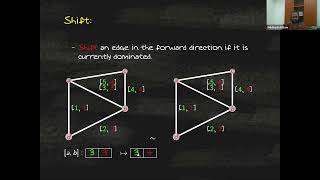
Swap, Shift and Trim to Edge Collapse a Flag Filtration
Exploring efficient algorithms for reducing flag filtrations in persistent homology, with focus on edge collapse techniques and their applications in computational topology.
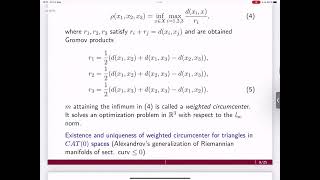
Geometry and Topology of Data
Explore hyperconvexity and generalized curvature in metric spaces, linking topological data analysis with geometric concepts for a deeper understanding of data structures.

The Generalized Persistence Diagram Encodes the Bigraded Betti Numbers
Explore how generalized persistence diagrams encode bigraded Betti numbers in 2-parameter persistence modules, with implications for RIVET software and interval decomposable modules.
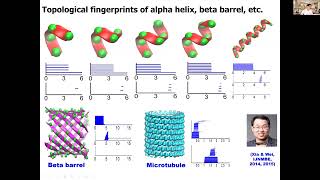
Persistent Topological Laplacians
Explores persistent topological Laplacians to address limitations in topological data analysis, enhancing the handling of complex data and uncovering SARS-CoV-2 evolution mechanisms.
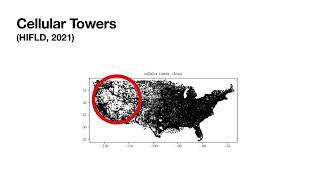
Small Density Vacuum and How to Find Them Robustly
Explore a new TDA method for identifying small density vacuums in high-density regions, with proven robustness and bounded persistence. Includes simulations and theoretical insights.
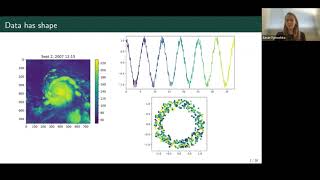
Topological Time Series Analysis for Hurricanes and Dynamical Systems
Explore topological data analysis applications in studying hurricane satellite imagery and dynamical system bifurcations using persistent homology and zigzag persistence techniques.
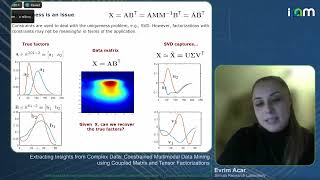
Constrained Multimodal Data Mining Using Coupled Matrix and Tensor Factorizations
Explore advanced techniques for analyzing complex multimodal data using coupled matrix and tensor factorizations. Learn about extracting insights from heterogeneous datasets in metabolomics and neuroscience.
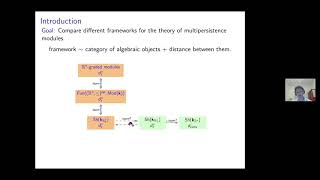
Ephemeral Persistence Modules and Distance Comparison
Exploring sheaf theoretic methods in persistent homology, comparing approaches using Alexandrov's and gamma-topology, and examining pseudo-distances in persistence module spaces.