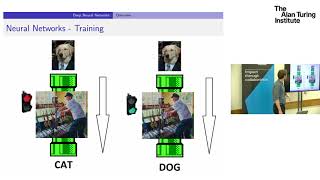
A Review of Machine Learning Techniques for Anomaly Detection - Dr. David Green
Explore machine learning techniques for anomaly detection, covering traditional methods, deep neural networks, and practical applications in various domains.
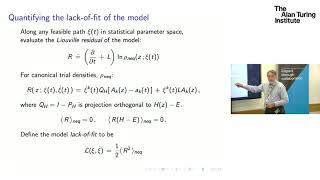
Models That Minimize the Rate of Information Loss
Explore data-driven modeling of complex systems, combining statistical inference, computation, and physical laws. Learn techniques for collective dynamics, molecular modeling, cell biology, and fluid dynamics.
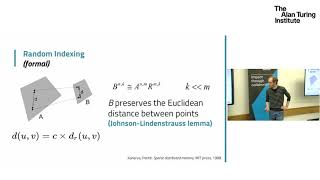
Detecting Semantic Shift in Large Corpora by Exploiting Temporal Random Indexing
Explore semantic shift in large corpora using Temporal Random Indexing. Learn to analyze word meaning evolution over time and see applications in Italian and UK internet archive corpus analysis.
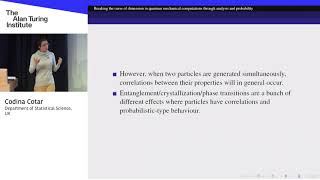
Breaking the Curse of Dimension in Quantum Mechanical Computations Through Analysis and Probability
Explore quantum mechanical computations, focusing on breaking dimensional constraints through analysis and probability. Learn about density functional theory and recent approaches to tackle existing issues.
Parsimonious Representations in Data Science - Dr. Armin Eftekhari, University of Edinburgh
Explore geometric structures in data, from linear subspace models to nonlinear approaches, for efficient data analysis and representation in the era of big data.
Time Series Class - Part 1 - Dr Ioannis Papastathopoulos, University of Edinburgh
Learn fundamental concepts and advanced techniques for analyzing time series data, including ARMA models, state-space models, and neural networks for forecasting and inference.
Data Science and Data System - Dr. Amy Braveman, NASA Jet Propulsion Laboratory
Explore NASA's Earth observation data systems, statistical challenges in climate science, and innovative approaches to analyzing complex environmental datasets.
Time Series Class - Part 1 - Dr. Ioannis Papastathopoulos, University of Edinburgh
Learn fundamental concepts and advanced techniques in time series analysis, including ARMA models, state-space models, and neural networks for forecasting and inference.
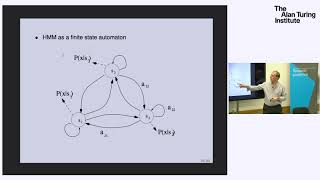
Time Series Class - Part 2 - Professor Chris Williams, University of Edinburgh
Explore time series analysis, from moving average models to advanced state-space techniques and recurrent neural networks. Gain practical skills in parameter estimation, forecasting, and applying models to real-world data.
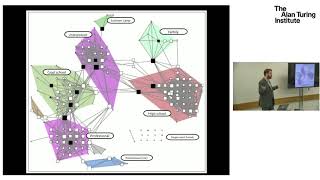
Social Network Analysis - Introduction to Structural Thinking
Explore structural thinking in social network analysis, covering key concepts like preferential attachment, small worlds, and homophily, with applications to modern digital networks and classic theories.
We Need to Talk About Statistics - Neil Sheldon, Teaching Statistics Trust
Exploring how precise language enhances statistical understanding for teachers, students, and citizens. Emphasizes interpretation over calculation, addressing common misunderstandings and the importance of clear communication in statistics.
Nonlinear Approximation by Deep ReLU Networks - Ron DeVore, Texas A&M
Explores deep ReLU networks for nonlinear approximation, covering architecture, error analysis, and manifold approximation. Bridges mathematics, statistics, and computer science in data science applications.
From Shallow to Deep Learning for Inverse Imaging Problems - Carola-Bibiane Schönlieb, Cambridge
Explore deep learning for inverse imaging problems, covering regularization techniques, neural networks, and optimization strategies for improved image reconstruction and analysis.

Intersectional Approaches to Data Can Inform the Development of Trustworthy Digital Identity Systems
Exploring intersectional approaches to data for developing trustworthy digital identity systems, highlighting benefits, challenges, and research insights for more inclusive and ethical design.

Is There a Post-Pandemic AI Panacea
Exploring AI's limited impact on pandemic response, challenges in health data science, and lessons from COVID-19. Experts discuss AI strengths, weaknesses, and future potential in healthcare.
TMCF Workshop Use-Cases - Counterfactual CPMS & Emerging COVID Work, Niels Peek
Exploring causal inference in AI prediction algorithms for decision-making, focusing on 'what if' scenarios in healthcare and insurance, with applications to COVID-19 pandemic response.
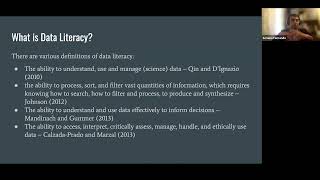
Data Literacy and the Role of the Visualization Designer
Explore data literacy's importance and the visualization designer's role in effective data comprehension. Learn key aspects of impactful visualizations and industry challenges through real-world examples and expert insights.
AIUK 2022 Workshop - RADDISH: Real-Time Data Assimilation for Digital Twins
Explore real-time data assimilation for digital twins using particle filtering techniques, with interactive demonstrations and discussions on parallelization, future applications, and implementation challenges.
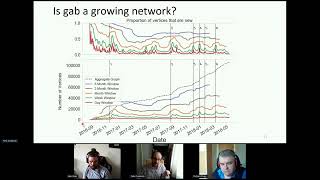
AIUK 2022 Workshop - Raphtory: Real-Time Graph Analytics
Explore real-time graph analytics with Raphtory, covering social networks, time-based graphs, and advanced features like historical properties and query languages.
MOSIP Research Platform - Integrating Anomaly Detection Prototypes into Centralized ID Systems
Explore novel anomaly detection methods for digital identity systems using autoencoders, with a focus on fraud prevention during registration in MOSIP architecture.
Towards Creating Time Sensitive Sensors from User-Generated Language and Heterogeneous Content
Exploring the creation of time-sensitive sensors using user-generated language and diverse content to advance natural language processing and its real-world applications.