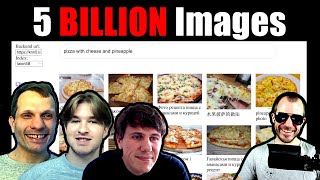
LAION-5B - 5 Billion Image-Text-Pairs Dataset - With the Authors
Explore LAION-5B, a massive open dataset of 5 billion image-text pairs. Learn about its creation, challenges, applications, and implications for AI research and development.
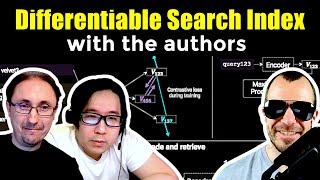
Author Interview - Transformer Memory as a Differentiable Search Index
Explore a novel approach to information retrieval using a single Transformer model that encodes corpus information in its parameters, enabling direct query-to-document mapping without external indices.
SQL You Need as a Data Scientist
Learn essential SQL skills for data science, including SELECT, JOIN, aggregations, CTEs, and window functions. Apply these techniques to time series forecasting and fraud prediction.
How a Data Scientist Fights Fraud - With Code!
Explore data science techniques for fraud detection, including feature engineering, SQL querying, model creation, evaluation, and interpretation, with hands-on coding examples.
A Guide to A/B Testing as a Data Scientist
Comprehensive guide to A/B testing for data scientists, covering experiment design, dataset creation, hypothesis testing, Bayesian methods, and result interpretation using practical examples and code.
How to Run A-B Tests as a Data Scientist
Explore Bayesian A/B testing for data scientists, comparing it with frequentist methods using real data and code. Learn to define experiments, process data, and interpret results effectively.

Build MultiPage Python App with Streamlit - Streamlit Native Multi-Page Tutorial
Learn to build multi-page Python web apps with Streamlit's new native support. Covers setup, demo, project structure, code walkthrough, page reordering, and live app creation.
GitHub Star History Tracker in Python - End-to-End Streamlit Tutorial
Learn to build a GitHub Stars History Tracker using Python and Streamlit. Create an end-to-end web app that visualizes repository star data, from design to deployment on Streamlit Cloud.
Make a Beautiful Ggplot2 Bar Chart from Basic to Powerful Themes
Learn to create stunning ggplot2 bar charts in R, from basic techniques to advanced theming. Master data cleaning, chart customization, and professional visualization using real-world crime data.
Deploy LayoutLMv3 for Document Classification Using Streamlit, Transformers, and HuggingFace Spaces
Learn to deploy LayoutLMv3 for document classification using Streamlit and HuggingFace Spaces. Covers model loading, input preparation, and classification process, resulting in a functional demo app.
Multivariate Time Series Forecasting with LSTM Using PyTorch and PyTorch Lightning - ML Tutorial
Learn to build and train an LSTM Deep Neural Network for Bitcoin price prediction using multivariate time series data, PyTorch, and PyTorch Lightning. Covers dataset creation, model building, and prediction analysis.
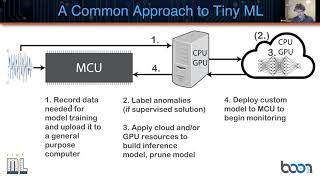
Amber - A Complete, ML-Based, Anomaly Detection Pipeline for Microcontrollers
Discover a complete ML-based anomaly detection pipeline for microcontrollers, featuring real-time sensor value processing, automatic hyperparameter tuning, and high-speed inference capabilities.
Wio Terminal TinyML Course - Anomaly Detection for Predictive Maintenance with Blynk IoT Platform
Learn to implement anomaly detection for predictive maintenance using Wio Terminal, TinyML, and Blynk IoT platform. Covers data collection, model training, testing, and integration with IoT systems.
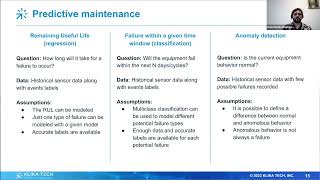
TinyML Talks - On-Device Model Fine-Tuning for Industrial Anomaly Detection Applications
Explore on-device model fine-tuning for industrial anomaly detection, improving flexibility and adaptability of ML models while reducing infrastructure costs and operational efforts.
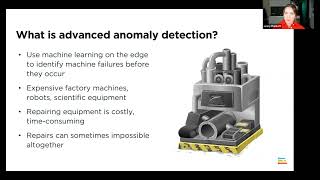
Advanced Anomaly Detection Made Easy
Advanced anomaly detection techniques for embedded ML, focusing on custom DSP blocks, feature importance, and threshold optimization. Learn to implement these methods for various IoT applications using Edge Impulse.
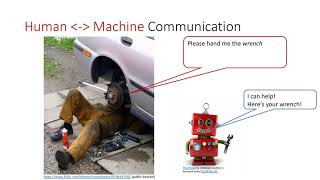
Keynote: Ross Girshick - Robustness Across the Data Abundance Spectrum
Explore robustness in computer vision across data abundance scenarios, addressing benchmarking challenges and efficient learning for diverse object categories using federated dataset design.
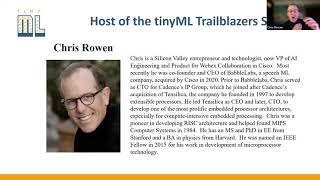
tinyML Trailblazers: Success Stories with Pete Warden
Explore tinyML success stories with Pete Warden, discussing game-changing technologies, innovations, and future visions in the field of machine learning on tiny devices.
Working with Geotiff Files Using Rasterio in Python - Also Quick Demo of NDVI Calculation
Learn to manipulate geotiff files using rasterio in Python, including reading, plotting, and performing NDVI calculations. Gain practical skills for working with satellite imagery and geospatial data analysis.
Implementing Filters in the New Haystack Doc Store
Explore implementing filters in Haystack's new document store, covering filter utilities, writing and testing filters, and integrating them into the pipeline.
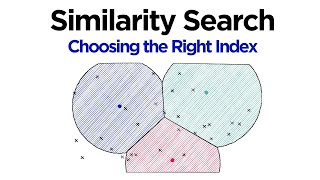
Choosing Indexes for Similarity Search - Faiss in Python
Explore Faiss indexes for efficient similarity search, comparing Flat, LSH, HNSW, and IVF to optimize performance in large-scale datasets. Learn to choose and implement the best index for your needs.
FAISS - Introduction to Similarity Search
Explore efficient similarity search with Facebook AI Similarity Search (FAISS). Learn implementation, options, and how FAISS enhances semantic search speed.