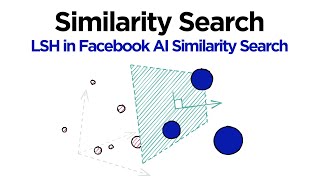
IndexLSH for Fast Similarity Search in Faiss
Explore fast similarity search using IndexLSH in Faiss. Learn efficient implementation techniques for large-scale data retrieval and comparison in AI applications.
How to Learn Data Science, ML, Programming
Explore effective strategies for mastering data science, machine learning, and programming, including balancing theory and practice, project-based learning, open-source contributions, and following personal interests.
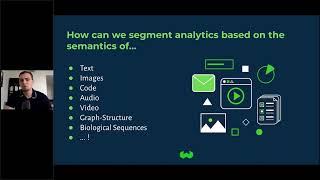
Vector Search for Data Scientists - Connor Shorten
Explore vector search in data science with Connor Shorten, covering Weaviate Vector Search Engine, healthcare applications, and content performance analytics. Gain insights into vector representations and segmentation.
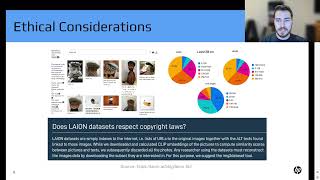
Introduction to Generative Art with Stable Diffusion
Explore stable diffusion for generative art with Hunter Kempf. Learn model architecture, ethical considerations, practical applications, query optimization, and future developments in AI-driven visual creativity.
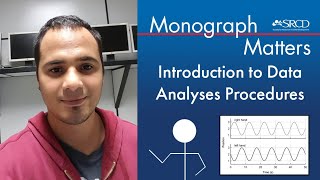
Methodological Lessons - Introduction to Data Analyses Procedures
Introduction to three data analysis procedures: Hilbert Transform Relative Phase, Wavelet Analysis, and Linear Mixed Effects Analysis. Suitable for all levels, providing a broad overview of their functions in bimanual coordination research.

Storytelling for a More Equitable Open Science Enterprise
Exploring storytelling's role in open science communication, emphasizing trust-building, public engagement, and addressing ethical implications of emerging technologies for more equitable scientific practices.
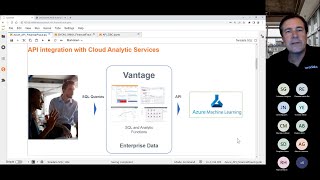
Accelerating AI and ML Insights with Azure ML and Teradata VantageCloud
Discover how Teradata VantageCloud and Azure ML integration accelerates AI and ML insights at scale, overcoming deployment challenges and unlocking data-driven value for organizations.
Qlik Data Integration for Microsoft Azure Synapse and Power BI
Accelerate BI & ML initiatives with Qlik's high-performance data integration for Azure Synapse and Power BI. Learn about automated pipelines, self-service catalog, and real-time data integration to drive agility in analytics.
Science Communication in a Virtual World
Enhance science communication skills for diverse audiences in digital settings. Learn to identify your audience, eliminate jargon, and craft impactful messages for effective virtual interactions.
Jupyter for First-Time Users - Introduction to Notebooks and Code Execution
Learn to use Jupyter notebooks for coding projects, including markdown, LaTeX, code execution, and debugging. Ideal for beginners in scientific computing and data analysis.
Advanced Emerging Technologies, Research and Practical Applications
Explore emerging technologies' practical applications in healthcare, AI, cloud computing, and more. Gain insights from industry expert on latest advancements and their real-world impact.
Excel 2021 VBA Advanced Tutorial
Master advanced VBA techniques for Excel 2021, including forms, controls, and pivot tables. Learn to automate tasks, create custom tools, and enhance data analysis capabilities through hands-on programming.
Chai Time Kaggle Talks With Anjum Sayed - Datasaurus
Explore Anjum Sayed's 4th place solution in the CommonLit Kaggle competition, including problem analysis, data exploration, and codebase walkthrough, with insights on using Weights & Biases for competition workflows.
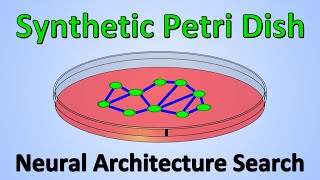
Synthetic Petri Dish - A Novel Surrogate Model for Rapid Architecture Search
Explore a novel approach to Neural Architecture Search using a Synthetic Petri Dish model, which evaluates architectural motifs in small networks with synthetic data to accelerate performance prediction and optimization.
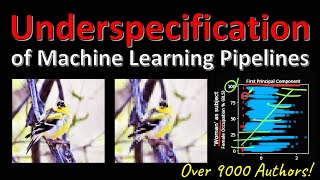
Underspecification Presents Challenges for Credibility in Modern Machine Learning - Paper Explained
Explores underspecification in ML pipelines, where models with similar training performance behave differently in real-world deployment, leading to instability and poor outcomes across various domains.
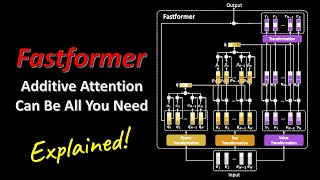
Fastformer - Additive Attention Can Be All You Need
Explore Fastformer, a linear-complexity Transformer variant for efficient long text modeling. Learn about additive attention, global context interactions, and its performance compared to traditional Transformers.

Build a TikTok Data Science App with Streamlit and Python - Data Science Project
Learn to build a real-time TikTok data analytics dashboard using Python, Streamlit, and Plotly. Covers data extraction, ETL pipeline creation, and interactive visualization techniques.

Python for Data Science - Beginner Friendly Full Course
Comprehensive Python tutorial covering fundamentals, data structures, control flow, functions, OOP, modules, file handling, and math operations, with practical data science applications and projects.
Python for Data Science - Conditions and Loops
Learn Python conditions and loops for data science, covering if-else statements, logical operators, loop types, and iterating through lists and dictionaries with practical applications.
Python for Data Science - Variables, Lists, and Dictionaries
Learn essential Python concepts for data science: variables, data types, lists, and dictionaries. Gain practical skills through hands-on examples and clear explanations.
Python for Data Science - Getting Started
Learn Python for data science: set up Jupyter Notebooks, understand its basics, write your first code, and explore Python in various environments. Perfect for beginners starting their data science journey.