
Wio Terminal TinyML Course - People Counting and Azure IoT Central Integration - Part 3
Learn to implement people counting using TinyML on Wio Terminal, integrating ultrasonic sensors and Azure IoT Central for real-time monitoring and data visualization.

Introduction to TinyML on Wio Terminal - Machine Learning on Microcontrollers
Introduction to TinyML on Wio Terminal: Learn to implement machine learning on microcontrollers using Arduino IDE, covering data gathering, processing, model training, and deployment.
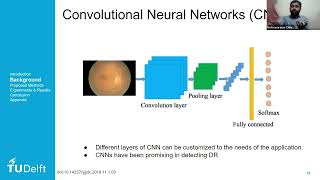
TinyML Talks Germany - Neural Network Framework Using Emerging Technologies for Screening Diabetic
Innovative framework using neural networks and emerging technologies for efficient screening of Diabetic Retinopathy, achieving high accuracy and significant improvements in energy consumption and latency.
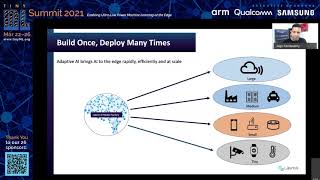
How Adaptive AI Solves Big Challenges for tinyML
Explore how Adaptive AI addresses challenges in tinyML, enabling efficient deployment of Edge AI models for smart devices and enterprise solutions.
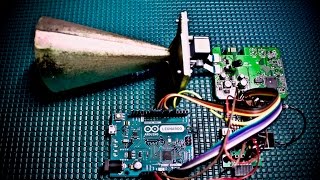
Arduino Radar Gun Speed Reader - Easy How-To Guide
Learn to extract speed data from a radar gun using Arduino, enabling DIY projects and custom applications with this off-the-shelf device. Includes hardware setup, code explanation, and future possibilities.
Kubernetes as a Substrate for ATLAS Compute
Exploring Kubernetes' potential for ATLAS experiment computing, including batch processing, GPU resource management, and interactive analysis clusters for high-energy physics research.
Introduction to Kubernetes Working Group Batch - Goals and Roadmap
Explore the Kubernetes WG Batch: goals, roadmap, and early efforts to enhance support for batch workloads, improve portability, and simplify deployment in core Kubernetes.
Boost Your Logs with Prometheus - From Logs to Metrics
Learn to transform log data into Prometheus metrics, enhancing observability by combining log information with existing metrics for improved troubleshooting and alerting in cloud-native environments.
Building Armada - Running Batch Jobs at Massive Scale on Kubernetes
Explore Armada: a system for massive-scale batch job execution on Kubernetes, enabling efficient utilization of GPUs and CPUs for advanced data science and machine learning in financial markets.
Fragmentation of the Batch Ecosystem in Kubernetes - Challenges and Solutions
Explore challenges and solutions for batch workloads in Kubernetes, discussing core support, missing functionalities, and future directions with industry experts.

Kubernetes on the Edge with K3s for Smart Metering - Use Case and Implementation
Explore K3s for edge computing in smart metering, leveraging CNCF projects like Prometheus and Helm to aggregate IoT data on-site before cloud transmission in industrial settings.
Building a Batch Processing Platform for Data Pipelines Using Argo and Kubernetes
Explore Intuit's scalable batch processing platform using Kubernetes and Argo for efficient data pipeline management, addressing scheduling, orchestration, and dependency challenges in AI and data engineering.
Revamping Kubernetes with Contextual and Structured Logging - A Deep Dive
Explore Kubernetes' new structured logging system, enhancing monitoring with machine-readable, contextual logs. Learn about klog improvements and their impact on the Kubernetes ecosystem.
Connected Observability Pipelines in the OpenTelemetry Collector
Explore connectors in OpenTelemetry Collector for advanced data flow control. Learn to link pipelines, replicate data, and implement multi-signal logic for sophisticated observability signal processing.
Building a Batch System for the Cloud with Kueue
Learn about Kueue, a cloud-native job scheduler for Kubernetes that optimizes resource allocation, implements fair sharing, and enhances batch processing efficiency in multi-team environments.
Kubernetes Batch Processing at Scale - A Scheduling Perspective
Explore Kubernetes batch processing challenges and solutions, including custom scheduling for large-scale operations, Gang Scheduling, DRF, and workload colocation for improved resource utilization.
Observability with Fluent Bit: Logs, Metrics and Traces
Learn to implement scalable observability solutions using Fluent Bit for logs, metrics, and traces. Explore data collection, preprocessing, and centralization techniques for effective analysis.
Enabling HPC and ML Workloads with Latest Kubernetes Job Features
Explore new Kubernetes Job API features for distributed Batch/AI/HPC workloads, including Indexed Jobs and Pod Failure Policy, with real-world examples from DeepMind and Lawrence Livermore National Laboratory.
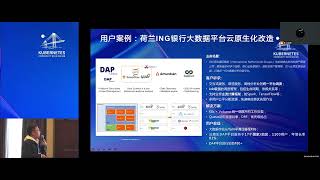
Volcano for FinTech Big Data on Kubernetes
Explore how Volcano enhances FinTech BigData operations on Kubernetes, optimizing resource management and workflow efficiency for financial technology applications.
Managing Artifacts at Scale for CI and Data Processing
Learn best practices for managing data artifacts in Argo Workflows, including configuring artifact repos, implementing garbage collection, and optimizing for CI and data processing use cases.
Feathr - An Open Source, Battle-Tested, Scalable and Enterprise-Grade Feature Store
Explore Feathr: an open-source, battle-tested feature store for machine learning. Learn its design, philosophy, and enterprise-grade capabilities, including native feature transformation and cloud-native architecture.