Feature Engineering Importance - Practical Application for Feature Engineering
Explore feature engineering techniques for data analysis and classification, including practical application to supermarket sales data. Learn to select, manipulate, and transform features for improved model performance.
Topic Modelling with BERTopic - Applied NLP Tutorial
Learn topic modeling with BERTopic, extract insights from Kaggle notebooks, and create interactive visualizations. Master applied NLP techniques using transformers and c-TF-IDF for interpretable, dense topic clusters.

PyTorch DataLoader Source Code Debugging - Batch Building and Normalization
Debugging session exploring PyTorch DataLoader's inner workings, focusing on data normalization, batch building, and parameter impacts. Insights into efficient data handling for deep learning projects.
Sentencepiece Tokenizer With Offsets for T5, ALBERT, XLM-RoBERTa and Many More
Implementación práctica del tokenizador Sentencepiece con offsets para modelos de transformers, enfocado en sistemas de preguntas y respuestas utilizando ALBERT.
Dark Data
Explore the concept of dark data, its retention, and processing, with a focus on personal data and legal compliance in data management.

End to End NLP Project Implementation With Deployment Github Action - Text Summarization - Krish Naik
Comprehensive guide to implementing an end-to-end NLP text summarization project, covering data processing, model training, evaluation, and deployment using GitHub Actions on AWS.
How to Display ChatGPT Output in Your App - Web Development with Open AI
Learn to implement streaming responses from OpenAI API in web apps, enhancing user experience with faster-perceived performance and real-time output display.

Transformer Encoder in 100 Lines of Code
Learn to implement a Transformer Encoder from scratch in Python. Explore key concepts like attention mechanisms, layer normalization, and feed-forward networks through hands-on coding.

End to End ML Project - Data Transformation Implementation Using Pipelines
Implement data transformation using pipelines for ML projects, covering categorical and missing value handling, standard scaling, and artifact storage.
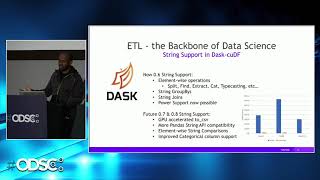
RAPIDS - The Platform Inside and Outside - Joshua Patterson - ODSC East 2019
Accelerating data science with GPUs using RAPIDS: open-source libraries for GPU-powered data manipulation, machine learning, and graph analytics, scaling across multiple GPUs and integrating with existing Python ecosystems.
Building a Recommender: Best Practices with Apache Mahout and Solr - Emerging Technologies 2014
Building a recommender system using Apache Mahout and Solr: best practices, data selection, co-occurrence analysis, and deployment techniques for rapid, production-ready recommendations.
Tools for Building the Real-Time Organization
Explore tools and architectures for processing real-time data streams, enabling organizations to make faster, better decisions through event-based systems and reactive platforms.
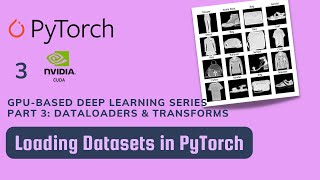
PyTorch Datasets, DataLoaders and Transforms - GPU Series Part 3
Explore PyTorch's data handling tools: Datasets, DataLoaders, and Transforms. Learn to prepare, visualize, and optimize data for GPU-accelerated deep learning using Fashion-MNIST dataset.
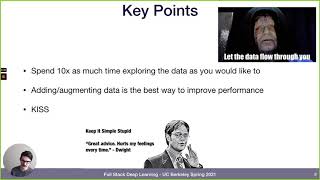
Data Management - Full Stack Deep Learning - Spring 2021
Explore ML infrastructure for data management: ingestion, storage, processing, exploration, labeling, and versioning. Learn about tools and best practices for effective dataset handling in deep learning projects.
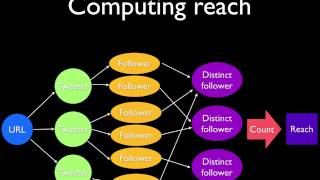
Storm: Realtime Distributed Computing with Nathan Marz - ETE 2012
Explore Storm for real-time data processing, covering concepts, development, deployment, fault-tolerance, and practical applications in distributed computing environments.
Photon Vectorized Execution Engine - Technical Deep Dive
Explore Photon's vectorized execution engine, learning about expression evaluation, compute kernels, runtime adaptivity, and vectorized operations for enhanced data processing efficiency.
Azure and Databricks Enabling Personalized Customer Experience at CVS Health
Explore how CVS Health leveraged Azure and Databricks to personalize customer experiences, implement machine learning models, and drive business value through data-driven decision-making and experimentation.
Zeus - Uber's Highly Scalable Distributed Shuffle as a Service
Explore Uber's Zeus: a highly scalable, distributed shuffle service powering data processing. Learn its architecture, integration with Spark, and performance advantages over traditional external shuffle methods.
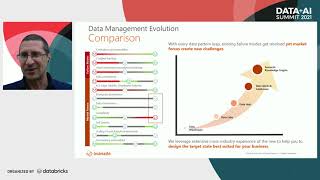
The Shift to Data Mesh: Fundamentals and Implementation Strategies
Explore Data Mesh fundamentals and how Avanade helps clients adopt a distributed, domain-led approach to improve data modeling, governance, and incremental transformation for faster performance.
Efficient Query Processing for Unstructured Data Using Machine Learning
Explore efficient query processing techniques for unstructured data using machine learning, including proxy scores and clustering methods to accelerate analysis and reduce costs.
Monitoring ML Models, IoT Data, and Quality Checks on Delta Lake - Quby's Approach
Discover how Quby monitors IoT data, ML models, and data quality using Databricks. Learn about Delta Lake, MLflow, and Slack integration for efficient data processing and model performance tracking.