How the AI Institute is Revolutionizing Robotics Machine Learning Training
Discover how Boston Dynamics AI Institute revolutionizes robotics ML with an innovative training platform that integrates multimodal data, extensive simulations, and scalable infrastructure using Ray.
Formation Tensorflow 2.0
Apprenez les fondamentaux de TensorFlow 2.0, des perceptrons aux réseaux de neurones récurrents, en passant par la normalisation des données et la création de modèles personnalisés.
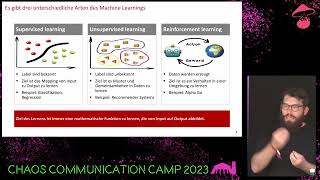
Demystifying AI - Understanding Machine Learning Fundamentals
Fundierte Einführung in Künstliche Intelligenz: Grundlagen des maschinellen Lernens, mathematische Konzepte und Herausforderungen werden verständlich erklärt. Praktische Tipps für den Einstieg inklusive.
Generate Data Science/Data Analysis Report of your Dataset in 5 Minutes
Learn to quickly generate comprehensive data science reports using Python, streamlining analysis and visualization for efficient insights from datasets.
Neo4J GDS: Machine Learning Feature Engineering in Spanish
Aprende a realizar ingeniería de características y preprocesamiento de datos con Neo4J y la librería GDS para ciencia de datos y aprendizaje automático.
Malware Clustering - Static and Dynamic Behavior Analysis
Explore innovative malware clustering techniques using static and dynamic behavior analysis, machine learning, and similarity search for robust, scalable, and repeatable results.
Music Genre Classification - Preparing the Dataset
Learn to preprocess audio data for music genre classification, including extracting MFCCs and labels from the Marsyas dataset and saving in a JSON format for easy retrieval during classifier training.
Weighted Gene Co-expression Network Analysis - Step-by-Step Tutorial - Part 1
Learn step-by-step Weighted Gene Co-expression Network Analysis (WGCNA) for RNA-Seq data, covering data manipulation, outlier detection, normalization, module identification, and visualization techniques.
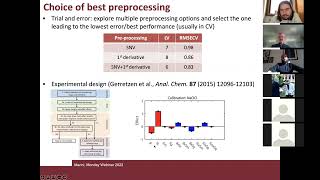
Preprocessing Revisited
Explore new developments in chemometric preprocessing, including multi-block strategies and Variable Sorting for Normalization, to reduce unwanted variability in experimental data.
Preprocessing Song Dataset for Melody Generation
Collate encoded songs, create integer mapping for symbolic notation, and prepare data for neural network ingestion in melody generation preprocessing.
TCGA Biomarkers Identification Using Machine Learning - Complete Walkthrough
Comprehensive walkthrough on using machine learning to identify TCGA biomarkers, covering data preparation, neural network construction, and gene set enrichment analysis.

Clustering and Markers Identification for ScRNA-Seq - Seurat Package Tutorial
Learn to analyze single-cell RNA-seq data using Seurat package, covering data import, QC, normalization, clustering, and marker identification. Gain insights into cell interactions and create visualizations.
IPL Data Analysis Using EDA - Exploratory Data Analysis Case Study
Practical guide to IPL data analysis using Python, covering EDA techniques, data preprocessing, and visualization to extract insights from real-world cricket datasets.
Using Scikit-Learn Pipelines for Data Preprocessing with Python
Deep dive into Scikit-Learn Pipelines for efficient data preprocessing in Python, enhancing your machine learning workflow and streamlining model development.
Intro to Azure ML and Cloud Computing
Explore Azure ML Studio's cloud-based data science capabilities, from data upload and visualization to preprocessing and cleaning, using its intuitive graphical interface.

Data Preprocessing in Python
Learn to transform raw text into structured lists and CSVs using Python, enhancing data organization and analysis skills for practical applications.
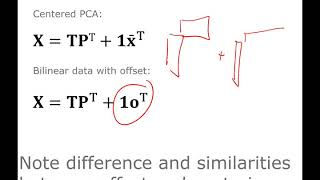
Preprocessing: Centering and Scaling in Chemometric Machine Learning
Learn techniques for centering and scaling data to enhance information in chemometric machine learning contexts like PCA and PLS models.
The Elephant in your Dataset: Addressing Bias in Machine Learning
Explore bias in machine learning, its societal impact, and strategies to mitigate it. Learn to create fair and ethical AI systems through hands-on examples and cutting-edge research.
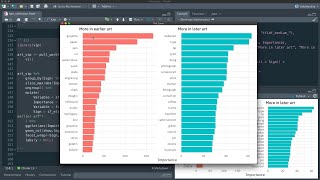
Explore Changes in Art Over Time With Tidymodels
Analyze art trends in the Tate collection using tidymodels for regression modeling, text feature engineering, and model diagnostics to uncover insights on changing art media usage over time.
Regression Analysis in Machine Learning - Linear Regression - Logistic Regression
Comprehensive exploration of regression analysis, covering linear and logistic techniques. Learn to leverage data relationships for informed decision-making in various business contexts.
Making Sense of Your Data: Statistics and Machine Learning - Lecture 2
Explore advanced statistical techniques and machine learning methods for analyzing complex neutrino data, enhancing your ability to extract meaningful insights from experimental results.