
Unchartered Ground - Will APIs Streamline MedTech?
Exploring how APIs can revolutionize healthcare, addressing innovation barriers, and discussing their potential to streamline the industry and enable collaborative solutions.

Using the Cloud for Scale
Explore how major tech companies leverage cloud, data, and emerging technologies to enhance customer experiences at massive scale.

Building Sustainable Communities Through Interaction
Experts discuss sustainable communities, exploring energy monitoring, distribution, and waste management to combat climate change and create lasting environmental impact.
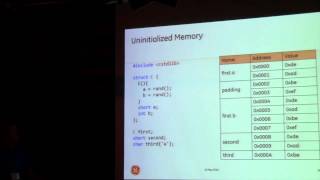
Lifetime and Usage of Global, Thread-local, and Static Data
Explore the intricacies of global, thread-local, and static data in C++, focusing on their lifetimes, usage patterns, and best practices for efficient and safe programming.
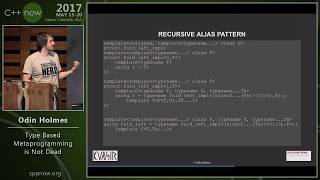
Type Based Template Metaprogramming is Not Dead
Exploring advanced C++ template metaprogramming techniques for improved compilation speed and efficiency, with a focus on type-based approaches and algorithm-data separation.
Hands-On Regular Expressions in Python
Learn to create, understand, and effectively use regular expressions in Python for data validation, parsing, and normalization. Discover when and how to apply regex for optimal results.
Statistical Typing - A Runtime Typing System for Data Science and Machine Learning
Statistical typing: A runtime typing system for data science and ML, extending primitive types to statistical data types. Enables multivariate schemas, generative data contracts, and easier data testing with pandera.
Large Scale Data Validation - with Spark and Dask
Explore data validation techniques for large-scale datasets using Spark and Dask. Learn to transition from single-machine to distributed computing, combining frameworks for efficient validation across partitions.
Open Source on Easy Mode
Streamline open source project maintenance with automation tools and best practices for packaging, testing, CI/CD, documentation, and community engagement. Focus on the fun parts of development.
How Pydantic V2 Leverages Rust's Superpowers
Explore how Pydantic V2 utilizes Rust to enhance performance, extensibility, and maintainability in data validation. Learn about architecture changes and real-world trade-offs in combining Python and Rust.
Modern, Typed Python for Multimodal ML - From Training to Deployment
Explore the benefits of Python type hints in machine learning, from improving code quality to organizing multimodal data and bridging the gap between training and deployment.
Data Driven Cache Invalidation
Explore efficient cache invalidation techniques using data-driven approaches to optimize system performance and reduce unnecessary cache updates.
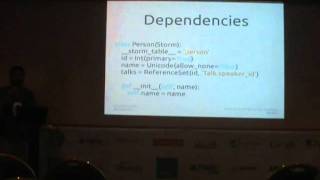
Using Storm to Work with SQL Databases
Learn to efficiently interact with SQL databases using Storm, an object-relational mapper for Python that simplifies database operations and enhances performance.
Data Driven Cache Invalidation
Explore efficient cache invalidation techniques using data-driven approaches to optimize system performance and reduce unnecessary cache updates.

Writing a Parallel and Distributed Tool for Backing Up a Multi Terabyte Data
Learn to create a parallel and distributed backup tool for handling multi-terabyte datasets, exploring efficient strategies for large-scale data management and protection.
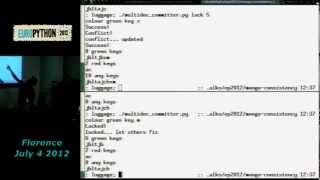
Multi-document Consistency with MongoDB
Explore multi-document consistency in MongoDB, focusing on techniques to maintain data integrity across related documents in distributed systems.
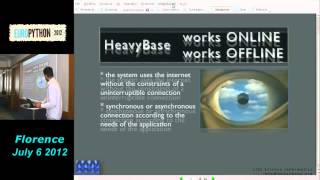
HeavyBASE - A Python Peer to Peer Database for Clinical Trials and Biobanks
Explore a Python-based peer-to-peer database system designed for managing clinical trials and biobanks, offering innovative solutions for data handling in medical research.
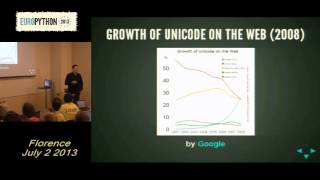
Understanding Encodings
Learn about character encodings, their history, and practical applications in Python, focusing on Unicode and common encoding issues developers face.
Practical Uses for Function Annotations
Explore practical applications of Python function annotations, including type hinting, runtime checking, and language bridging, to enhance code clarity and functionality.
Python and PostgreSQL for Huge Data Warehouses
Explore techniques for managing massive data warehouses using Python and PostgreSQL, covering connection pooling, data replication, optimization, and efficient querying strategies.
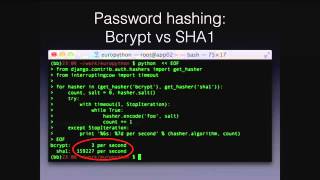
The Inner Guts of Bitbucket
Explore Bitbucket's architecture evolution, from a modest Django app to a complex, scalable system serving millions. Learn about technology choices and infrastructure components.