
Solving Real World Data Science Problems With Python - Computer Vision Edition
Learn to build and improve convolutional neural networks for computer vision tasks using Python, TensorFlow, and Keras. Explore data augmentation, preprocessing, and network architecture optimization techniques.
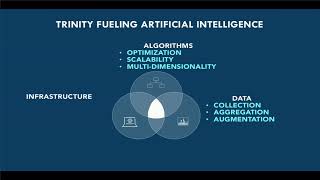
The AI Trinity - Data + Algorithms + Infrastructure
Explore the AI trinity: data, algorithms, and infrastructure. Learn about named entity recognition, active learning, crowdsourcing, data augmentation, and neural rendering models.
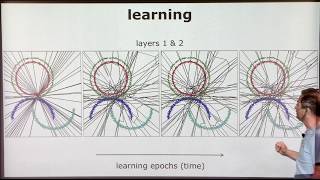
Mad Max - Affine Spline Insights into Deep Learning
Explore deep learning through spline theory, focusing on max-affine splines and their role in neural networks, data memorization, and network complexity.
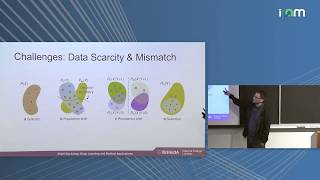
Causality Matters in Medical Imaging
Explore causal reasoning in medical imaging, addressing data scarcity and mismatch challenges. Gain insights on predictive models, semi-supervision limitations, and strategies for successful machine learning implementation.
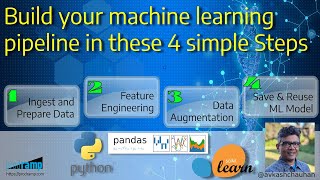
Build Your Machine Learning Pipeline in These 4 Simple Steps - Loan Prediction Scikit-Learn Example
Aprenda a construir um pipeline completo de machine learning usando scikit-learn para previsão de empréstimos, desde a ingestão de dados até o uso do modelo salvo para previsões.

BYOB - Build Your Own Bot
Learn to build conversational agents with frameworks, NLP techniques, and best practices. Explore intent recognition, dialogue management, and generative models while avoiding common pitfalls in chatbot development.
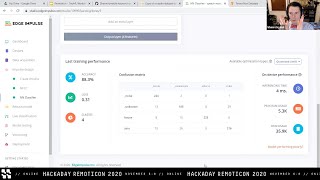
TinyML - Using Machine Learning on Microcontrollers to Recognize Speech
Learn to implement speech recognition on microcontrollers using TinyML. Train a neural network, convert it to TensorFlow Lite, and deploy it on an ARM board for real-time wake word detection.
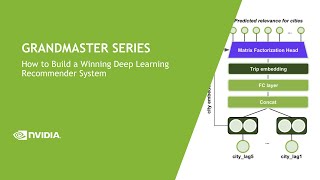
Building a Winning Deep Learning Recommender System - Grandmaster Series Episode 5
Learn how Kaggle Grandmasters built a winning Deep Learning Recommender System for Booking.com, using matrix factorization, ensemble models, and data augmentation techniques. Gain insights into GPU-accelerated recommender systems.
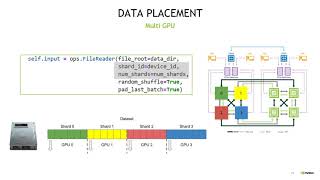
Efficient Data Loading Using DALI for Deep Learning Applications
Accelerate deep learning applications with efficient data loading pipelines using NVIDIA's DALI library. Explore augmentation, documentation, and performance optimization techniques.
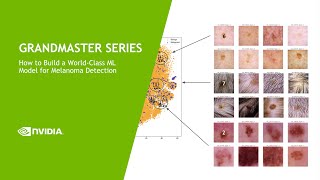
Grandmaster Series - Building a World-Class ML Model for Melanoma Detection
Learn how Kaggle Grandmasters built a world-class ML model for melanoma detection, outperforming average dermatologists. Discover key strategies in model architecture, augmentation, and training for accurate skin lesion classification.
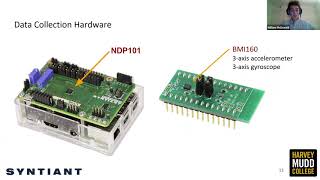
Training Neural Networks for Sensors
Overview of training neural networks for gesture recognition using accelerometer data on a low-power device. Covers data collection, augmentation, network architecture, and performance for smartwatch applications.
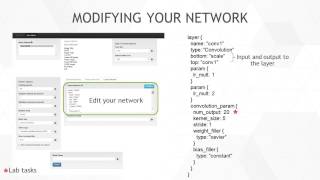
NVIDIA Deep Learning: Getting Started with DIGITS - Class 2
Learn to create, test, and optimize deep neural networks using NVIDIA's DIGITS tool for image classification tasks, with hands-on examples and practical deployment strategies.
Dynamic Data and Infinite Possibilities - Exploring Streaming Data in Generative AI
Explore streaming data's role in generative AI, covering applications, model training, and challenges. Learn about real-time data's impact on AI systems' adaptability and contextual relevance.
Empowering Open-Source Generative AI by Integrating the Wikidata Knowledge Graph
Explore integrating Wikidata's open-source knowledge graph into generative AI applications for automated content creation, data augmentation, and semantic analysis, fostering collaborative development.
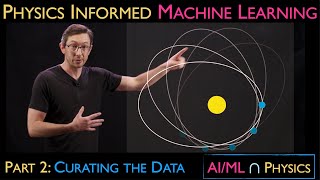
Physics-Informed Machine Learning: Curating Training Data - Part 2
Explore physics-informed data curation for machine learning, covering data augmentation, coordinate systems, simulation vs. experiments, and strategies for handling expensive, biased, and rare data in AI/ML applications.
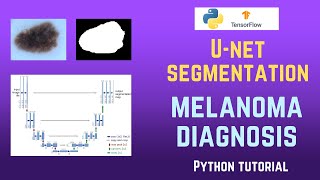
Medical Melanoma Detection - TensorFlow U-Net Tutorial
Step-by-step guide to implementing a U-Net model for melanoma detection using TensorFlow/Keras, covering data preparation, augmentation, model building, training, testing, and result visualization.
Revisiting Out-of-Distribution Generalization
Explore out-of-distribution generalization in machine learning, focusing on nuisance-induced spurious correlations and strategies for robust model performance across diverse datasets.
Train a Production-Level Image Classifier
Learn to build a robust image classifier using advanced techniques like data augmentation, transfer learning, and learning rate scheduling.
Learning with Marginalized Corrupted Features
Explore machine learning with marginalized corrupted features, a novel approach to enhance generalization and scalability in finite data scenarios. Discover applications in risk minimization and document representation.
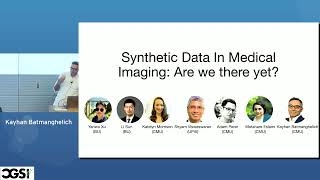
Synthetic Data in Medical Imaging: Are We There Yet?
Explore synthetic data's potential and challenges in medical imaging, focusing on recent advancements and future prospects for improved healthcare applications.
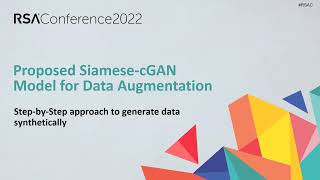
Data Augmentation Using Generative Adversarial Networks for All the Crypto You Need on Small Devices
Explore innovative data augmentation techniques using GANs for enhancing cryptographic capabilities on resource-constrained devices, presented by a PhD scholar at RSA Conference.