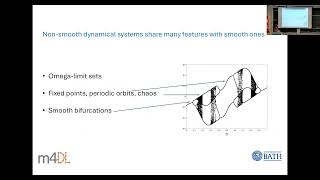
Non-smooth Dynamics and Machine Learning
Explore the intersection of non-smooth dynamics and machine learning, uncovering innovative approaches to complex systems analysis and prediction.
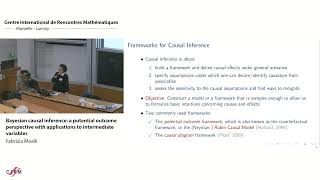
Bayesian Causal Inference: A Potential Outcome Perspective with Applications - Lecture
Explore Bayesian causal inference from a potential outcome perspective, with practical applications and insights from Fabrizia Mealli's conference talk.
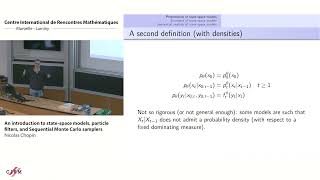
An Introduction to State-Space Models, Particle Filters, and Sequential Monte Carlo - Lecture 1
Explore state-space models, particle filters, and sequential methods in Bayesian statistics with Nicolas Chopin's comprehensive introduction to these advanced mathematical concepts.

Bridging the Divide: From Matrix to Tensor Algebra for Optimal Approximation and Compression
Explore tensor algebra and its advantages over matrix-based approaches for data compression and analysis. Learn about novel tensor-tensor products and their applications in various fields.

A Mathematical Toolkit for Pandemics
Explore mathematical tools for understanding and managing pandemics with Prof. Julia Gog. Gain insights into modeling, data analysis, and decision-making strategies for infectious disease outbreaks.
Understanding Complex Biological Systems: A Journey into Computational Topology
Explore computational topology's role in decoding complex biological systems. Learn how algorithms interpret data from molecular biology, genetics, and medicine, offering unique insights into disease progression and protein structures.
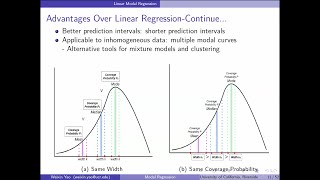
Modal Regression: A New Approach to Modeling Conditional Relationships - Lecture
Explore modal regression, a new tool revealing unique data structures and offering advantages over mean and quantile regressions for outliers, heavy-tailed, and truncated data.
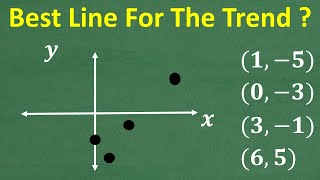
Learn Scatter Plots and Best Fitting Lines - Algebra, Statistics and Linear Regression
Master scatter plots and best fitting lines, exploring algebra, statistics, and linear regression concepts for improved data analysis skills.

Linear Regression
Explore linear regression concepts, techniques, and applications for data analysis and predictive modeling.
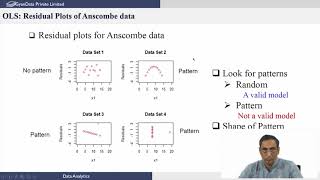
Diagnostics to Improve Linear Model Fit - OLS Analysis and Residual Plots
Explore techniques to enhance linear model fit through residual analysis, normality checks, and outlier detection in OLS regression.
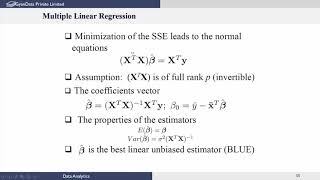
Multiple Linear Regression
Explore multiple linear regression techniques for analyzing relationships between multiple variables and predicting outcomes in statistical modeling.
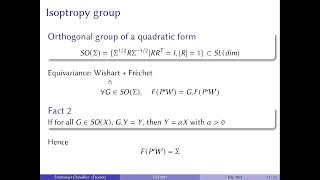
Projective Wishart Distributions
Explore projective Wishart distributions and their applications in statistical analysis and machine learning.
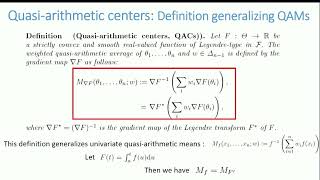
Quasi Arithmetic Centers and Quasi Arithmetic Mixtures
Explore quasi arithmetic centers and mixtures, delving into their mathematical properties and applications in advanced statistical analysis.
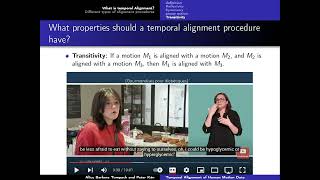
Temporal Alignment of Human Motion Data - A Geometric Point of View
Explore geometric approaches to temporally align human motion data, focusing on innovative techniques and their applications in motion analysis.

The Proof is in the Pudding - Ordinary Kriging is the Best - Geology Symposium 2022
Explore geostatistical estimation methods, comparing Ordinary Kriging, Inverse Distance Weighted, Nearest Neighbor, and Moving Window Average for resource estimation in geology.

Overview of Isatis.neo - Geostatistical Software for Data Analysis and Modeling
Explore Isatis.neo, a comprehensive geostatistical software for data analysis, estimation, and simulation in mining, oil and gas, and environmental applications. Learn its layout, tools, and key features.
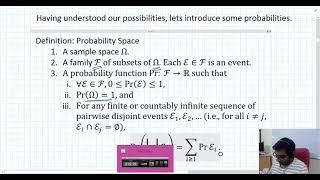
Basic Definitions in Probability Theory - Introduction and Experiment
Learn fundamental probability concepts through clear definitions and practical experiments, enhancing your understanding of statistical principles.
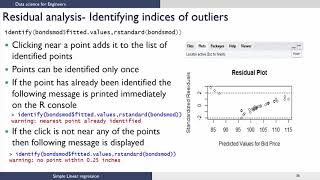
Simple Linear Regression Model Assessment - Continued
Assess simple linear regression models through continued exploration of key concepts and techniques for evaluating model performance and validity.
Elements of Scientific Measurement - Part 2: Analyzing Sampled Data and Experimental Errors
Explore issues in measurement, data analysis, distribution, sampling, and experimental errors for enhanced scientific understanding.
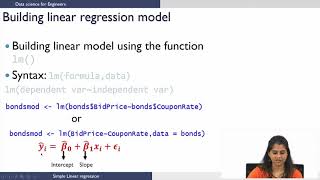
Simple Linear Regression Model Building
Build a simple linear regression model by loading data, exploring its structure, and fitting a regression line, with a comprehensive model summary.
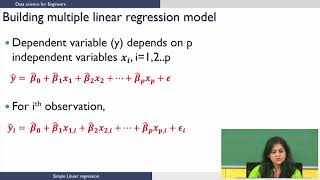
Multiple Linear Regression: Model Building and Selection
Build and select multiple linear regression models through data loading, visualization, and iterative model refinement using R.