From Data Tsunami to Actionable Insights - Generating Meaningful Insights for OSPOs
Learn to transform overwhelming open source project data into actionable insights. Explore data collection, processing, and interpretation techniques to improve OSS projects using CHAOSS metrics and tools like Augur and 8Knot.
Transformers in Time Series: A Survey
Explore the application of Transformer models in time series analysis, covering recent advancements and potential future directions in this rapidly evolving field.
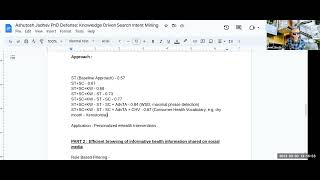
PhD Dissertation Overview - Lecture 18
Explore a PhD dissertation overview, gaining insights into advanced research methodologies and findings in a specific field of study.

How to Manage Data Science Projects - A 5-Step Framework
Discover a 5-step framework for managing data science projects, including a case study on a YouTube video search tool. Learn the project manager's crucial role in implementation.

Smoothing Crypto Time Series with Wavelets - Real-world Data Project
Explore real-world data science through crypto time series smoothing. Learn moving averages, polynomial fits, Fourier transforms, and wavelet decomposition techniques for financial data analysis.

Quantifying Artistic Experiences: How Art Metadata Can Be Used to Understand Audiences' Encounters with Art
Explore computational analysis of art metadata to understand audience experiences and improve art viewing, using topic models, NLP, and image extraction techniques.
Build a Stream Graph Processing System Based on Apache Calcite and Gremlin
Explore building a streaming graph engine using Apache Calcite and Gremlin. Learn about GeaFlow's query language and its applications in real-time graph processing at Ant Group.
Statistics Canada's Disaggregated Data Action Plan: Best Practices and Analytical Guidelines
Découvrez le plan d'action de Statistique Canada sur les données désagrégées, ses meilleures pratiques et ses défis pour une recherche systématique et éthique.

Auto-regressive Approximations to Non-stationary Time Series: Inference and Applications
Explore auto-regressive approximations for non-stationary time series, covering inference methods and practical applications in forecasting, estimation, and resampling.
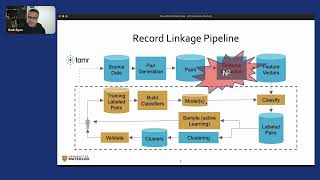
How ML-Powered Data Cleaning Streamlines the AI Pipeline
Explore ML-powered data cleaning techniques to streamline AI pipelines, automate labor-intensive tasks, and overcome impediments in data preparation for efficient data science workflows.
How to Create Data-Cleaning Auto-Pipelines With Python
Develop automated data cleaning pipelines using Scikit-Learn to streamline data processing, reduce time spent on preprocessing, and enhance reproducibility in your data science projects.

chDB - The Blazing Fast SQL Engine for Data Science
Explore chDB, a high-performance SQL engine for Python data ecosystem. Leverage its extensive data source support, ANSI SQL compliance, and seamless integration with popular libraries for efficient data analysis.
One Analysis a Day Keeps Anomalies Away - Detecting and Analyzing Data Anomalies
Explore Python techniques for data observability, anomaly detection, and root cause analysis in multivariate time series. Learn to distinguish anomalies from data drift and turn insights into opportunities.
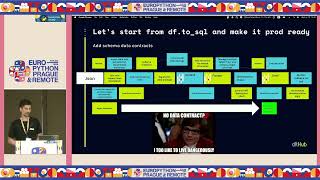
From Pandas to Production: ELT with dlt
Explore data load tool (dlt) to streamline data science workflows, overcome roadblocks, and transition smoothly from exploration to production. Learn best practices for data handling and managing failures with real-life examples.
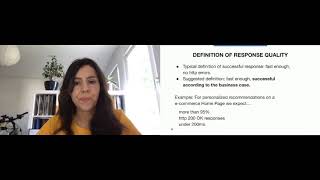
How to Monitor Machine Learning Stacks - Detecting and Addressing Special Issues
Discover advanced monitoring techniques for ML stacks, addressing unique challenges beyond traditional metrics to ensure robust performance and early issue detection.
Introduction to Machine Learning with Python
Explore machine learning fundamentals using Python, covering key concepts and practical applications in this hands-on workshop led by a field engineer from Domino.
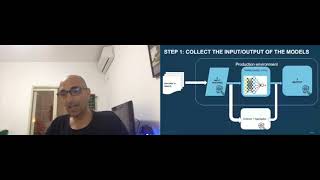
ML Monitoring ML: Scalable Monitoring of ML Models in Production Environments
Explore scalable ML model monitoring in production. Learn key performance measures, anomaly detection techniques, and an open-source agent for automated tracking and alerting of model issues.
Automated Pipeline for Large-Scale Neural Network Training and Inference
Explore cloud-native ML pipeline for automated anomaly detection using BiLSTM models. Learn to manage thousands of models with data collection, training, validation, and deployment techniques.
MLOps at Scale: Predicting Bus Departure Times Using 18,000 ML Models
Explore MLOps at scale through a case study on predicting bus departure times using 18,000 ML models. Learn practical insights for implementing large-scale machine learning projects.
Cardiometabolic Disease Trends in Canada - Data Analysis Workshop
Explore cardiometabolic disease trends in Canada through Loblaw's advanced analytics, examining pharmaceutical data and health-geospatial insights for diabetes and cardiovascular diseases.
The Algorithm is Not Enough: UX Meets Data Science
Explore the synergy between UX and data science, learning how to integrate user-centric design with data-driven insights for more effective product development.