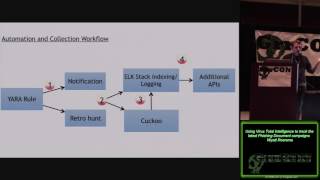
Using Virus Total Intelligence to Track the Latest Phishing Document Campaigns
Learn to track phishing campaigns using Virus Total Intelligence. Explore RetroHunt, Elastic Search, and automation techniques for effective threat analysis and prevention.

How Does Text Become Data
Explore concept-based text understanding and its applications in NLP. Learn to build models of human thinking for search engines, recommender systems, and classifiers using practical examples and code.

Building a Unified Cancer Immunotherapy Data Library
Explore a unified cancer immunotherapy data library leveraging Datomic for efficient storage, querying, and collaboration. Learn about CANDEL's innovative approach to managing complex research data.
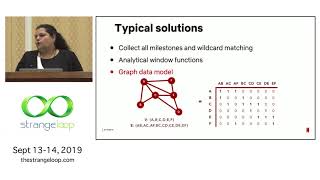
Pattern Matching at Scale Using Finite State Machine
Explore pattern matching at scale using finite state machines for big data analysis. Learn to build a framework for expressing user journey patterns and applying them across billions of events using Spark.

Scala DSLs and Probabilistic Programming
Explore ScalaStan, a type-safe DSL for statistical modeling with Stan, enabling programmatic manipulation and generation of Stan programs within Scala for efficient Bayesian inference and data analysis.

Scalable Anomaly Detection - With Zero Machine Learning
Explore Netflix's innovative approach to detecting anomalies in complex distributed systems using stream processing and simple algorithms, without relying on machine learning.

Is It A Bug Or Is It A Story
Investigative data journalist shares insights on analyzing big data, focusing on outliers to uncover bugs or unique user behaviors, using examples from Iraq War Logs and FIFA Files.

Probabilistic Scripts for Automating Common-Sense Tasks
Explore probabilistic scripting for automating common-sense tasks, focusing on data cleaning. Learn how to encode domain knowledge and leverage probabilistic programming for efficient problem-solving.
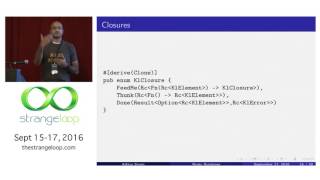
Building Languages in Rust
Explore building a Scheme-like language compiler in Rust, comparing its performance with C-based implementations and discussing the pros and cons of using Rust for language development.

Lies, Damn Lies, and Metrics
Explore the pitfalls of metrics analysis and learn strategies to extract actionable insights beyond raw numbers in software development and operations.
Democratizing AI - Back-Fitting End-to-End Machine Learning
Explore LinkedIn's journey in democratizing AI, enhancing modeler efficiency, and scaling machine learning across engineering teams through innovative infrastructure and practices.
Key to the City - Writing Code to Induce Social Change
Exploring how software development can address social inequalities through open data, collaboration, and civic tech, with a focus on verifiable solutions and empathy-driven approaches.
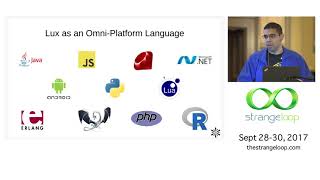
The Lux Programming Language
Explore Lux: a functional, statically-typed Lisp for multiple platforms. Learn about its features, philosophy, and potential impact on programming paradigms and meta-programming.
A Skeptics Guide to Graph Databases
Explore the pros and cons of graph databases, learn when to use them effectively, and understand their potential pitfalls in solving real-world problems.
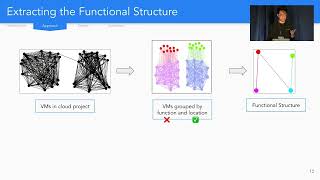
CloudCluster - Unearthing the Functional Structure of a Cloud Service
Unearths cloud service functional structure using VM-to-VM traffic matrix clustering. Aids management by revealing design patterns, enabling cost reduction, and identifying anomalies and misconfigurations.

Social Network Analysis - A Scary Primer
Explore unconventional data fusion techniques to analyze social networks, revealing insights from digital footprints and real-world sensors. Learn about graph theory and its applications in personal data analysis.

Time Signature Based Matching for Data Fusion and Coordination Detection in Cyber Relevant Logs
Methodology for detecting automated behavior in cyber logs using temporal pattern matching, scalable through locality sensitive hashing. Applications include anomaly detection and data fusion.

Spike Detection in Alert Correlation at LinkedIn
Discover how LinkedIn uses spike detection in alert correlation to quickly identify root causes of outages in their complex microservices architecture, reducing false positives and engineer toil.
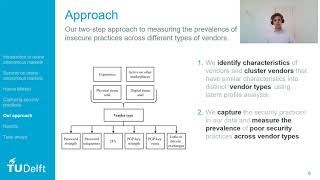
Risky Business - Investigating the Security Practices of Vendors on an Online Anonymous Market Using Ground-Truth Data
Investigates security practices of vendors on dark web markets, revealing surprising vulnerabilities among digital item sellers compared to drug vendors. Analyzes password strength, 2FA usage, and PGP adoption.
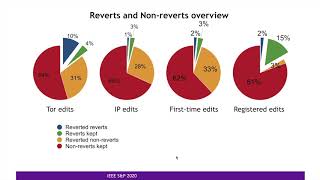
Are Anonymity-Seekers Just like Everybody Else? An Analysis of Contributions to Wikipedia from Tor
Análisis de contribuciones anónimas a Wikipedia a través de Tor, comparando calidad y patrones con otros tipos de usuarios para evaluar el impacto de bloquear proxies de privacidad.
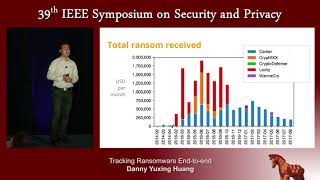
Tracking Ransomware End-to-end
Comprehensive analysis of ransomware ecosystem, tracing financial transactions from victim payments to operator cash-outs. Explores Bitcoin's role in cybercrime and potential countermeasures.