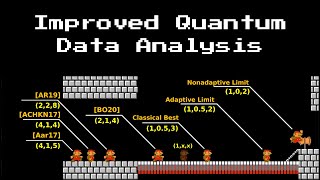
Improved Quantum Data Analysis - Shadow Tomography
Explore improved quantum shadow tomography, focusing on optimal dependence on observables, dimension, and error tolerance. Learn connections to adaptive data analysis in this advanced talk.

Building Armada - Running Batch Jobs at Massive Scale on Kubernetes
Explore Armada: a system for massive-scale batch job execution on Kubernetes, enabling efficient utilization of GPUs and CPUs for advanced data science and machine learning in financial markets.
Observability in ArgoCD and Rollouts Using Streaming ML for Reducing MTTR
Explore real-time anomaly detection in Kubernetes using streaming ML and DAG-based processing. Learn how Intuit reduces outage response time with AIOps and integrates observability into Argo CD.
Connected Observability Pipelines in the OpenTelemetry Collector
Explore connectors in OpenTelemetry Collector for advanced data flow control. Learn to link pipelines, replicate data, and implement multi-signal logic for sophisticated observability signal processing.
AI and Observability Role in E-Government Ecosystem
Explore how AI and observability enhance e-government IT operations, using open-source tools for telemetry data analysis and deep learning to improve service delivery and efficiency.
Building on-Premises MLOps for ISS Columbus Ground Operations
Explore the development of an on-premises MLOps platform for ISS Columbus operations, covering anomaly detection, root cause analysis, and automated deployment using GitLab, microk8s, and Kubeflow.
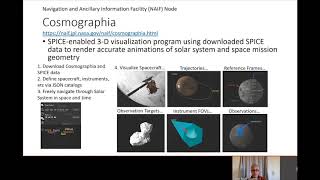
Recent Advancements in Planetary Data Archiving
Explore cutting-edge tools and services for planetary data archives, focusing on delivery, discovery, and analysis. Learn about innovations from NASA's PDS and ESA's PSA within the IPDA partnership.
Cloud-Native Metric Monitoring with Prometheus
Explore cloud-native metric monitoring with Prometheus, covering its key features, concepts, and integration with Grafana Labs' tools for comprehensive observability and efficient system management.
How to Utilize Profiles for AI Use Cases
Explore effective strategies for leveraging profiles in AI applications, enhancing decision-making and personalization capabilities.
Customer Centric Observability at Scale Leveraging AIOps and OpenTelemetry
Explore how Intuit leverages OpenTelemetry and AIOps for real-time customer experience monitoring, anomaly detection, and rapid issue resolution in complex infrastructure environments.
Making Quantum Algorithms Learn from Data
Explore cutting-edge research on integrating machine learning with quantum algorithms, enhancing their ability to process and learn from data for advanced computational tasks.
Machine Learning for Analysis of High-Dimensional Spatiotemporal Chaotic Dynamical Systems
Discover how machine learning techniques can analyze and predict complex chaotic systems, with insights from cutting-edge research in physics and data science.
A Sketch Data Structure for Quantiles in eBPF
Explore an innovative sketch data structure for efficient quantile estimation in eBPF, enhancing performance monitoring and analysis capabilities in Linux systems.
Cluster Golden Signals: Avoiding Alert Fatigue at Scale
Learn to implement Cluster Golden Signals for efficient Kubernetes observability, reducing alert fatigue and improving incident response through effective metrics pipeline and anomaly detection techniques.
Getting ML Right in a Complex Data World
Explore efficient ML experimentation using data versioning tools to reproduce iterations, capture training data versions, and build intuitive infrastructure without duplicating resources.
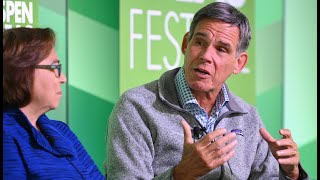
Ethical Artificial Intelligence: Oxymoron or Possibility?
Exploring ethical AI in healthcare: balancing rapid data analysis with concerns about bias, regulation, and fairness to advance health equity and address algorithmic decision-making challenges.
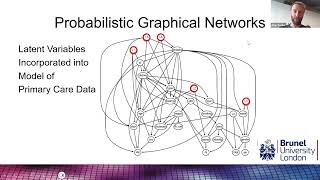
Dealing with Privacy, Bias and Drift in Synthetic Primary Care Data
Explore synthetic healthcare data generation, addressing privacy concerns, bias detection, and concept drift in evolving medical datasets for improved research and policy-making.

Nature Reviews Physics - Science in the Age of Large Language Models
Explore the impact of Large Language Models on scientific research and publishing, discussing challenges, opportunities, and future implications for the field.
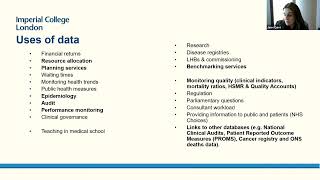
Using Routinely Collected Electronic Healthcare Record Data to Study Respiratory Disease
Explore methods for analyzing electronic healthcare records to gain insights into respiratory diseases, leveraging big data for improved patient outcomes and research.
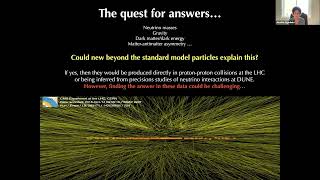
Machine Learning in Theoretical and Experimental High Energy Physics
Explore machine learning's impact on high energy physics, from data analysis to theoretical advancements, and its role in the search for new physics discoveries.
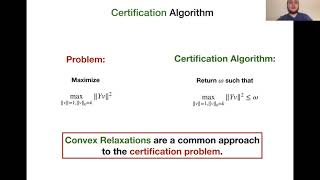
Sparse PCA: Algorithms, Adversarial Perturbations and Certificates
Explore algorithms, adversarial perturbations, and certificates in Sparse Principal Component Analysis, a crucial technique for high-dimensional data analysis and feature selection.