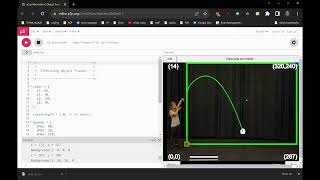
Trying Out the STEMCoding Object Tracker - Episode 1
Explore a user-friendly object tracking app for physics analysis, featuring hands-on demonstrations and practical applications in STEM education.
Simple Calculations with Spreadsheets
Learn to use spreadsheets for basic physics calculations, enhancing computational skills and problem-solving abilities in a visual, step-by-step manner.
Tracking Two-Dimensional Motion - Tracker for Beginners Part 7
Learn to analyze two-dimensional motion using Tracker software, covering x- and y-components, magnitudes, and angles for comprehensive projectile motion studies.
Graph Analysis and Acceleration - Tracker for Beginners Part 4
Explore three techniques for analyzing acceleration data in Tracker software, enhancing your video-based motion analysis skills for physics experiments and research.
Tracking Multiple Objects - Tracker for Beginners Part 3
Learn to analyze multiple objects' motion and their center of mass using Tracker software, gaining insights into interesting physics concepts through video analysis techniques.
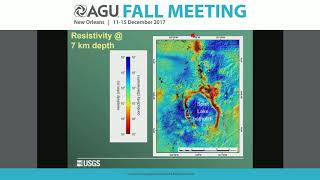
Frontiers in Electromagnetic Methods I - 2017 Fall Meeting
Explore cutting-edge electromagnetic methods in geophysics with expert presentations on advancements, applications, and innovative techniques for Earth exploration and understanding.
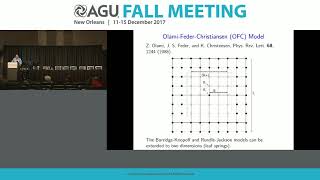
Climate Dynamics and Predictability: Insights from Simple Models - 2017 Fall Meeting Lorenz Lecture
Explore the Lorenz Lecture on simple models in geophysics, covering topics like residual stress, data collapse, and Gutenberg-Richter scaling, with implications for fault behavior and earthquake prediction.
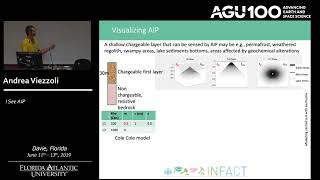
More Insights in Airborne Induced Polarization
Explore advanced insights in Airborne Induced Polarization (AIP) techniques for geophysical exploration and data interpretation.
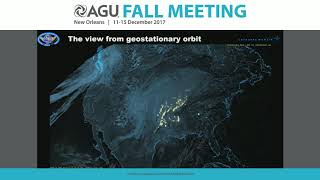
A New Era of Lightning Observations from Space
Explore cutting-edge space-based lightning detection technologies and their impact on atmospheric research, meteorology, and climate studies. Insights from leading experts in the field.
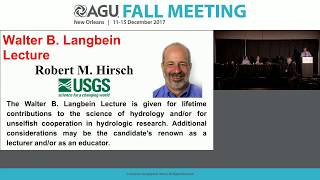
The Walter B. Langbein Lecture - 2017 Fall Meeting
Explore water resource challenges and innovative solutions with Robert M Hirsch in this AGU Fall Meeting lecture, focusing on critical hydrological issues and advancements in the field.
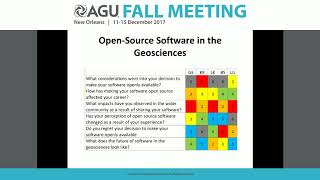
Open-Source Software in the Geosciences - 2017 Fall Meeting
Explore cutting-edge open-source software applications in geosciences, featuring expert presentations on innovative tools and methodologies for advancing research and data analysis in the field.
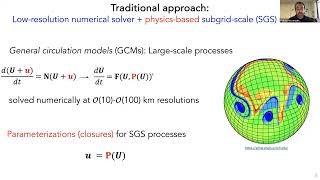
Integrating Physics, Data and Scientific Machine Learning to Predict Climate Variability and Extremes
Explore cutting-edge approaches combining physics, data analysis, and machine learning to enhance climate variability and extreme event predictions with Prof. Pedram Hassanzadeh.
Cracking the Code: Using Data Analysis to Engineer Stronger and Tougher Glasses
Explore data analysis techniques for engineering stronger glasses. Learn how topological data analysis and machine learning accelerate the discovery of fracture-resistant glass compositions.
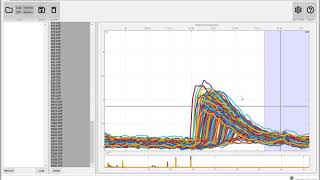
PARADISe 5.7 Beta for Untargeted GC-MS Analysis
Explore the revamped PARADISe 5.7 beta for enhanced untargeted GCMS data analysis, offering improved information extraction and advanced features for comprehensive analytical insights.
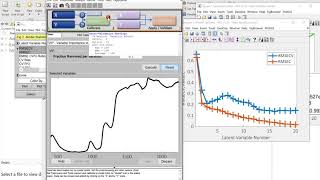
Variable Selection in PLS_Toolbox - Part 3
Explore advanced techniques for variable selection in PLS_Toolbox, enhancing your data analysis skills and improving model performance.
Variable Selection in Chemometrics: Advanced Methodologies - Part 2
Advanced methodologies for variable selection in chemometrics, including genetic algorithms, jack-knifing, and iPLS, building on fundamental concepts.
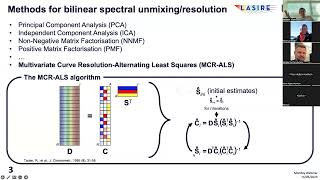
The Black Hole Effect in MCR with Raffaele Vitale
Exploring the black hole effect in Multivariate Curve Resolution, its impact on data analysis, and strategies to overcome this phenomenon in chemometrics and machine learning.
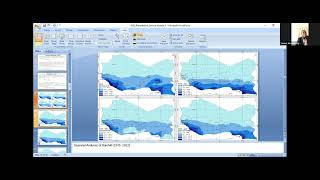
New Horizons in Extreme Event Science - 10.25.2023
Explore cutting-edge advancements in extreme event science, examining innovative approaches to understanding and predicting catastrophic natural phenomena.
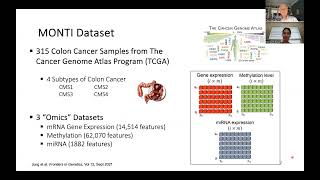
TUSCA: A Method for Tucker3 Modeling with ASCA+ - Webinar
Explore TUSCA, a novel method combining Tucker3 and ASCA+ for analyzing multi-way datasets from designed experiments, enhancing interpretation and visualization of complex data structures.
From Petabytes to Insights - 2023 AGU Informatics Leptoukh Award Lecture
Explore cutting-edge data analysis techniques for transforming massive scientific datasets into actionable insights in Earth and space sciences.
Modulation of Ensemble-level TNFR1 Mediated Apoptosis Response - Lecture 2
Explore ensemble-level TNFR1 mediated apoptosis response modulation, delving into advanced concepts of cancer cell death mechanisms and potential therapeutic implications.