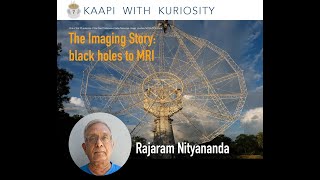
The Imaging Story - Black Holes to MRI by Rajaram Nityananda
Explore modern imaging techniques beyond traditional cameras, from medical MRI to radio telescopes. Learn how optics, computation, and statistics revolutionized image creation across various fields.
Machine Learning in High Energy Physics by Michael Kagan
Explore applications of deep machine learning in high energy physics, covering classification, identification, and estimation strategies for analyzing LHC data and searching for new physics.
Machine-Learned Symmetries by Konstantin Matchev
Explore machine-learned symmetries in high-energy physics with Konstantin Matchev. Discover innovative approaches to uncover hidden patterns and symmetries in particle physics data using advanced machine learning techniques.
Statistical Methods and Machine Learning in High Energy Physics - Project Presentation Session 2
Explore cutting-edge statistical methods and machine learning applications in high energy physics through expert presentations, fostering collaboration and innovation in data-driven research.
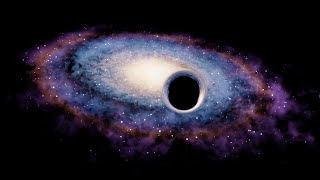
What's the Matter with Primordial Black Holes? by Ravi K. Sheth
Explore the intriguing possibility of dark matter being composed of primordial black holes. Learn about astronomical methods used to investigate this cosmic mystery and its implications for our understanding of the universe.
Machine Learning for Gravitational Wave Astronomy - Concepts & Terminology
Explore machine learning concepts and terminology for gravitational wave data analysis, enhancing your understanding of this cutting-edge field in astronomy and physics.
High-Dimension Perspective on Extracting & Encoding Information in Chemical Systems
Explore high-dimensional data extraction and encoding in complex chemical systems, focusing on exascale computing opportunities, multiscale correlations, and challenges in feature selection and interpretability.
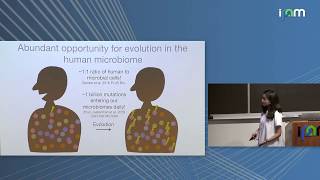
Population Genetics in the Human Microbiome
Explore microbiome evolution, ecological processes, and rapid adaptation in human-associated bacteria. Gain insights into population genetics and emerging research opportunities in this field.

Largest Cosmological Surveys and Big Data Science - Session 3
Explore cutting-edge cosmological research through hands-on projects and expert insights. Develop skills in analyzing large-scale structure surveys and multi-messenger cosmology data.

Largest Cosmological Surveys and Big Data Science - Session 1
Explore cutting-edge cosmological research through hands-on projects and expert insights. Gain valuable skills for analyzing large-scale structure surveys and cosmic microwave background data.
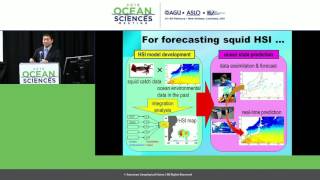
Forecasting Fisheries: Ocean Science Data for Sustainable Management
Experts discuss innovative ocean science data applications for sustainable fisheries management, exploring climate impacts and new forecasting methods to improve efficiency and conservation efforts.
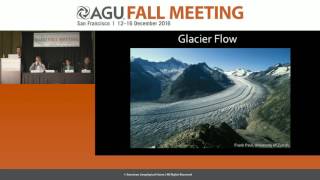
Mapping the Flow of Ice Around the Globe - New Database for Tracking Global Ice Velocity
Scientists discuss a new database tracking global ice velocity using NASA/USGS Landsat satellites, providing insights into glacier melting, sea level rise, and seasonal changes in ice movement due to climate change.
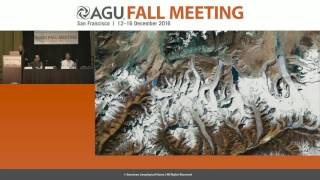
Attributing Mountain Glacier Retreat to Climate Change
New method for assessing glacier retreat and its link to climate change. Researchers present findings on individual glacier changes and their implications for freshwater sources and climate indicators.
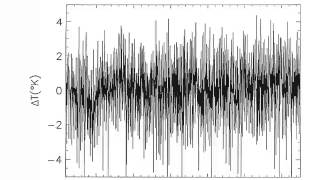
Complexity and Self-Organization in Earth Systems - Lorenz Lecture 2002
Explore self-organized complexity, predictability, and universal statistical distributions in natural systems through Donald L. Turcotte's insightful Lorenz Lecture at the 2002 AGU Fall Meeting.
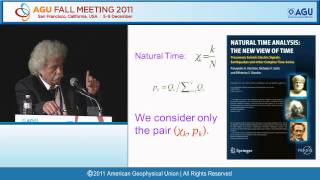
Predicting Extreme Events in Natural and Socioeconomic Systems - State-of-the-Art and Emerging Possibilities
Explore state-of-the-art methods and emerging possibilities for predicting extreme events in natural and socioeconomic systems, with insights from leading experts in the field.
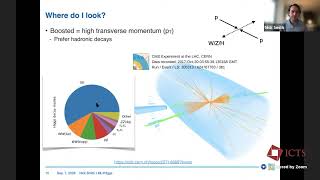
ML4Higgs - Success and Future Prospects by Nick Smith
Explore machine learning applications in high-energy physics, focusing on Higgs boson research. Learn about successful ML techniques and future prospects in analyzing LHC data for new physics discoveries.
Exercise with Root - Lecture 3
Hands-on ROOT exercise exploring data analysis techniques in high-energy physics, led by expert Tommaso Dorigo. Practical application of statistical methods for particle physics research.

Elements of Effective Crime Scene Investigation
Explore key elements of effective crime scene investigation, including evidence management and documentation, with insights from a global expert in forensic science.
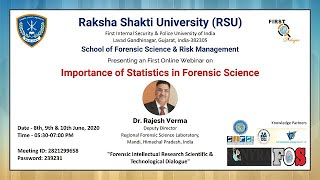
Importance of Statistics in Forensic Science - Dr. Rajesh Verma
Detailed analysis of data presentation and variable correlation in forensic science, with case studies. Builds on Session 1's coverage of uncertainty in scientific evidence and basic statistics.
Building New Tools for Gravitational Wave Astronomy
Explore cutting-edge techniques and innovations in gravitational wave detection with experts, enhancing our understanding of cosmic phenomena and astrophysical events.
The Neuroscience of Perception - How Digital Can Unite Us
Explore the intersection of neuroscience, behavioral science, and design thinking to gain a fresh perspective on perception and digital connectivity.