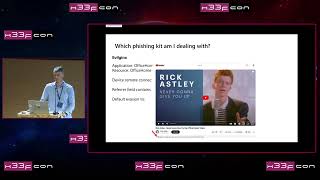
Unraveling and Countering Adversary-in-the-Middle (AiTM) Phishing Attacks
Dive into advanced cybersecurity strategies for detecting and preventing Adversary-in-the-Middle phishing attacks, exploring real-world cases, detection methods, and practical defense techniques.
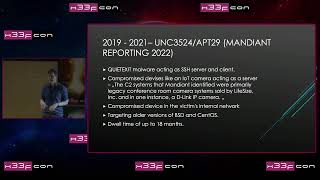
Addressing Tactics Related to Edge Device Compromise - Security Detection and Defense
Explore advanced threat hunting techniques and defense strategies against edge device compromises, focusing on detection methods, forensic analysis, and proactive security measures for network infrastructure.

Busting Red Team Trends with Style - Building a Custom ETW-Based Sysmon Replacement
Dive into advanced threat hunting with a custom ETW-based Sysmon replacement, exploring enhanced telemetry capabilities for detecting sophisticated red team techniques and threat actor fingerprinting.

Red Team Operations Recovery and Adaptation - Lessons from Fortune 500 Companies
Discover real-world red team operation mishaps and recovery strategies in Fortune 500 companies, exploring innovative TTPs development and mission success through candid insights from experienced security professionals.

Cloud Console Cartographer - Mapping Cloud Events for Security Analysis
Discover how to efficiently map and analyze cloud console activities with an open-source framework that simplifies the complex task of correlating hundreds of CloudTrail events to specific user actions.
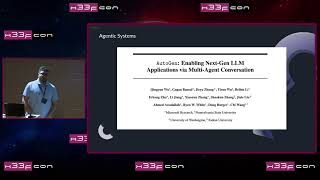
Attacking and Defending Large Language Models in Production Environments
Explore essential security strategies and potential vulnerabilities of Large Language Models in production, covering attack vectors, defense mechanisms, and implementation best practices based on leading AI research.
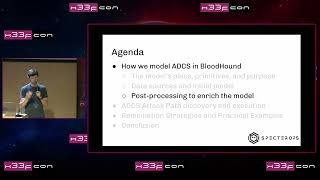
Analyzing and Executing ADCS Attack Paths with BloodHound
Discover how to identify, analyze, and execute ADCS attack paths using BloodHound, while learning practical remediation strategies for defending against PKI-based privilege escalation in Active Directory environments.
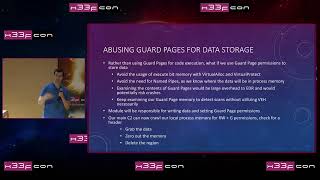
Hiding C2 Communications in Plain Sight Using Windows Memory Page Permissions
Discover advanced techniques for hiding C2 communications by exploiting Windows memory page permissions, with practical approaches to building modular and stealthy command-and-control systems.
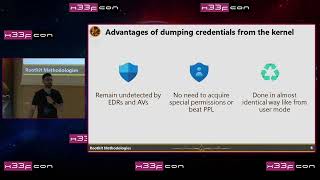
Kernel Games: The Ballad of Offense and Defense in Rootkit Methodologies
Dive into advanced kernel rootkit techniques for red team operations and defense strategies, covering stealthy persistence, EDR evasion, and practical detection methods with hands-on demos.

Innovate, Navigate, Elevate - A Journey into Offensive Security Entrepreneurship
Explore the challenges and opportunities in offensive security entrepreneurship, from industry dynamics to practical insights on building innovative security companies while maintaining hacker culture.

NTLM Relay Attacks - An OPSEC-Conscious Approach to Port 445 Takeover
Discover a stealthy technique for NTLM relay attacks by hijacking port 445/tcp, featuring reverse engineering insights and automation tools for enhanced SMB-based operations with minimal detection risk.

Modern Stuxnet-Style Attacks Using Filesystem Vulnerabilities and NTFS Exploits
Explore modern cyber attack techniques inspired by Stuxnet, focusing on filesystem vulnerabilities, NTFS exploits, and advanced persistence methods while learning effective defense strategies.
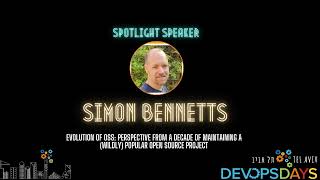
Evolution of Open Source Software: Perspectives from a Decade of Project Maintenance
Gain insights into the evolution of open source software through a decade-long journey of maintaining OWASP ZAP, the world's most popular web vulnerability scanner, shared by project lead Simon Bennetts.
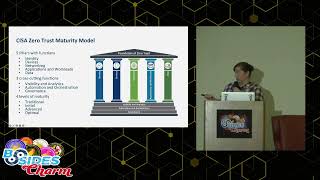
Measuring Your Zero Trust Maturity Using the CISA Framework
Discover how to assess and enhance zero trust architecture using CISA's Maturity Model, with practical insights from Centers for Medicare and Medicaid Services' implementation framework and tracking methods.
Detecting and Triaging Modern Windows Rootkits
Discover modern Windows rootkit detection techniques, memory forensics, and event log analysis methods to combat evolving kernel-level malware threats in Windows 10 and beyond.
The Action Group Model for Incident Response
Discover a flexible framework for coordinating incident response teams, improving support structures, and developing staff capabilities during security incidents.
Make Better Risk Decisions to Prevent Future Cyber Attacks
Discover proactive cybersecurity strategies for better risk decisions, focusing on preventative measures over reactive controls. Learn to identify vulnerabilities, assess business impact, and implement effective risk mitigation techniques.
Complexity for Complexity's Sake: The Bane of Cybersecurity Programs
Discover how to simplify cybersecurity approaches by avoiding tool overload and focusing on effective, streamlined solutions for better threat management and user experience in modern security programs.
Analysis of North Korean Nation-State Attacks Using MagicRAT Malware
Dive into North Korean APT group Lazarus's cyber-kill chain tactics, examining their MagicRAT malware and attack strategies against global energy companies through detailed MITRE ATT&CK analysis.
Evolving into the Next-Gen SOC - Baby Steps to the Future
Discover how to transform traditional Security Operations Centers into agile, next-generation entities capable of addressing modern cyber threats and future challenges through practical, actionable steps.
The Action Group Model for Incident Response
Discover a flexible framework for coordinating incident response teams, improving support structures, and developing staff capabilities during security incidents.