From Finding New Type of Logical Flaw at Linux Kernel to Developing New Heap Exploitation Technique
Discover Pspray, a novel Linux kernel exploitation technique enhancing reliability for targeted attacks. Learn about its effectiveness across various memory vulnerabilities and its impact on cybersecurity.
Demystifying AI and Machine Learning to Enhance SOC Detection
Demystifies AI and machine learning for SOC teams, focusing on practical applications like data leak prevention. Includes live demo and insights from Credit Agricole's SOC experience.
Human or Not - Can You Really Detect the Fake Voices?
Explore AI-synthesized speech detection techniques and their real-world effectiveness in combating voice cloning and fake audio. Uncover challenges and limitations in current approaches.
Is WebAssembly Really Safe? - Wasm VM Escape and RCE Vulnerabilities Have Been Found in New Way
Explore WebAssembly security vulnerabilities through a new fuzzing framework, focusing on VM escape and RCE risks in Wasm runtimes for edge computing and web applications.
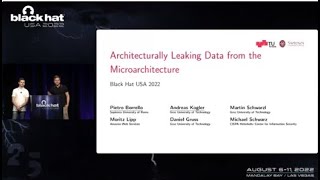
AEPIC Leak - Architecturally Leaking Uninitialized Data from the Microarchitecture
Systematic analysis of CPU vulnerabilities, exploring root causes and connections between transient-execution attacks and architectural vulnerabilities. Identifies blank spots in CPU security research.
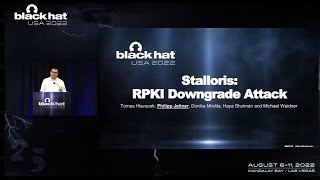
Stalloris - RPKI Downgrade Attack
Demonstration of novel downgrade attacks against RPKI, exposing networks to prefix hijacks by disabling RPKI validation through malicious publication points.
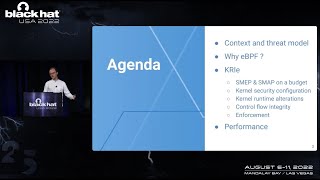
Detecting Kernel Exploits with eBPF
Explore eBPF's evolution in Linux, its expanding capabilities, and its potential for detecting kernel exploits, with insights on probes, challenges, and performance implications.
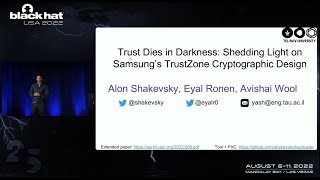
Trust Dies in Darkness - Shedding Light on Samsung's TrustZone Keymaster Design
Exposing critical security flaws in Samsung Galaxy devices' hardware-backed keystore through reverse engineering, revealing vulnerabilities in cryptographic design and implementation.
The Open Threat Hunting Framework - Enabling Organizations to Build, Operationalize, and Scale Threat
Explore the Open Threat Hunting Framework to build, operationalize, and scale threat hunting in organizations. Learn from industry experts about effective strategies and best practices.
Malware Classification With Machine Learning Enhanced by Windows Kernel Emulation
Explore hybrid machine learning for malware classification using static and dynamic analysis, Windows kernel emulation, and neural networks. Learn about adversarial ML and future developments.
DirectX - The New Hyper-V Attack Surface
Explore vulnerabilities in Hyper-V's GPU-Paravirtualization feature, examining 4 fixed DirectX component issues and their implications for virtualization security.
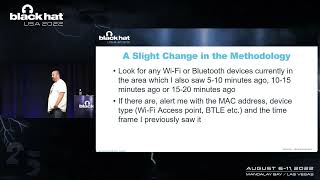
Chasing Your Tail With a Raspberry Pi
Methodology for detecting wireless signal tracking using low-cost hardware and Python. Covers SIGINT techniques, MAC address randomization, and provides code for DIY implementation.
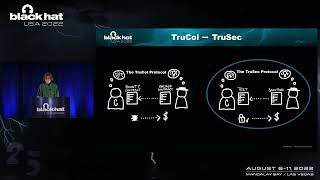
Eliminating Triage Intermediaries for Zero-day Exploits Using a Decentralised Payout Protocol
Explore a protocol for collectivizing security bounties, enabling companies to showcase software security and ethical hackers to retrieve bounties without ambiguity, eliminating subjectivity in triage processes.
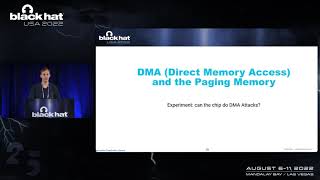
Ghost in the Wireless - iwlwifi Edition
Explore Intel Wi-Fi chip vulnerabilities through reverse-engineering, uncovering firmware exploits and code execution risks in complex features like Wake-on-WLAN and TDLS.
How Firefox Uses In-process Sandboxing to Protect Itself From Exploitable Libraries
Explore Firefox's innovative approach to mitigating zero-day attacks using in-memory sandboxes for third-party C libraries, enhancing security against memory safety vulnerabilities.

All Your Devices Can Be Hacked
Cybersecurity expert reveals vulnerabilities in everyday devices, from pacemakers to cars, highlighting the growing risks in our increasingly connected world.

What Will a Future Without Secrets Look Like?
Explore the blurred line between public and private in the digital age, examining research on privacy implications and the ease of matching strangers' photos with sensitive personal information.

Everyday Cybercrime - and What You Can Do About It
Discover everyday cybersecurity risks and learn practical strategies to protect yourself from malware, data breaches, and sophisticated cybercriminals in this eye-opening talk by security expert James Lyne.
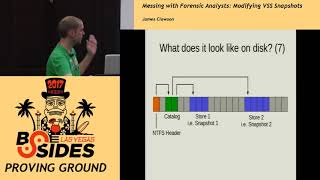
Messing with Forensic Analysts - Modifying VSS Snapshots
Learn techniques to modify Volume Shadow Copy snapshots, understand VSS basics, and explore methods to detect tampering in forensic analysis.
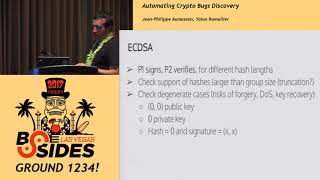
Automating Crypto Bugs Discovery
Explore automated techniques for discovering cryptographic vulnerabilities, focusing on differential fuzzing and CDF interfaces to enhance security testing efficiency.
Least Authority File System
Explore the Least Authority File System, a secure and privacy-focused approach to data storage and sharing, presented by Zooko at BSidesLV 2013.