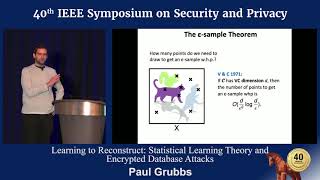
Learning to Reconstruct - Statistical Learning Theory and Encrypted Database Attacks
Explores the connection between statistical learning theory and encrypted database attacks, presenting novel approaches for database reconstruction from access pattern leakage with improved efficiency and broader applicability.
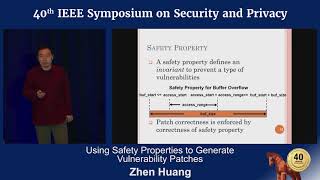
Using Safety Properties to Generate Vulnerability Patches
Innovative approach to automatic program repair using safety properties for precise and complete vulnerability fixes, demonstrated on 32 real-world vulnerabilities across diverse applications.
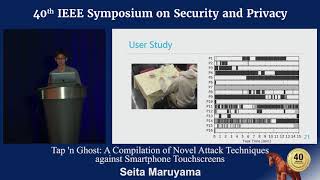
Tap 'n Ghost - A Compilation of Novel Attack Techniques against Smartphone Touchscreens
Novel attack techniques targeting NFC-enabled smartphone touchscreens, combining device fingerprinting and ghost touch generation to manipulate user interactions and potentially gain remote control.

Synesthesia - Detecting Screen Content via Remote Acoustic Side Channels
Explore acoustic side channels in screens, revealing how subtle noises can expose displayed content and user inputs, posing privacy risks in various scenarios.
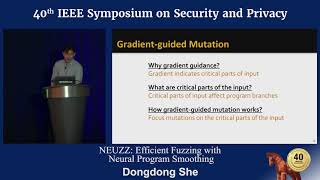
NEUZZ - Efficient Fuzzing with Neural Program Smoothing
Innovative fuzzing technique using neural networks to approximate program behavior, enabling more efficient bug discovery and higher code coverage in software testing.
Reasoning Analytically About Password Cracking Software
Efficient techniques for analyzing transformation-based password cracking software, enabling improved attack configurations and scientific reasoning about real-world password-guessing attacks.
Using Safety Properties to Generate Vulnerability Patches
Explores a novel approach to automatic program repair using safety properties to generate precise and comprehensive vulnerability patches, avoiding limitations of example-based methods.
If HTTPS Were Secure I Wouldn't Need 2FA - End User and Administrator Mental Models of HTTPS
Explores misconceptions about HTTPS security among end users and administrators, revealing gaps in understanding and providing recommendations for improved protocol design and user interfaces.

Does Certificate Transparency Break the Web? Measuring Adoption and Error Rate
Exploring Certificate Transparency adoption, challenges, and impact on web security. Analyzes deployment strategies, error rates, and lessons for future large-scale security implementations.
RIDL - Rogue In-Flight Data Load
Unveiling RIDL: a new class of speculative execution attacks that leak arbitrary data across boundaries, bypassing existing mitigations and posing significant security risks for modern processors.
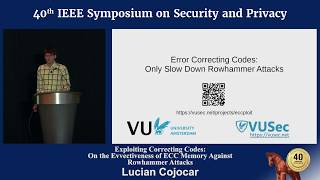
Exploiting Correcting Codes on the Effectiveness of ECC Memory Against Rowhammer Attacks
Investigates ECC memory's vulnerability to Rowhammer attacks, revealing limitations in its protective capabilities through reverse engineering and a novel attack method called ECCploit.
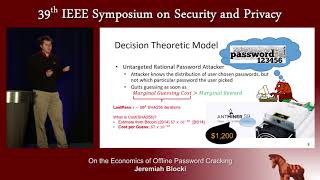
On the Economics of Offline Password Cracking
Analyzing economic models of offline password cracking to predict attacker behavior and evaluate password protection methods, emphasizing the importance of memory-hard functions for enhanced security.
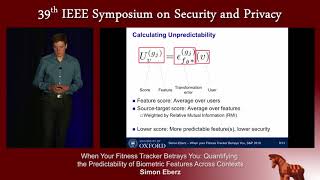
When Your Fitness Tracker Betrays You - Quantifying the Predictability of Biometric Features Across Contexts
Explores predictability of biometric features across contexts, revealing vulnerabilities in behavioral biometrics and assessing resilience against cross-context attacks through a comprehensive user study.
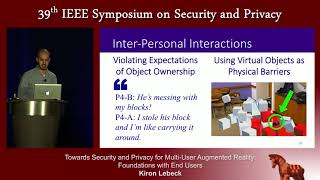
Towards Security and Privacy for Multi-User Augmented Reality - Foundations with End Users
Exploring security and privacy challenges in multi-user augmented reality through a qualitative study with HoloLens, revealing unique concerns and design implications for immersive AR technologies.
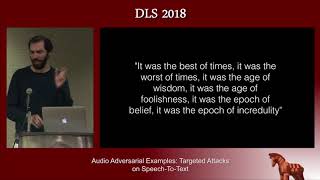
Audio Adversarial Examples - Targeted Attacks on Speech-to-Text
Explore targeted audio adversarial examples on automatic speech recognition, constructing waveforms that transcribe as chosen phrases while remaining nearly identical to the original.
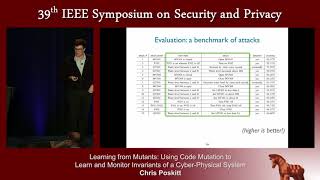
Learning from Mutants - Using Code Mutation to Learn and Monitor Invariants of a Cyber-Physical System
Innovative approach to automatically construct CPS models using supervised machine learning on data from systematically seeded software faults, demonstrating efficacy in detecting various attacks on a water purification plant simulator.
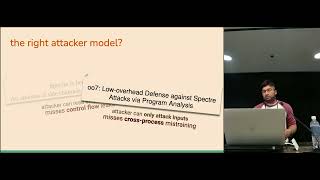
SoK - Practical Foundations for Software Spectre Defenses
Explore practical foundations for software Spectre defenses, covering key strategies and techniques to mitigate this critical security vulnerability in modern processors.
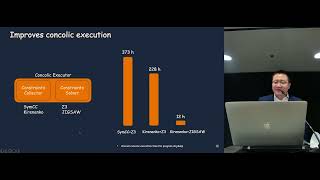
Jigsaw - Efficient and Scalable Path Constraints Fuzzing
Explore efficient and scalable path constraints fuzzing techniques with Jigsaw, enhancing software testing and vulnerability detection for improved system security and reliability.
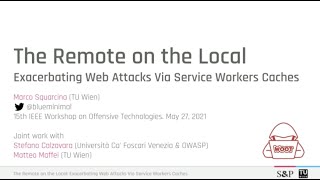
The Remote on the Local - Exacerbating Web Attacks Via Service Workers Caches
Explore how service worker caches can amplify web attacks, examining vulnerabilities and potential security risks in modern web applications.
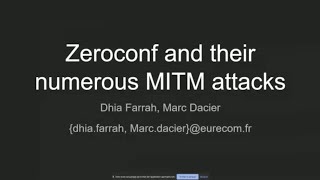
Zeroconf Protocols and Their Numerous Man in the Middle Attacks
Explore vulnerabilities in Zeroconf protocols, focusing on man-in-the-middle attacks. Learn about potential security risks and implications for network configurations.

Happer - Unpacking Android Apps via a Hardware-Assisted Approach
Explore a hardware-assisted approach for unpacking Android apps, enhancing security analysis and malware detection through innovative techniques and methodologies.