Breaking Payment Points of Interaction
Explore vulnerabilities in payment systems, focusing on bypassing protections in points of interaction devices. Live demonstrations showcase EMV bypassing and PIN protection avoidance.
Capturing 0Day Exploits With Perfectly Placed Hardware Traps
Innovative hardware-assisted approach to prevent control-flow hijack attacks, using processor features for real-time detection and prevention of abnormal branches in Windows and Linux systems.
Augmenting Static Analysis Using Pintool - Ablation
Extracts runtime information to enhance static analysis, resolving virtual calls in C++ binaries and visually comparing samples for efficient vulnerability research and code auditing.
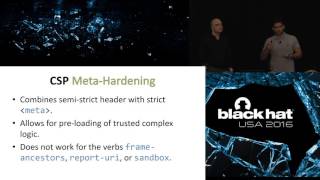
Abusing Bleeding Edge Web Standards for Appsec Glory
Explore risks and mitigation strategies for modern web security standards like SRI, CSP, and HPKP. Learn about implementation challenges, trade-offs, and potential exploits in legacy applications.

A Retrospective on the Use of Export Cryptography
Explores vulnerabilities in TLS due to export-grade cryptography, examining FREAK, Logjam, and Drown attacks, their impact, and lessons for future cryptographic protocol design and implementation.
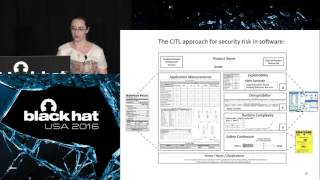
Measuring Adversary Costs to Exploit Commercial Software
Quantitative analysis of software security across platforms, revealing surprising insights for informed decision-making in product selection and vulnerability assessment.
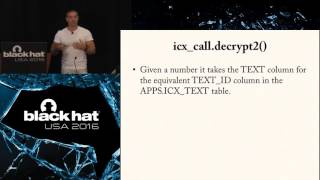
Hackproofing Oracle EBusiness Suite
Explore vulnerabilities in Oracle eBusiness Suite and learn effective strategies to secure systems against potential attacks, including remote code execution and SQL injection.

Nonce-Disrespecting Adversaries - Practical Forgery Attacks on GCM in TLS
Explore nonce-reuse vulnerabilities in GCM encryption for TLS, including Internet-wide scans, proof-of-concept attacks, and implications for HTTPS security.

Subverting Apple Graphics - Practical Approaches to Remotely Gaining Root
Explore techniques for subverting Apple graphics to gain root access remotely. Learn about vulnerabilities in userland and kernel components, and practical exploitation methods for both OS X and iOS systems.
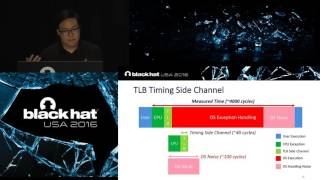
Breaking Kernel Address Space Layout Randomization - KASLR - With Intel TSX
Explore a novel timing side-channel attack against KASLR using Intel TSX, demonstrating its effectiveness in de-randomizing kernel memory layout across major operating systems.

Pwning Your Java Messaging With Deserialization Vulnerabilities
Explore Java messaging vulnerabilities, focusing on deserialization issues in popular message brokers. Learn to identify and exploit these weaknesses using the Java Messaging Exploitation Tool.

GreatFET - Making GoodFET Great Again
GreatFET: An improved open-source hardware hacking tool with enhanced features, better maintainability, and cost-effective manufacturing, replacing the popular GoodFET project.
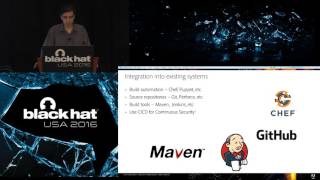
Design Approaches for Security Automation
Explore criteria for designing and evaluating security automation tools, from small-scale techniques to large-scale implementations, to effectively secure organizational environments.
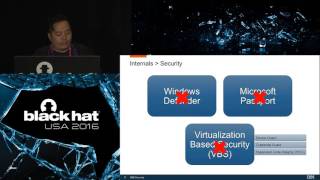
Into the Core - In-Depth Exploration of Windows 10 IoT Core
Explore Windows 10 IoT Core internals, security features, attack surfaces, and assessment methods. Learn to secure IoT devices and understand their role in the evolving Internet of Things landscape.
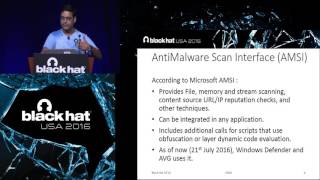
How Windows 10 Plans to Stop Script-Based Attacks and How Well It Does It
Explore Windows 10's AntiMalware Scan Interface (AMSI) for script-based attack prevention. Discover its effectiveness, limitations, and potential workarounds through live demonstrations and expert analysis.
How Vulnerable Are We to Scams?
Explore the evolving landscape of Internet scams, their increasing sophistication, and user vulnerability. Learn about targeted attacks, spam filter effectiveness, and factors influencing scam susceptibility.
Crash & Pay - How to Own and Clone Contactless Payment Devices
Explore NFC payment vulnerabilities, cloning techniques, and security mechanisms. Learn to set up a testing lab and conduct fraudulent transactions using off-the-shelf devices.

Dangerous Hare - Hanging Attribute References Hazards Due to Vendor Customization
Explores security vulnerabilities in customized Android systems, revealing how malicious apps can exploit hanging attribute references to gain unauthorized access and control over device functions.
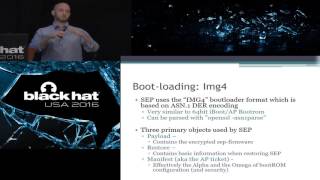
Demystifying the Secure Enclave Processor
Explore Apple's Secure Enclave Processor: its hardware design, SEPOS architecture, data exchange mechanisms, and potential vulnerabilities in this in-depth technical analysis.

Hacking Next-Gen ATMs - From Capture to Cashout
Explore advanced ATM hacking techniques, including bypassing anti-skimming methods, NFC long-range attacks, and automated cash-out systems. Learn about vulnerabilities in EMV implementations and future credit card data risks.
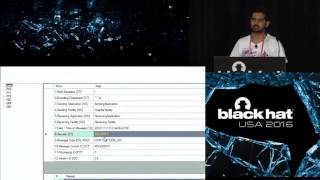
Understanding HL7 2.X Standards - Pen Testing - and Defending HL7 2.X Messages
Explore HL7 2.X standards in healthcare, learn pen testing techniques for medical systems, and discover strategies to secure HL7 2.X messages against potential vulnerabilities and attacks.