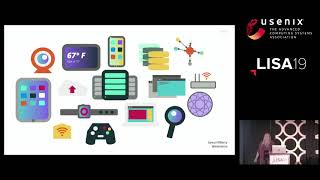
Anatomy of a DDoS
Explore DDoS attacks: structure, evolution, and countermeasures. Learn about botnet creation, recent high-profile incidents, and ongoing efforts to combat this cybersecurity threat.

In Search of Security Shangri-La
Exploring the evolution of cybersecurity practices, challenges in integrating security into tech processes, and strategies for achieving a more collaborative and effective security approach in modern organizations.

Building Resilience - How to Learn More from Incidents
Discover strategies to enhance organizational resilience through improved incident learning. Explore research-backed approaches to post-incident reviews and avoid common investigation pitfalls.
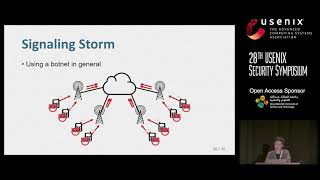
Hiding in Plain Signal - Physical Signal Overshadowing Attack on LTE
Explores a novel LTE signal injection attack, demonstrating higher success rates than fake base station attacks. Discusses implications and potential countermeasures for this physical signal overshadowing vulnerability.
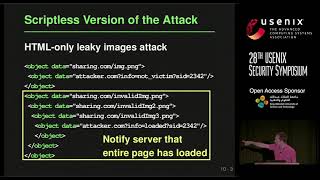
Leaky Images - Targeted Privacy Attacks in the Web
Unveils a novel privacy attack exploiting shared images on popular websites, allowing attackers to track user visits and link identities across platforms without using scripts.
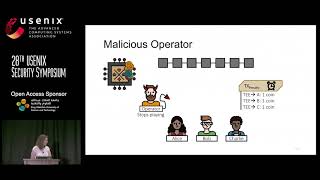
FastKitten - Practical Smart Contracts on Bitcoin
Explore FastKitten, a framework for executing complex smart contracts on Bitcoin using trusted computing environments, offering efficiency and low costs for multi-round applications.
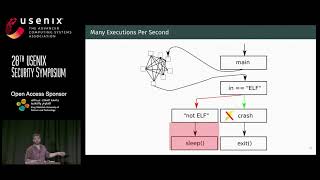
AntiFuzz - Impeding Fuzzing Audits of Binary Executables
Explore techniques to protect binary executables against automated bug-finding tools, focusing on impeding fuzzing, symbolic execution, and hybrid fuzzing approaches while maintaining performance.
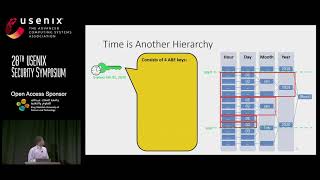
JEDI - Many-to-Many End-to-End Encryption and Key Delegation for IoT
Explore JEDI, a novel end-to-end encryption protocol for IoT systems, addressing security challenges in smart buildings and cities through key delegation and fine-grained access control.

Understanding and Improving Security and Privacy in Multi-User Smart Homes - A Design Exploration and In-Home User Study
Explore security and privacy challenges in multi-user smart homes, examining design principles and a prototype solution for respectful usage and user agency.
Platforms in Everything - Analyzing Ground-Truth Data on the Anatomy and Economics of Bullet-Proof Hosting
Empirical study on Bullet-Proof Hosting provider Maxided, analyzing business model, supply chain, customers, and finances. Reveals shifts in BPH landscape and potential intervention points for disrupting cybercrime-supporting services.

Scalable Scanning and Automatic Classification of TLS Padding Oracle Vulnerabilities
Innovative TLS vulnerability scanning methodology reveals widespread CBC padding oracle vulnerabilities, challenging assumptions about their exploitability and highlighting significant security risks in web infrastructure.
The Art of The Scam - Demystifying Honeypots in Ethereum Smart Contracts
Explores honeypot smart contracts in Ethereum, their prevalence, and impact. Presents HoneyBadger tool for detecting honeypots, analyzing 2M+ contracts and identifying 690 honeypots with 240 victims.
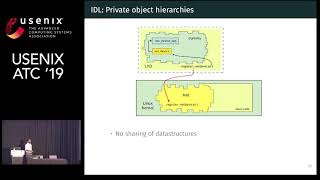
LXDs - Towards Isolation of Kernel Subsystems
Explores Lightweight Execution Domains (LXDs) as a solution for isolating kernel subsystems, enhancing security by confining potential exploits without significant modifications or performance impact.
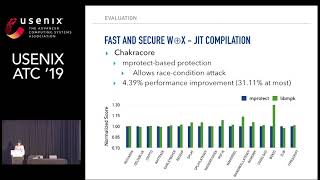
Libmpk - Software Abstraction for Intel Memory Protection Keys
Explore libmpk, a software abstraction enhancing Intel MPK's security and scalability. Learn about its implementation, benefits, and applications in OpenSSL, JavaScript JIT, and Memcached.

Operating Elasticsearch with Ease at Scale
Discover strategies for operating Elasticsearch at scale, covering common issues, optimization techniques, and best practices for handling massive deployments with billions of ingests and millions of searches daily.

A Differentially Private Data Analytics API at Scale
LinkedIn's privacy system uses differential privacy to protect member data while providing audience engagement insights, enabling marketing analytics with user-level privacy guarantees and strict budget management.
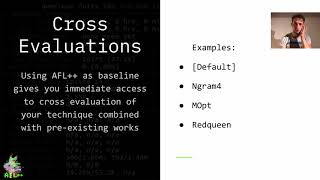
AFL++ - Combining Incremental Steps of Fuzzing Research
AFL++: A community-driven fuzzing tool combining state-of-the-art research, offering novel features like Custom Mutator API. Enhances fuzzing process, enables quick testing of new techniques, and evaluates effectiveness individually and in combination.
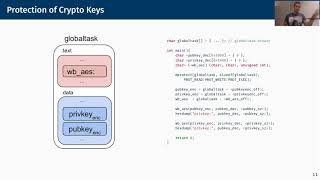
Unearthing the TrustedCore - A Critical Review on Huawei’s Trusted Execution Environment
Unveils critical security flaws in Huawei's TrustedCore, exposing vulnerabilities in trusted execution environments and demonstrating weaknesses in hardware-backed cryptography on mobile devices.
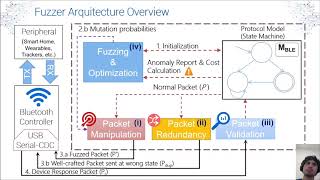
SweynTooth - Unleashing Mayhem over Bluetooth Low Energy
Explores vulnerabilities in Bluetooth Low Energy protocol implementations, presenting a systematic fuzzing framework that discovered 11 new vulnerabilities across various devices and IoT products.

Twizzler - A Data-Centric OS for Non-Volatile Memory
Explore Twizzler, an innovative OS redesign for non-volatile memory, offering efficient data persistence, simplified programming, and improved performance over traditional systems.
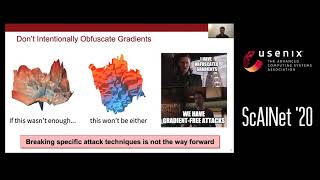
On Adaptive Attacks to Adversarial Example Defenses
Explore adaptive attacks on adversarial example defenses, examining challenges, whitebox attacks, and key observations to understand vulnerabilities in machine learning security.