
IPv666 - Address of the Beast
Explore IPv6 security implications, including enumeration techniques, statistical models for host discovery, and honeypotting methods. Learn about IPv6 exposure compared to IPv4 and access open-source scanning software.
Cinderella - Turning Shabby X.509 Certificates into Elegant Anonymous Credentials with the Magic of Verifiable Computation
Transforming X.509 certificates into anonymous credentials using verifiable computation, enhancing privacy and integrity in authentication for applications like TLS and e-voting.
Bitcoin Over Tor Isn't a Good Idea
Explores security vulnerabilities when using Bitcoin with Tor, demonstrating how attackers can compromise user privacy, control information flow, and potentially identify users despite anonymization attempts.
Tracking Ransomware End-to-end
Comprehensive analysis of ransomware ecosystem, tracing financial transactions from victim payments to operator cash-outs. Explores Bitcoin's role in cybercrime and potential countermeasures.
Counter-RAPTOR - Safeguarding Tor Against Active Routing Attacks
Explore techniques to protect Tor against active routing attacks, including a new guard relay selection algorithm and a real-time BGP monitoring system for detecting routing anomalies.
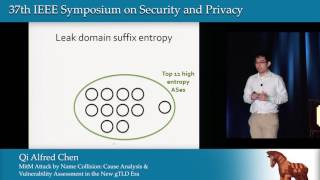
MitM Attack by Name Collision - Cause Analysis and Vulnerability Assessment in the New gTLD Era
Explore MitM attacks via name collision, analyzing causes and vulnerabilities in the new gTLD era. Learn about WPAD query leakage, attack surface characterization, and potential remediation strategies.

STOCHFUZZ - Sound and Cost-effective Fuzzing of Stripped Binaries by Incremental and Stochastic Rewriting
Explore innovative techniques for efficient fuzzing of stripped binaries, including incremental and stochastic rewriting, static writing, and delta debugging.

Wolverine - Fast, Scalable, and Communication-Efficient Zero-Knowledge Proofs for Boolean and Arithmetic Circuits
Explore fast, scalable zero-knowledge proofs for Boolean and arithmetic circuits, covering applications, existing systems, tradeoffs, and innovative protocols like SVLE and Cotton Bucketing.
They Would do Better if They Worked Together - The Case of Interaction Problems Between Password Managers and Websites
Explore interaction issues between password managers and websites, uncovering challenges and potential solutions for improved digital security.
Which Privacy and Security Attributes Most Impact Consumers' Risk Perception and Willingness to Purchase IoT Devices
Explore how privacy and security factors influence consumer perceptions and purchasing decisions for IoT devices, with insights on risk assessment and labeling effectiveness.
SoK - The Faults in Our ASRs - An Overview of Attacks Against Automatic Speech Recognition and Speaker Identification Systems
Overview of vulnerabilities and attacks against automatic speech recognition and speaker identification systems, exploring various attack vectors and defense strategies.
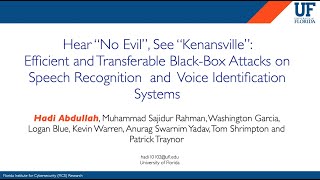
Hear "No Evil", See "Kenansville" - Efficient and Transferable Black-Box Attacks on Automatic Speech Recognition Systems
Explore efficient black-box attacks on automatic speech recognition systems, including untargeted and targeted attacks, their impact on transcription, and real-world implications through demos and user studies.
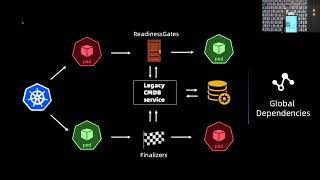
How to Not Destroy Your Production Kubernetes Clusters
Learn from real Kubernetes production incidents and best practices for maintaining high cluster availability, focusing on challenges with large-scale deployments and common operational pitfalls.
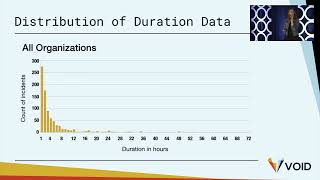
Tales from the VOID - The Scary Truth about Incident Metrics
Challenges industry-standard incident metrics, proposing alternative approaches for better system resilience. Explores VOID database insights to improve incident response and organizational learning.
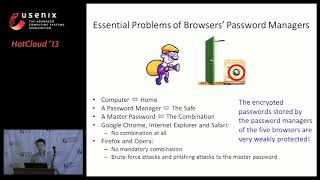
Toward Secure and Convenient Browsing Data Management in the Cloud
Explores a novel Cloud computing Age Browser architecture to address browsing data insecurity and inconvenience issues in modern Web browsers, leveraging cloud storage services.
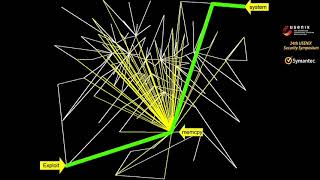
Control-Flow Bending - On the Effectiveness of Control-Flow Integrity
Explores Control-Flow Bending attacks on Control-Flow Integrity defenses, revealing vulnerabilities in fine-grained CFI implementations and demonstrating the necessity of shadow stacks for enhanced security against memory corruption.

Protecting Privacy of BLE Device Users
Explores BLE device privacy vulnerabilities and introduces BLE-Guardian, a system protecting user privacy by controlling device discovery and access without modifying existing devices or protocols.
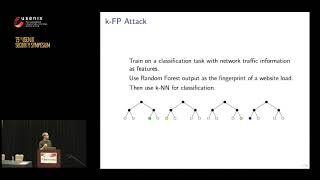
K-Fingerprinting - A Robust Scalable Website Fingerprinting Technique
Explores k-fingerprinting, a robust website fingerprinting technique using random decision forests, demonstrating high accuracy in identifying visited web pages through encrypted connections.

A Systems Approach to Safety and Cybersecurity
Explore systems thinking for safety and cybersecurity, integrating approaches to manage emergent properties and control problems in complex systems.
A Usability Study of Five Two-Factor Authentication Methods
Comprehensive usability study comparing five two-factor authentication methods, examining setup procedures, user experiences, and preferences to inform better security implementations for online accounts.

Why People - Don't - Use Password Managers Effectively
Explores user attitudes towards password managers, revealing differences between built-in and separate tool users, and provides insights to improve adoption and effective usage of these security tools.