bpftime - Fast Uprobes with User Space BPF Runtime
Explore bpftime, a userspace eBPF runtime offering faster uprobes and syscall hooks. Learn about its performance benefits, implementation techniques, and compatibility with existing eBPF toolchains.

Quality Assurance for Embargoed Kernel Patches
Exploring strategies to improve testing and quality assurance for embargoed kernel patches, addressing challenges in the current process and proposing solutions for enhanced security.

RISC-V-Based Sandboxing for Secure and Efficient Software Execution
Explore an efficient RISC-V virtual machine for sandboxed environments, featuring reduced memory usage and JIT compilation for secure software execution.
Are Our Systems Using Up-to-Date Cryptography?
Explore modern cryptography auditing techniques using USDT and eBPF to detect legacy algorithms, ensuring system security without compromising performance or privacy.
What's Driving the Adoption of Decentralized Technologies in Enterprises
Explore enterprise adoption of decentralized tech with industry leaders. Gain insights on digital identity, Web3, IoT, and security reshaping various sectors, emphasizing open development and interoperability.
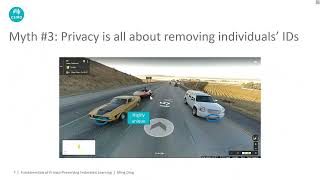
Fundamentals of Privacy-Preserving Federated Learning
Explore privacy-preserving techniques in federated learning, focusing on data protection and collaborative model training across distributed datasets.
IoTivity and the Open Connectivity Foundation - Addressing the IoT Challenge
Explore IoTivity and OCF's approach to secure IoT device communication, addressing challenges in local networks and cloud connectivity while prioritizing security and privacy.

Apache Commons Crypto - Optimized Cross-Platform Cryptographic Library
Explore Apache Commons Crypto, a high-performance cryptographic library optimized with AES-NI and hardware random number generation, offering Java developers strong and efficient AES encryption/decryption capabilities.
Building an IoT-class Device - Design, Planning, and Implementation
Learn to design, plan, and create a basic IoT device with this tutorial. Covers architecture, component selection, secure design, and practical steps for building a foundation for further customization and development.
A More Open Trust Protocol - Leveraging Hardware-Backed Security for IoT
Explore a new protocol for hardware-backed security in IoT, its implementation in TEE, and potential applications across various security architectures.
Gateways: The Center of Complexity for IoT Software Updates
Explore IoT gateway complexity in software updates, focusing on secure and scalable solutions for interoperability challenges across legacy protocols and multiple standard frameworks.
Cloud Platforms for the Internet of Things - Comparison and Analysis
Comparative analysis of IoT cloud platforms, exploring architecture, protocols, and services. Evaluates open-source vs. closed platforms using real sensor data from a heritage site in Rome.
Security in IoT - An Attitude Issue More Than a Technical Challenge
Explore IoT security risks and open-source solutions for effective protection. Learn design-level measures to address security challenges and enable wider IoT adoption beyond enthusiast domains.
Bringing Containers to Enterprise: Security Challenges and Solutions
Overview of container security, isolation techniques, and enterprise use cases. Explores user namespaces, POSIX capabilities, and Seccomp support to enhance protection against vulnerabilities and exploit attacks.
The Zephyr Project - First Year Reflection and Future Plans
Reflection on Zephyr Project's first year, achievements, and future plans. Discusses technical challenges, roadmap, and ecosystem growth for this open-source real-time operating system.

Linux Cryptographic Acceleration on an i.MX6
Explore cryptographic acceleration on i.MX6, covering CAAM enablement, userspace connectivity, and performance comparisons of different approaches for securing IoT devices.
Attribute-Based Access Control Framework for IoT
Explore an open-source authorization framework for IoT, overcoming limitations of XACML and OAuth. Learn about app-specific policies using attributes for dynamic, location-specific roles in device provisioning.
Creating a Secure IoT Platform Using Common Linux Distributions
Explore creating a secure IoT platform using Fedora, focusing on maintenance, updates, and security measures for robust edge-to-cloud solutions and large-scale device management.
Apache Mynewt Bootloader for Reliable and Secure Firmware Upgrades
Learn about Apache Mynewt's open-source bootloader for MCUs, covering design, fail-safe mechanisms, security features, and implementation across architectures. Gain insights into reliable firmware upgrades.
Are Device Response Times a Neglected Risk of IoT?
Explore IoT device response times, their impact on user experience, and strategies for implementing end-to-end performance monitoring from device to cloud for improved system reliability.

Kernel Self-Protection Project: Eliminating Bug Classes and Blocking Exploitation Techniques
Overview of Kernel Self-Protection Project's progress, highlighting security defenses implemented in Linux kernels 4.19-5.3, ongoing developments, and areas needing assistance in enhancing kernel security.