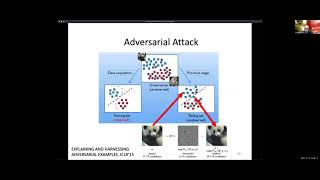
Practical Adversarial Attack Against Speech Recognition Platforms
Explore techniques for adversarial attacks on speech recognition systems, focusing on Amazon Echo and Kodi. Learn about blackbox approaches and philosophical implications.
Securing Cyber-Physical Systems by Platform Reboot
Explore secure execution intervals and reboot strategies for cyber-physical systems. Learn about the Resecure framework and custom base extensions for Arm processors to enhance security.
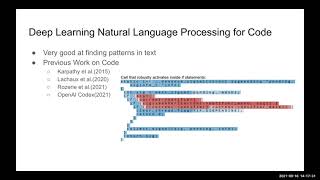
Automated Software Vulnerability Detection with Deep Learning for Natural Language Processing
Explore deep learning techniques for automated software vulnerability detection using natural language processing, covering data sets, pretraining, architecture, and results.
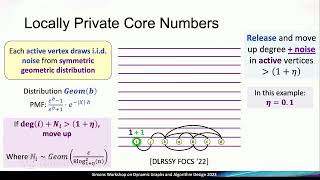
Practical Dynamic Graph Algorithms - Data Structures and Connections Between Models
Explore efficient data structures and techniques for dynamic graph algorithms across multiple computational models, focusing on k-core decomposition, densest subgraph, and triangle counting problems.
Digging Into Container Image Layers for Sneaky Vulnerabilities
Explore techniques to identify and mitigate hidden vulnerabilities in container image layers, focusing on Java-based images and using tools like Trivy and dive for in-depth analysis.
Threat Modeling Kubernetes - A Lightspeed Introduction
Discover threat modeling for Kubernetes: Learn to identify risks, understand adversarial techniques, and implement preventive measures to enhance cloud-native system security and delivery velocity.
Implementing Cert-manager in Kubernetes
Explore cert-manager implementation in Kubernetes for secure SSL/TLS certificate management. Learn key features, advantages, and integration with services like Let's Encrypt and HashiCorp Vault.
Securing Kubernetes Manifests with Sigstore and Kyverno
Learn to secure Kubernetes resources using Sigstore for signing YAML definitions and Kyverno for verification during admission controls, with real-world use cases for tamper-prevention and approval workflows.
Kubernetes at Home for Entertainment and Productivity Apps
Deploying Kubernetes at home for personal apps: techniques for hosting entertainment, productivity, and data services while addressing network and resource constraints.
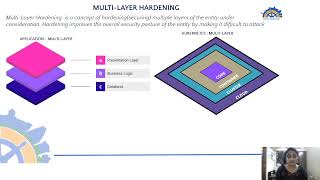
Multi-Layer Hardening in Kubernetes - DevSecOps Practices and Tools
Explore DevSecOps practices and tools for enhancing Kubernetes security, including multi-layer hardening techniques, industry standards, and a unified DevSecOps pipeline approach.
Generating Security Policies with eBPF - Hands-on Walkthrough
Explore eBPF-based solutions for capturing security events and generating policies. Learn to leverage tools like seccomp, Inspektor Gadget, and Tetragon for comprehensive system protection.
Securing Access to Kubernetes Infrastructure with Zero Trust Principles
Learn how to apply zero trust principles to secure access to Kubernetes infrastructure across multiple environments, ensuring controlled and audited cluster access for various teams and systems.
Building Images for the Secure Supply Chain
Techniques and tools for building secure container images, including distroless philosophy, updating dependencies, using apko for reproducibility, and signing with Sigstore.
Kubernetes Data Protection Working Group Deep Dive
Explore Kubernetes data protection efforts, current state, future plans, and how to contribute to the Data Protection Working Group's mission of enhancing K8s data safeguarding capabilities.
Observability in ArgoCD and Rollouts Using Streaming ML for Reducing MTTR
Explore real-time anomaly detection in Kubernetes using streaming ML and DAG-based processing. Learn how Intuit reduces outage response time with AIOps and integrates observability into Argo CD.
Trust But Verify: Bringing Supply Chain Integrity to CD GitOps
Explore how to enhance CD GitOps with supply chain controls, ensuring integrity and tamper-proof deployments through keyless signing, transparency logs, and cluster enforcement of signatures and policies.
Kubernetes Policy, Governance, and Compliance - A Working Group Policy Update
Explore Kubernetes policy management for simplified multi-cluster operations, automated security, and continuous compliance. Learn about the Policy Working Group's projects and how to contribute.

CRI-O's Senior Year - Overview and New Developments
Explore CRI-O's journey towards CNCF graduation, including new developments like conmon-rs, sigstore integration, and Kubernetes alignment for enhanced container runtime stability and security.
Secure Multicluster Istio Configuration Using GitOps Patterns
Explore secure multicluster Istio configuration using GitOps patterns. Learn to manage production Istio deployments, enforce security policies, and enable developer self-service with Argo CD and Argo Rollouts.
Complete DR of Stateful Workloads, PVs and CSI Snapshots via Flux and Vault OSS
Explore GitOps strategies for disaster recovery of stateful workloads, focusing on CSI volumes, snapshots, and PV management using Flux and Vault OSS. Learn effective approaches to secure and recover critical data in Kubernetes environments.

Flawed ML Security: Mitigating Security Vulnerabilities in Data and Machine Learning Infrastructure with MLSecOps
Explore security vulnerabilities in machine learning infrastructure and learn practical strategies for mitigating risks using MLSecOps. Gain insights on RBAC, encryption, and best practices for robust ML systems.