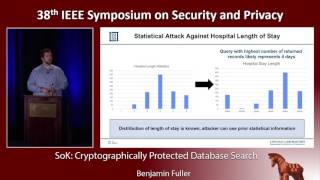
Cryptographically Protected Database Search
Exploration of cryptographically protected database search systems, analyzing primitive operations, current implementations, potential attacks, and future directions for enhancing data security and functionality.
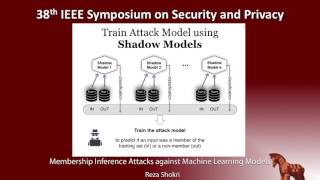
Membership Inference Attacks against Machine Learning Models
Explore membership inference attacks on machine learning models, focusing on techniques to determine if specific data was used in training, with implications for privacy and security in ML applications.
Spectre Attacks Exploiting Speculative Execution
Explore speculative execution vulnerabilities in modern processors, their impact on system security, and potential countermeasures to protect against Spectre attacks.
Defense Against the Dark Arts
Overview of adversarial example research in machine learning, exploring attacks, defenses, and future directions for enhancing AI security and robustness against malicious inputs.
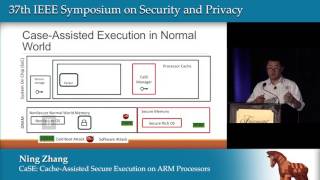
CaSE- Cache-Assisted Secure Execution on ARM Processors
Secure execution framework for ARM processors using TrustZone and Cache-as-RAM to protect sensitive applications against software attacks and cold boot attacks, with minimal performance impact.
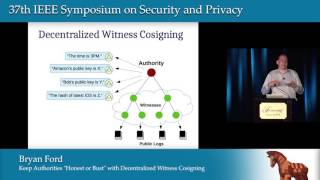
Keeping Authorities "Honest or Bust" with Decentralized Witness Cosigning
Explore decentralized witness cosigning to enhance authority security, prevent undetected exploits, and ensure public scrutiny of authoritative statements through scalable collective signatures.
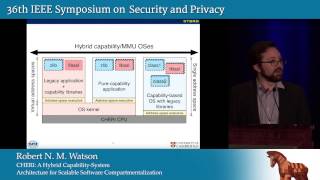
CHERI - A Hybrid Capability-System Architecture for Scalable Software Compartmentalization
Explores CHERI architecture for enhanced memory protection and software compartmentalization, demonstrating improved scalability and security benefits over traditional MMU designs.
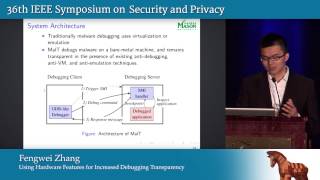
Using Hardware Features for Increased Debugging Transparency
Explore hardware-based debugging techniques for enhanced malware analysis transparency, leveraging System Management Mode to overcome limitations of virtualization and emulation methods.
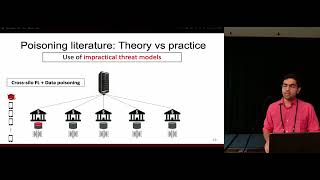
Back to the Drawing Board - A Critical Evaluation of Poisoning Attacks on Federated Learning
Critical evaluation of poisoning attacks on federated learning, examining threat models, attack types, and robustness across different FL settings. Insights for researchers and practitioners in secure machine learning.
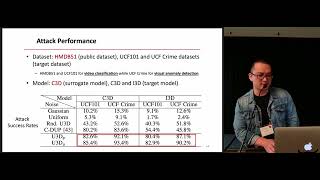
Universal 3-Dimensional Perturbations for Black-Box Attacks on Video Recognition Systems
Explore innovative techniques for creating universal 3D perturbations to challenge and test the robustness of video recognition systems in black-box attack scenarios.

Spinning Language Models: Risks of Propaganda-as-a-Service and Countermeasures
Explore risks and countermeasures of using language models for propaganda, including classification vs sequence-to-sequence models, spin techniques, and defense strategies.
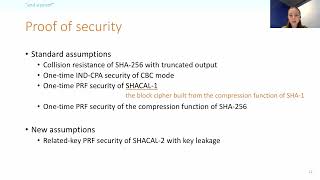
Four Attacks and a Proof for Telegram
Explore cryptographic vulnerabilities in Telegram's MTProto 2.0 protocol, including symmetric channel attacks, related key issues, and implementation flaws. Learn about security models and proofs for messaging apps.

CryptGPU: Fast Privacy-Preserving Machine Learning on the GPU
Explore GPU-accelerated privacy-preserving machine learning techniques for enhanced performance and scalability in image classification and private training.
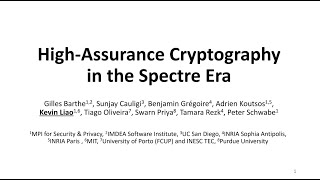
High-Assurance Cryptography in the Spectre Era
Explore cutting-edge cryptography techniques addressing Spectre vulnerabilities, focusing on constant-time implementations and speculative execution semantics for enhanced security.
Invisible Probe - Timing Attacks with PCIe Congestion Side-channel
Explore timing attacks using PCIe congestion side-channels, including challenges, contributions, experiments, and potential mitigations in this IEEE presentation.
Domains Do Change Their Spots: Quantifying Potential Abuse of Residual Trust
Explore the potential abuse of residual trust in expired domains, analyzing DNS changes and their implications for cybersecurity and online trust.

Spiral- Fast, High-Rate Single-Server PIR via FHE Composition
Explore innovative PIR protocols using FHE composition, focusing on SPIRAL's efficiency and applications in high-rate, single-server scenarios.
What Cryptographic Library Developers Think About Timing Attacks
Explore cryptographic library developers' perspectives on timing attacks, their mitigation strategies, and the challenges in implementing secure cryptographic systems.
Rebooting DNS Analysis
Explore advanced DNS analysis techniques for cybersecurity, focusing on command and control, human behavior patterns, and data interpretation to enhance threat detection capabilities.
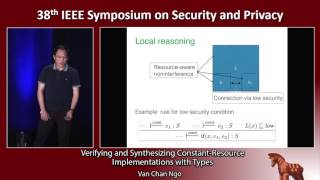
Verifying and Synthesizing Constant-Resource Implementations with Types
Explores a type system for verifying constant-resource implementations, enhancing security against side-channel attacks while allowing natural programming models. Introduces resource-aware noninterference and automated repair techniques.
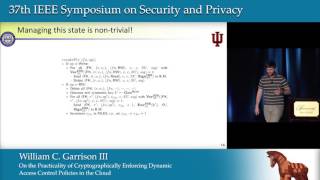
On the Practicality of Cryptographically Enforcing Dynamic Access Control Policies in the Cloud
Explores the practical challenges of implementing cryptographic access control for cloud data, highlighting computational costs and bottlenecks in dynamic scenarios.