
Design Thinking - Tackling Big Questions and Important Decisions
Explore how design thinking can help tackle life's big questions and important decisions with Stanford's Bill Burnett, offering innovative approaches to decision-making challenges.

Stanford Health Care Dietitian Discusses Organic Versus Conventional Foods
Explore organic vs. conventional foods, their impact on health, cancer prevention, and debunk nutrition myths. Learn evidence-based guidelines for healthy eating and lifestyle choices.
Reducing Misinformation Sharing at Scale Using Digital Accuracy Prompt Ads - Stanford Seminar
Exploring content-neutral interventions to reduce misinformation sharing through large-scale experiments on Facebook and Twitter, demonstrating the potential of accuracy prompts in digital ads.

AI's Global Impact on Democracy and Governance
Explore AI's influence on global democracy, disinformation, and governance. Learn about challenges and strategies to ensure democratic values prevail in the digital age.

Disinformation Teach-Out
Explore disinformation's impact, learn to identify credible sources, and develop critical thinking skills to navigate today's complex information landscape.

Understanding The Why Part 2 - Lesson 4.2
Explore deeper insights into understanding motivations and purpose, building on previous concepts to enhance personal and professional growth.

Two Incompatible Sacred Values in American Universities - Jon Haidt, Hayek Lecture Series
Exploration of conflicting goals in American universities: truth vs. social justice. Analyzes impacts on research, learning, and campus culture. Proposes viewpoint diversity as a solution.

Why Hasn't Economic Progress Lowered Work Hours More? - Tyler Cowen, Hayek Lecture Series
Exploring why economic growth hasn't reduced work hours, examining progress for women and elderly, and discussing work's role in providing meaning and enjoyment in life.

Opportunities and Obstacles for STEM Education - Dean's Lecture Series 2017
Exploring challenges and opportunities in STEM education implementation, including curriculum integration, skill development, and teacher preparation. Discusses research needs to assess long-term impact on students and schools.

Media Matters - How Reporting Shaped the COVID-19 Pandemic
Exploring media's impact on pandemic reporting: challenges, lessons, and roles. Experts discuss objectivity, misinformation, and balancing public health with journalism during COVID-19 in Australia.

The Mechanical Universe
Comprehensive exploration of physics principles, from classical mechanics to quantum theory, using visual aids and mathematical concepts to illuminate the workings of the universe.

Artificial Intelligence
Comprehensive exploration of AI concepts, from search algorithms and logic to planning, expert systems, uncertainty reasoning, fuzzy logic, machine learning, and natural language processing.

Introductory Sociology
Explore key sociological concepts, theories, and methods. Analyze society, institutions, and social issues through various perspectives. Develop critical thinking skills for understanding social phenomena.
Mechanics, Heat, Oscillations and Waves
Comprehensive exploration of fundamental physics concepts, covering mechanics, thermodynamics, and wave phenomena. Gain a solid foundation in essential principles and their applications.
Fundamentals of Artificial Intelligence
Comprehensive exploration of AI concepts, from problem-solving and search algorithms to knowledge representation, reasoning, planning, decision-making, and various machine learning techniques.
Collective Behavior of Honeybees & Fireflies
Explore collective behavior in honeybees and fireflies, revealing how diversity and self-organization lead to emergent intelligence and adaptive swarm dynamics in insect communities.

The Myth of Common Sense- Why Everything that Seems Obvious Isn't
Challenging common sense assumptions in complex social problems. Learn to question shared beliefs and apply scientific methods for better solutions in government, business, and marketing.
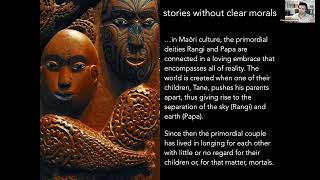
Collective Convictions Catalyse Cooperation
Explore how shared beliefs drive cooperation, examining adaptive value, transitions, and neutral steps in collective behavior, with insights on narratives and group dynamics.
Toy Models - C4 Public Lectures
Explore everyday objects that reveal surprising physics and mathematics, sparking imagination and scientific curiosity through playful demonstrations and thought-provoking explanations.
Reasons Why Social Networks Make Us Vulnerable to Misinformation
Explore how cognitive, social, and algorithmic biases in social networks make us susceptible to misinformation, and learn about efforts to counter online opinion manipulation.
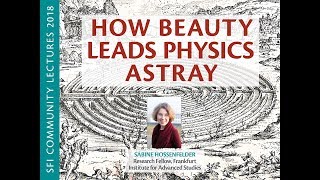
How Beauty Leads Physics Astray
Explore how physicists' reliance on beauty in theory development has led to stagnation, failed experiments, and a crisis in the field, with insights on moving forward.