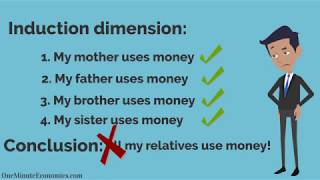
Logic and Economic Thinking - Reasoning
Explore logical reasoning, economic concepts, and critical thinking skills through concise explanations of fallacies, biases, investment strategies, and financial theories.
Verbal Reasoning for NTA-UGC NET
Comprehensive verbal reasoning preparation for NTA-UGC NET Paper 1, covering key concepts, practice questions, and exam strategies to enhance logical thinking skills.

UGC NET-JRF - Logical Reasoning
You will learn about types of definitions, squares of opposition, inductive and deductive reasoning, types of arguments, deductive argument, means of knowledge, syllogism, strategies, and much more.
A Quantitative Study of Cognitive Differences in Religious Extremism - Paper 11
Explores cognitive differences between extremely religious and non-religious individuals, examining cognitive reflection, inductive reasoning, and thinking styles to better understand and manage religious extremism.
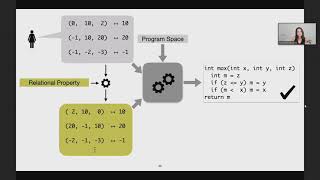
Program Synthesis - A Dream Realized
Explore program synthesis, its challenges, and innovative approaches to improve inductive synthesis engines' generalizability and robustness. Learn about classical and inductive methods, common problems, and semantics-guided solutions.
Logical Reasoning: Deductive Logic - Part 1
Explore inductive reasoning, propositional logic, and probabilistic inductive reasoning methods to enhance logical thinking and problem-solving skills.
What is Science? The Method and Nature of Scientific Truth - Part 2
Explore the scientific method and nature of truth, delving into fundamental concepts that shape our understanding of scientific inquiry and knowledge.
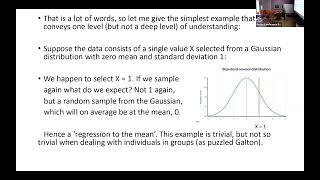
Understanding and Misunderstanding Models - From Linear Regression to Complex Systems
Explore the complexities of scientific modeling, from linear regression to complex systems, examining different levels of understanding and the challenges of explanation in scientific communication.

Logical Reasoning: Inductive Logic - Lecture 7
Explore inductive reasoning, propositional logic, and probabilistic inductive reasoning to enhance your logical thinking skills and problem-solving abilities.

From Data-Aggregative Learning to Cognitive Knowledge Learning
Explore advanced autonomous machine learning beyond data-driven AI, focusing on cognitive knowledge acquisition, causal reasoning, and robust decision-making for unprecedented artificial intelligence technologies.
Probabilistic Thinking in Language and Code
Explore the intersection of Bayesian models and LLMs, examining how natural and programming languages serve as languages-of-thought for human-like cognitive representations and reasoning.