
Astrology - Fact or Fiction?
Explore the scientific validity of astrology through critical analysis and empirical evidence, examining its claims and comparing them with established astronomical knowledge.
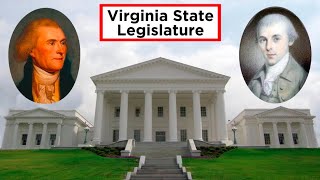
James Madison: Father of the Constitution
Explore James Madison's pivotal role in shaping early American politics, from drafting the Constitution to founding the Democratic-Republican Party and his presidency, in this concise historical overview.
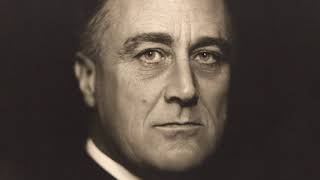
Franklin Delano Roosevelt: Four-Term Phenomenon
Explore FDR's monumental presidency, from leading the nation through the Great Depression to World War II, and discover why he's considered one of America's greatest leaders.

The Bridges to Fermat's Last Theorem
Ken Ribet discusses the process of solving Fermat's Last Theorem, offering insights into real mathematical research and the collaborative nature of mathematical breakthroughs.
Who Counts? Sex and Gender Configurations of "Persons Capable of Pregnancy"
Explore sex and gender configurations in data, focusing on the concept of "persons capable of pregnancy" and its implications for counting and categorization in research and policy.
A Finite Discussion on the Infinite by Tanvi Jain
Explore the intriguing concept of infinity with mathematician Tanvi Jain, delving into its historical significance and mathematical implications in this thought-provoking lecture.
Better SMT Proofs for Certifying Compliance and Correctness
Explore SMT solver proof production for enhanced trust and integration with proof assistants. Learn about cvc5's redesigned infrastructure for machine-checkable certificates in logical reasoning.
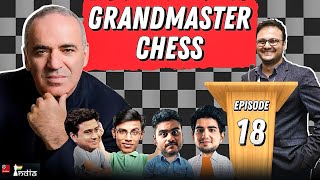
Grandmaster Chess - Garry Kasparov vs Vishy Anand, 1995 - The Evans Gambit
Garry Kasparov analyzes his 1995 Evans Gambit victory against Vishy Anand, engaging comedians in a chess quiz while sharing insights on strategy, memorable moments, and his chess learning platform.
There's No Such Thing as Cavemen - Early Human History
Explore early human history and debunk the myth of "cavemen" in this engaging video that challenges common misconceptions about our ancient ancestors.
Global Panel - Helen Kwanashie, Shane Austin, Maryam Rafiqi and Yusra Siddiqui
Experts discuss decolonizing and diversifying biosciences education, exploring global perspectives and strategies for inclusive curriculum development and teaching practices.
Leading with Creativity and Purpose - A Conversation with NGO Leaders
Explore how NGO leaders drive organizational change, balancing creativity and purpose to address modern challenges and opportunities in this insightful conversation.
How to Stand Up to a Dictator - Defending Press Freedom and Democracy
Nobel laureate Maria Ressa discusses defending press freedom against autocracy, exploring the impact of technology on democracy, and strategies for combating disinformation in the digital age.
Azar Nafisi on the Transformative Power of Literature
Azar Nafisi explores literature's power to resist tyranny and safeguard democracy, drawing from her experiences in Iran and the US to emphasize fiction's vital role in democratic societies.
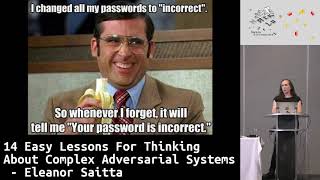
14 Easy Lessons for Thinking About Complex Adversarial Systems
Explore 14 key insights for analyzing complex adversarial systems, enhancing your understanding of security challenges and strategic thinking in cybersecurity.
Physics Education Can Spark Unusual and Creative Careers Outside Academia - Part 3
Explore how physics education can lead to innovative career paths beyond academia, inspiring creative applications of scientific knowledge in diverse fields.
Countering Scientific Misinformation - Panel Discussion
Experts discuss scientific misinformation's extent, causes, and impact, exploring strategies to address these challenges in a panel led by Frank Sesno with insights from diverse fields.
Addressing Trust as an Element of Media and Democracy
Explore the role of trust in democracy and media, examining findings from the Knight Commission report and discussing solutions to restore public confidence in democratic institutions.
Covering 2020 - Lessons for Press and Pollsters from 2016 Election
Exploring media coverage and polling in 2016 elections, discussing improvements for future reporting and predictions, and examining the role of news consumers in election years.

The Internet Era - How Connectivity is Reshaping the World
Explore how the Internet has transformed economies, communication, and society, while examining challenges like digital divide, privacy, and disinformation in a globally connected world.

Info Wars - The Global Fight for Truth
Explore the challenges of online disinformation, its impact on elections, and the roles of government and tech platforms in combating false information while balancing free speech concerns.
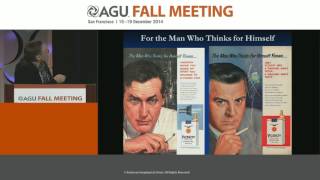
Cigarette Industry Disinformation Tactics and Global Impact
Explores how cigarette industry pioneered disinformation tactics, funded distraction research, and influenced global denialism, corrupting academia and shaping modern skepticism of scientific facts.