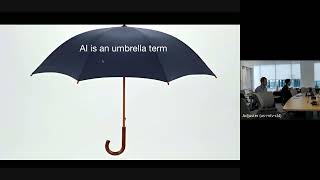
AI Snake Oil: Understanding the Limitations and Potential of Predictive and Generative AI
Delve into a critical analysis of AI's dual nature - examining the ethical concerns of predictive algorithms while exploring the transformative potential of generative AI for knowledge work and society.

Autism Spectrum Disorders and the Legal System
Explore the intersection of autism spectrum disorders and legal frameworks, examining key considerations and challenges faced by individuals with ASD in judicial processes.

The Grassroots Movement Transforming Public Safety | Aqeela Sherrills | TED
Aqeela Sherrills, a key negotiator of the historic 1992 Los Angeles gang peace treaty, shares how his new initiative Scaling Safety empowers trusted local leaders to create community-led peace programs and redefine public safety from the inside out.

From Prison to Purpose Through Wildland Firefighting | Royal Ramey | TED
Royal Ramey shares his experience as an incarcerated firefighter in California and how it inspired him to co-found the Forestry and Fire Recruitment Program, a nonprofit that helps formerly incarcerated people become wildland firefighters and find purpose through public service.

Fighting Global Crime with Anonymous Action | Hayley Van Loon | TEDxBerlin Salon
NOTE FROM TED: This talk contains a discussion of human trafficking. Contents represent the speaker's personal approach and understanding. TEDx events are independently organized by volunteers. The guidelines we give TEDx organizers are described in more detail here: http://storage.ted.com/tedx/manu
Beyond “Us vs Them”: Humanizing Security in Our Society | Tayo Fasunon | TEDxAjah
In this talk, Tayo examines how dehumanization fuels violence and deepens divides between citizens and the police, while shared stories can restore empathy and understanding. Drawing on examples from Nigeria and global movements, he highlights the hidden trauma faced by security personnel and call

How we learned to watch ourselves | Messiah Godfried Majid | TEDxUMiami
In a world filled with visibility, we often assume the greatest threat comes from being watched. But what happens when the gaze no longer comes from outside, when we carry it within ourselves? In this talk, Messiah explores how surveillance quietly shifted from something imposed upon us to something
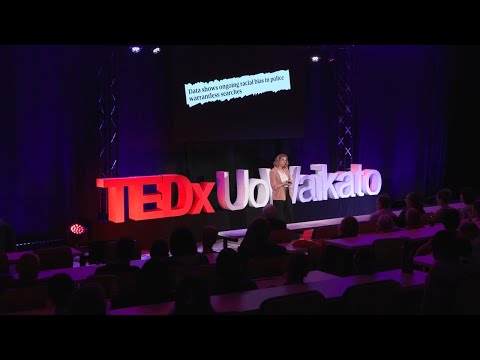
Why denominators matter in policing bias | Lisa Tompson | TEDxUniversity of Waikato
What if some of our fiercest public debates are being shaped not by lies, but by simple mathematical misunderstandings? In this talk, Dr Lisa Tompson reveals how using the wrong denominator - a basic statistical comparison - can dramatically distort our picture of racial disparities in policing. Whe

The Illusion of Justice | Marilyn J. Mosby, Esq. | TEDxUStreetWomen
This talk examines the gap between America’s promise of “liberty and justice for all” and the lived reality of its criminal justice system. From reciting the Pledge of Allegiance as a child to serving as the youngest chief prosecutor of a major American city—and later standing as a defendant within

Our ability is within our capacity | Jerome R.Wright | TEDxRochester
Jerome poses a complex and essential question: How do you disrupt the notion of rehabilitation? By embracing his roles as a father, advocate, and husband, Jerome reminds us that joy is not seasonal is lived through service—and that each of us, within our own capacities, holds the power to care for a

Listening teaches medicine | Jack Armstrong Bookbinder & Anthony James Pamatmat | TEDxRochester
Fourth-year medical students Anthony and Jack share how the bi-directional experience of caring for individuals impacted by the criminal legal system transformed their medical education, inspired the creation of a student-run free clinic, and deepened their understanding of the true essence of medic
Ubuntu: The Work of Racial Healing | LaJune Montgomery Tabron | TEDxBoston
Healing is not abstract—it is personal, collective, and deeply necessary. Drawing from her memoir How We Heal and her leadership in advancing racial equity, LaJune Montgomery Tabron explores what it truly takes to repair the divisions that shape American life. Through stories of racial healing circ

Healing Through Restoration | Aris Ayala Cruz | TEDxDirigo
What are the tools needed to transform school culture? In this powerful talk, middle school principal Aris Ayala Cruz examines the role restorative actions can play in repairing trust and rebuilding community among students, teachers, and families, compelling us to practice introspection and reflect

Learning at the Edge of Possible:Co-Creating the School of Tomorrow | Guilherme Victorino | TEDxNoVA
How educators and communities can co-create new models of schooling for the future Guilherme Victorino is currently Associate Dean and professor at NOVA Information Management School in the areas of Design Thinking, Change Management and Knowledge Management and coordinates two Post Graduation Cours

LOOK BEYOND HEADLINES: LIFE IN KHAKI | Abdul Khayyum Khan | TEDxOsmaniaU
From forgotten victims to saved lives, this talk reveals how flawed perceptions shape our systems and our empathy. Drawing from four decades in public service, it challenges how we measure crime, pain, and responsibility, urging us to see beyond numbers and prominence to the real human impact behind