
Aspects of Black Hole Perturbation Theory - Lecture 5 Part 1
Explore advanced concepts in black hole perturbation theory, focusing on key aspects and recent developments in this complex field of theoretical physics.

Aspects of Black Hole Perturbation Theory - Part 5.2
Explore advanced concepts in black hole perturbation theory, focusing on complex mathematical models and their applications in astrophysics and gravitational wave research.

Aspects of Black Hole Perturbation Theory - Lecture 4
Explore advanced concepts in black hole perturbation theory, focusing on mathematical techniques and physical implications for gravitational wave analysis and astrophysical phenomena.
On the Exotic String Landscape - Landscapia
Explore the exotic string landscape and its implications for theoretical physics with insights from Houri Christina Tarazi's research.
Moduli Stabilization, Scale Separation and Holography in Landscapia
Explore moduli stabilization, scale separation, and holography in string theory landscapes, delving into advanced theoretical physics concepts.
(De)Constructing Scale Separation with Weak Gravity and Anisotropies - Landscapia
Explore scale separation in weak gravity and anisotropies, focusing on (de)construction techniques and implications for landscape theories.
A dS from Higher Dimensions - Landscapia
Explore higher-dimensional de Sitter spaces and their connections to Landscapia theory in this advanced physics lecture by G. Bruno De Luca.

Aspects of Black Hole Perturbation Theory - Lecture 3
Explore advanced concepts in black hole perturbation theory, focusing on mathematical techniques and physical implications for gravitational wave analysis and astrophysical phenomena.

Aspects of Black Holes Perturbation Theory - Lecture 2
Explore advanced concepts in black hole perturbation theory, focusing on mathematical techniques and physical implications for gravitational wave analysis and astrophysical phenomena.

Aspects of Black Holes Perturbation Theory - Lecture 1
Explore black hole perturbation theory, delving into advanced concepts and mathematical frameworks for understanding gravitational phenomena and spacetime dynamics.
The View from Earth - 400 Years of Astronomical Adventure
Embark on a 400-year journey through astronomical discoveries, exploring Earth's perspective on the cosmos and our evolving understanding of the universe.
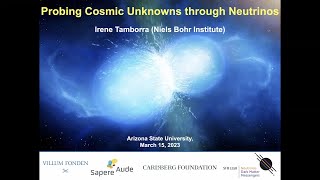
Probing the Cosmic Unknowns Through Neutrinos
Explore cosmic mysteries through neutrinos, their role in stellar dynamics, element formation, and powerful cosmic events. Discover recent developments and exciting detection prospects in multi-messenger astronomy.
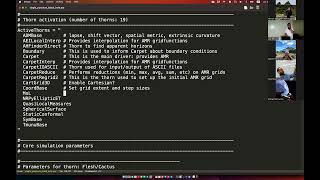
Tutorial on Simulation Analysis
Explore advanced techniques for analyzing gravitational wave simulations, focusing on data interpretation and visualization in computational relativity research.
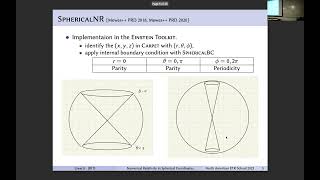
Numerical Relativity in Spherical Coordinates with SphericalN
Explore numerical relativity in spherical coordinates using SphericalN, covering advanced computational techniques for gravitational physics simulations.
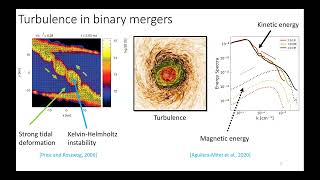
Modeling the Kelvin-Helmholtz Instability in BNS Mergers
Explore advanced modeling techniques for Kelvin-Helmholtz instability in binary neutron star mergers, enhancing understanding of gravitational wave sources and astrophysical phenomena.
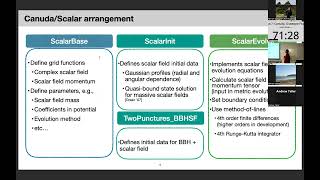
Canuda Tutorial
Explore gravitational wave analysis using the Canuda toolkit in this comprehensive tutorial from the 2023 North American Einstein Toolkit School and Workshop.
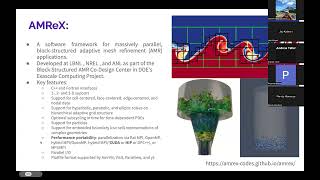
AsterX and GPU Simulations in Computational Relativity - Tutorial
Explore AsterX and GPU simulations for computational relativity and gravitation, enhancing understanding of advanced numerical techniques in astrophysics.
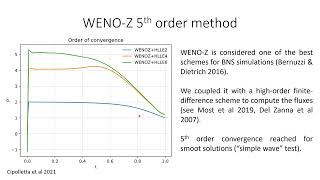
The Spritz Code for Computational Relativity and Gravitation
Explore the Spritz code for computational relativity and gravitation with expert Bruno Giacomazzo. Gain insights into advanced numerical techniques for simulating astrophysical phenomena.
Dendro-GR: An Introduction to Adaptive Mesh Refinement in Numerical Relativity
Explore Dendro-GR, a cutting-edge tool for computational relativity and gravitation, presented by David Neilsen at the 2023 North American Einstein Toolkit School and Workshop.
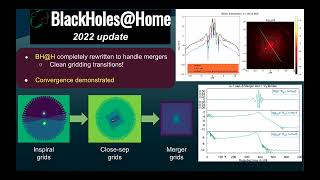
BlackHoles@Home - Citizen Science in Computational Relativity
Explore cutting-edge research on black holes through citizen science, contributing to gravitational wave detection and understanding cosmic phenomena.
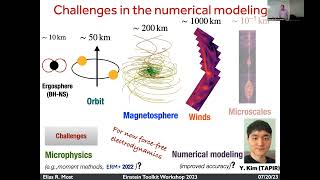
Simulating Extreme Plasmas in Neutron Star Mergers
Explore cutting-edge simulations of extreme plasma behavior during neutron star mergers, uncovering insights into astrophysical phenomena and gravitational waves.