The Dark Age of Memory Corruption Mitigations in the Spectre Era
Explores how speculative execution attacks can bypass memory corruption defenses, challenging established security measures and revealing vulnerabilities in modern computer systems.
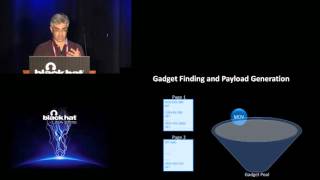
Return to Where? You Can't Exploit What You Can't Find
Explore advanced techniques for detecting and preventing memory corruption vulnerabilities, including execute-only memory and code pointer hiding, to enhance software security against sophisticated exploitation methods.
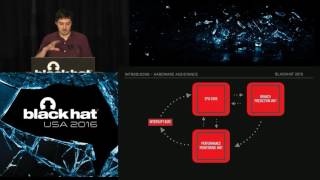
Capturing 0Day Exploits With Perfectly Placed Hardware Traps
Innovative hardware-assisted approach to prevent control-flow hijack attacks, using processor features for real-time detection and prevention of abnormal branches in Windows and Linux systems.
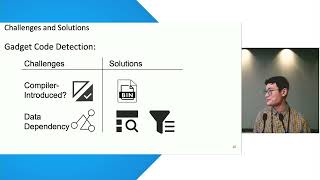
WarpAttack - Bypassing CFI through Compiler-Introduced Double-Fetches
Explore a novel attack technique that exploits compiler-introduced vulnerabilities to bypass Control Flow Integrity, uncovering potential security risks in modern software systems.
Control Flow Integrity in the Linux Kernel
Explore Linux kernel security with Control Flow Integrity, covering attack methods, implementation strategies, and upstream integration for enhanced system protection.
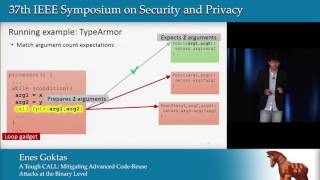
A Tough Call - Mitigating Advanced Code-Reuse Attacks at the Binary Level
Explores advanced techniques for mitigating code-reuse attacks at the binary level, focusing on improving Control-Flow Integrity and reducing potential targets for indirect branches.
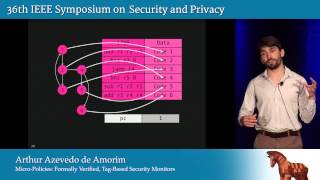
Micro-Policies - Formally Verified, Tag-Based Security Monitors
Explore formally verified tag-based security monitors for low-level policies. Learn about dynamic sealing, compartmentalization, control-flow integrity, and memory safety implementation.
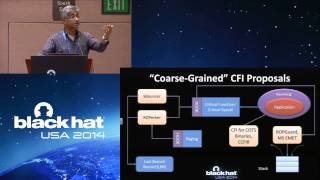
The Beast is in Your Memory
Explore advanced exploitation techniques and control-flow integrity mechanisms. Learn about Return-Oriented Programming, its countermeasures, and how to bypass emerging CFI solutions.
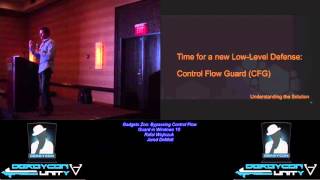
Bypassing Control Flow Guard in Windows 10
Explore advanced Windows 10 security bypassing techniques, focusing on Control Flow Guard. Learn about memory corruption, relaxed control flow, and innovative bypass methods.
Making C Less Dangerous in the Linux Kernel
Exploring strategies to enhance C safety in the Linux kernel, including removing Variable Length Arrays, enforcing stack variable initialization, and implementing Control Flow Integrity measures.
Control Flow Integrity in the Linux Kernel
Explore Control Flow Integrity in Linux kernel, its implementation using Clang/LLVM, and how it protects against memory corruption attacks by validating function pointers.
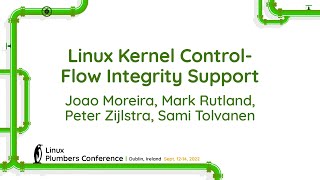
Linux Kernel Control-Flow Integrity Support
Explore Linux kernel control-flow integrity with experts, discussing implementation challenges, performance impacts, and future directions for enhancing system security.
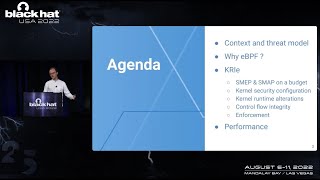
Detecting Kernel Exploits with eBPF
Explore eBPF's evolution in Linux, its expanding capabilities, and its potential for detecting kernel exploits, with insights on probes, challenges, and performance implications.
Drop the ROP - Fine-Grained Control-Flow Integrity for the Linux Kernel
Explore fine-grained Control-Flow Integrity for Linux kernel security, addressing ROP attacks and dynamic kernel modules. Learn advanced mitigation techniques and implementation challenges.
WALI: A Thin Linux Kernel Interface for WebAssembly
Explore WALI, a thin layer enabling WebAssembly to interact seamlessly with Linux systems, enhancing application portability and security while leveraging existing compiler backends.
Practical Data-Only Attack Generation Using Einstein - A Dynamic Taint Analysis Approach
Discover how Einstein pipeline uses dynamic taint analysis to generate data-only attacks, scan vulnerable system calls, and create exploits that bypass modern security mitigations in server applications.
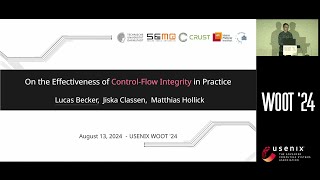
On the Effectiveness of Control-Flow Integrity in Practice - A Systematic Overview
Explore the real-world effectiveness of Control-Flow Integrity protection across Android and Windows systems, revealing critical gaps between research advances and actual deployment in practice.

Black Hat USA 2025
Black Hat USA 2025

Black Hat USA 2023
Black Hat USA 2023