
Kubernetes at Scale: Practical Solutions for Enhanced CNI and Kubelet Performance
Dive into practical strategies for optimizing CNI and Kubelet performance in large-scale Kubernetes deployments, covering IP allocation, registry pulls, and disk performance optimization techniques.
Squashing Trampoline Pods: The Future of Securely Enabling Hardware Extensions
Discover how to secure hardware extensions in Kubernetes by implementing node-level security features and preventing cross-node compromises through advanced admission policies and token claims.
Elevate Your Kubernetes Policy Game with Kyverno - Policy as Code Lifecycle Management
Master Kubernetes policy management with Kyverno through real-world insights from Robinhood's migration journey, covering validation, enforcement, lifecycle management, and performance optimization for large-scale deployments.
What's New in SIG-Windows - Kubelet Improvements and Memory Management
Discover the latest kubelet improvements for Windows containers, including memory-pressure eviction, CPU topology management, and other key enhancements for Kubernetes Windows deployments.

Mish-Mesh: Abusing the Service Mesh to Compromise Kubernetes Environments
Discover critical security vulnerabilities in Kubernetes service mesh deployments and learn defensive strategies against unauthorized access, system compromises, and secret exposure.
From Standards to Practice: The Journey to Container Maturity
Discover how Yelp manages container security at scale, from implementing vulnerability tracking to developing maturity models that guide thousands of engineers in maintaining robust Docker and Kubernetes deployments.
Strategies for Patching Critical CVEs in Open Source Software - Best Practices and Tools
Master strategies for handling critical CVEs in open source packages, from patching container images with Copacetic to building projects from scratch, while learning best practices for software supply chain security.

Comparing Kubernetes Security Agents: Falco, Tetragon and KubeArmor
Explore a detailed comparison of three leading eBPF-based Kubernetes security solutions, examining performance impacts, required privileges, and key features to make an informed choice for cluster protection.
CRI-O Features for Fun and Profit - Advanced Kubernetes Container Runtime Capabilities
Discover cutting-edge CRI-O and Kubernetes features, from sigstore signature support to Podman pod integration and OCI artifacts, designed for cluster admins seeking advanced container runtime capabilities.
The Key Value of etcd Over Custom Resources - Scaling Cilium in Large Kubernetes Clusters
Discover how using dedicated etcd instances can enhance Cilium's scalability in large Kubernetes clusters, exploring direct etcd API interaction and performance optimization techniques.
Robust Multi-Tenancy in Kubernetes - Building and Managing Multi-Tenant Clusters
Discover how Uber implements robust multi-tenancy in Kubernetes, exploring isolation strategies, node pools, and namespace integration for managing multiple users while ensuring security and performance.
Why Perfect Compliance Is the Enemy of Good Kubernetes Security
Discover practical approaches to Kubernetes security that balance compliance requirements with operational efficiency, focusing on risk reduction and platform functionality rather than perfect security scores.

Faster Containerized LLM Serving via Knowledge Sharing
Discover how to optimize LLM performance through knowledge sharing systems, reducing processing delays and improving efficiency by enabling multiple LLMs to share cached information on Kubernetes.
Rogue No More: Securing Kubernetes with Node-Specific Restrictions
Discover essential security enhancements for Kubernetes that prevent escalation attacks through node-specific restrictions, bounded service account tokens, and validating admission policies for robust infrastructure protection.

Implementing Multicast with eBPF and Cilium
Discover how eBPF and Cilium enable efficient multicast networking in Kubernetes clusters, exploring implementation techniques, challenges, and solutions for streamlined pod-to-pod data delivery.

Stop Kubernetes' Revolving Door: A Hands-on Tutorial to Secure a Kubernetes Cluster
Master essential security practices for Kubernetes clusters through hands-on exercises covering authentication, authorization, network policies, and pod security to protect against potential threats.

Seccomp and eBPF: Understanding Container Security and Kernel Access Control
Explore container security hardening through Seccomp and eBPF, comparing their approaches to limiting Linux kernel access and implementing the principle of least privilege in Kubernetes environments.

Managing and Distributing AI Models Using OCI Standards and Harbor
Discover how to effectively manage and distribute AI models using OCI standards and Harbor, covering model structures, security, replication, and acceleration mechanisms for enterprise deployment.
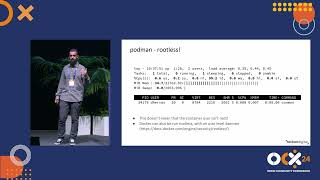
Podman: Leaving the Dock - Building and Managing Containers Beyond Docker
Discover how to build and manage containers with Podman, exploring rootless containers, deployment strategies, and real-world applications for both developers and DevOps engineers.
LLM Powered Agents with Kubernetes - Building Intelligent Systems for Deployment Management
Discover how to build advanced LLM systems that dynamically interact with Kubernetes deployments using agent frameworks, tools, and real-time data integration for enhanced performance and automation.
Building a Self-Serving Multi-Tenant Kubernetes Platform for Enterprise - Developer Experience and Best Practices
Discover how to build a self-serving multi-tenant Kubernetes platform that streamlines deployment, enhances security, and provides unified management through automated namespaces.