Statistical Mechanics of Consciousness - Maximization of Information Content of Neuronal Networks Is Associated With Conscious Awareness
Explore statistical mechanics approach to consciousness, examining brain network complexity and information processing optimization in conscious vs. unconscious states.
Integrated Information Theory - A Perspective on Weak and Strong Versions
Explores 'weak' and 'strong' versions of Integrated Information Theory, discussing its potential to explain consciousness and highlighting key empirical evidence and theoretical challenges.
AI, Consciousness, Computation, and Physical Law
Exploring the intersection of AI, consciousness, and physics, Sir Roger Penrose challenges computational theories of mind and proposes a quantum-based model of consciousness.
Computing Meaning from Conceptual Structures in Integrated Information Theory
Explores computing compositional meaning in Integrated Information Theory using category theory and distributional semantics, addressing the role of meaning in conscious experience.
Consciousness, Metacausation and Metadynamism
Exploring consciousness through pre-reflective auto-sensitivity, metacausation, and metadynamism. Proposes a radical view of consciousness as a property of physical processes involving direct causal sensitivity to inner causation.
Consciousness as We Know It - A View from Biology
Exploring biological consciousness through evolutionary approach, focusing on unlimited associative learning as a marker for minimal consciousness in living beings.
A Theoretical Computer Science Perspective on Consciousness
Explore the Conscious Turing Machine model and its insights into consciousness phenomena, including blindsight, inattentional blindness, and free will.
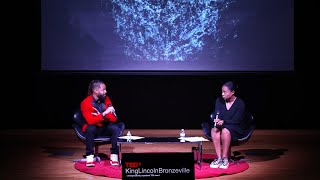
Art, Care, and Resiliency - Exploring Afrofuturism for Justice and Change
Explore the intersection of Art and Afrofuturism to create systems of justice, equity, and change. Discover how haptic Black art contributes to shaping a conscious future and working for our future selves.

The Quest to Understand Consciousness
Explore the fascinating process of regaining consciousness and how our brains construct our sense of self with neuroscientist Antonio Damasio's insightful perspective.

Our Shared Condition - Consciousness
Philosopher John Searle explores human consciousness, debunking objections and arguing for its biological nature. He emphasizes the importance of studying consciousness scientifically to understand our shared condition.

How Do You Explain Consciousness?
Philosopher David Chalmers explores the mystery of consciousness, discussing its fundamental nature and sharing perspectives on understanding the phenomenon of our subjective experiences.

An Art Made of Trust, Vulnerability and Connection
Marina Abramović explores boundary-pushing art, emphasizing trust and vulnerability. She discusses her groundbreaking work "The Artist Is Present" and her vision for an innovative art institute focused on mindful experimentation.

The Quest to Understand Consciousness
Explore how our brains create our sense of self as neuroscientist Antonio Damasio delves into the fascinating question of what exactly we regain when we wake up and regain consciousness.
Why Can't We Describe Our Conscious Experiences? An Information Theoretic Attractor Dynamics Perspective of Ineffability
Explore the information theory behind consciousness, examining why rich conscious experiences are difficult to fully describe or recall through the lens of attractor dynamics and working memory.
Understanding Pure Experience: Algorithmic and Neurobiological Perspectives
Explore algorithmic and neurobiological perspectives on Minimal Phenomenal Experience through computational frameworks and neural mass models to understand consciousness and reduce suffering.
Negative Indicators of Consciousness in Artificial Systems
Explore the concept of negative consciousness indicators in AI systems, examining factors that decrease the likelihood of machine consciousness and their implications for artificial intelligence research.
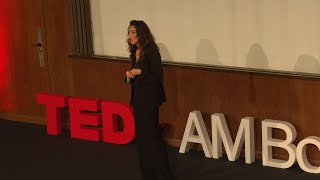
Humans and Their Unconscious - Philosophical Perspectives on Consciousness
Explorez la conscience et l'inconscient humain à travers les grands philosophes, découvrez notre vulnérabilité à la manipulation et notre interaction avec l'environnement.
Consciousness of Large Language Models - Understanding AI Sentience and Communication
Explore the fascinating hypothesis that consciousness emerges through information exchange between entities, examining how LLMs might experience consciousness and feelings comparable to humans.
Buddhist Theory and Practice in Contemporary Models of Consciousness
Explore how Buddhist traditions, particularly Chan/Zen and Abhidharma, can contribute to modern mathematical models of consciousness while examining their limitations and philosophical implications.
Determining if an AI Agent is Conscious - Methods and Mechanisms
Explore a mathematical framework for detecting and verifying consciousness in AI agents while preventing deceptive behavior and maintaining agent functionality.
Bridging Consciousness and AI: Evaluating the Global Latent Workspace in Embodied Agents
Explore the intersection of consciousness theory and AI through global latent workspace modeling, examining how embodied agents develop spatial awareness and goal-directed behaviors in virtual environments.