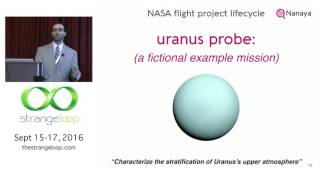
How Rocket Science Can Help You Build Your App
Discover how NASA's mission development principles can be applied to software projects, improving outcomes and mitigating risks in app development.
How to Bring Open Source to a Closed Community
Strategies for introducing open source principles to academia, overcoming challenges, and fostering collaboration in a competitive research environment.
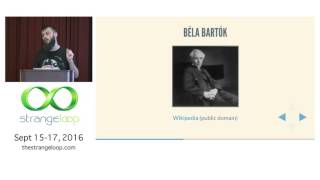
African Polyphony and Polyrhythm
Exploring computational models for African music, bridging ethnomusicology and programming to preserve and recreate traditional central African polyphony and polyrhythm.

Wikimedia Content API - A Cassandra Use-case
Explore Wikimedia's use of Apache Cassandra for their content API, addressing challenges in storing and serving massive datasets with low latency in a global environment.
Changing the Engine in Flight - Rebuilding Monitoring at Scale
Explore real-time data processing architecture for high-traffic monitoring, including distributed systems, Go-based microservices, and Kafka with ElasticSearch. Learn from successes and failures in upgrading monitoring systems.

GraphQL - Designing a Data Language
Explore GraphQL's evolution from Facebook's internal tool to open-source query language. Learn its design process, motivations, and impact on server-client architecture.
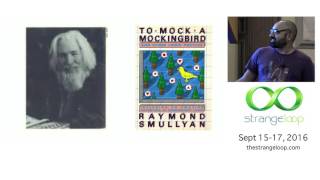
Point-Free or Die - Tacit Programming in Haskell and Beyond
Explore tacit programming in functional languages, its benefits, drawbacks, and applications. Learn eta-reduction, develop intuition, and examine its use in libraries and specialized languages.
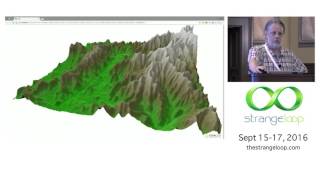
An Interactive Web Visualization for Watershed Topology
Explore watershed topology through an interactive web visualization, combining data processing, graph algorithms, and graphics optimization to map water flow across nearly 100,000 regions.
PureScript & Pux - A Safer, More Expressive Way to React
Discover PureScript and Pux: a powerful alternative to Elm for React development, offering gradual adoption, hot reloading, and advanced typing features while maintaining compatibility with existing components.
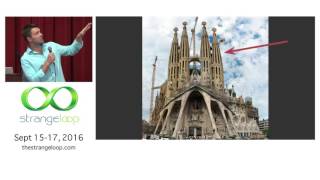
If Gaudí Had a Cluster
Explore a visual programming environment for architects, combining Gaudí's innovative spirit with modern distributed computing to revolutionize building design and unleash creative potential.
Distributed Commit Log - Application Techniques for Transaction Processing
Explore techniques for leveraging distributed commit logs in transaction processing, including handling duplicates, sharding, exceptions, and debugging in real-time systems.
How to Get Started With Functional Programming
Explore functional programming concepts and learn how to transition from object-oriented to functional paradigms for more reliable and readable code.
Idealized Commit Logs - Code Simplification via Program Slicing
Explore a tool for generating Idealized Commit Logs to simplify complex software systems. Learn about type analysis, code coverage, AST transformations, and program slicing to enhance code understanding and modification.
"Eve" by Chris Granger
Explore the innovative programming system "Eve" and its potential to revolutionize software development through a novel approach to coding and problem-solving.
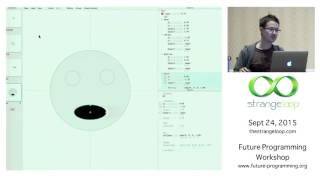
Apparatus - A Hybrid Graphics Editor - Programming Environment
Explore Apparatus, a hybrid tool combining vector graphics and dataflow capabilities for rapid creation of interactive diagrams, bridging spatial and symbolic approaches to visualization.
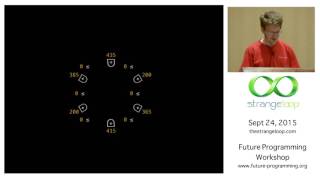
Constraint Logic Propagation Conflict Spreadsheets
Live coding system bridging constraint logic programming with data-centric reactivity, enabling speculative analysis and conflict resolution through domain propagation and provenance tracking in relational tables.
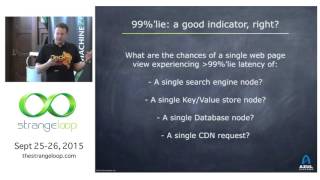
How NOT to Measure Latency
Explore common pitfalls in latency measurement and learn effective techniques for accurate response time analysis using open-source tools to improve application performance and reliability.
Relevance of ClojureScript
Explore ClojureScript's relevance in modern web development, comparing its features with ES6 and showcasing code examples to help developers make informed decisions about its adoption.
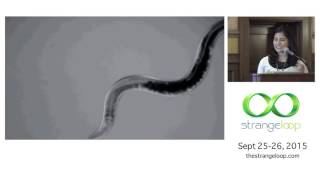
How the Web Is Democratizing Science - Join In!
Explore how the web enables open science, empowering anyone to access and analyze scientific data. Learn about tools and platforms that facilitate collaborative research and data visualization.
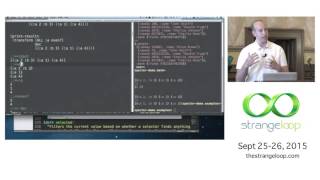
Specter - Overcome Your Fear of Nested Clojure Data
Discover Specter, a library simplifying manipulation of nested data structures in Clojure. Learn to efficiently query and transform complex data, enhancing code readability and performance.
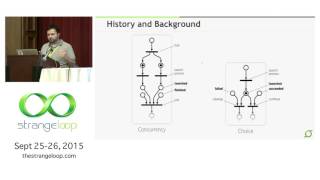
PTero - Architecture and Development
Explore PTero, a workflow system using petri nets for genomic data analysis. Learn about its architecture, development, and advantages in managing complex computational workflows at scale.