Malware Wars - DarkSide Strikes Back as BlackMatter
Explore the evolution of BlackMatter ransomware, its technical aspects, and its impact on the cybersecurity landscape. Gain insights into sophisticated ransomware operators and their tactics.
Living Off the Walled Garden
Explore Windows security vulnerabilities in ELAM and PPL, revealing how overly-permissive rules can be exploited for malware protection and code execution, hampering detection efforts.
Function Overrides - From a Security Mitigation to a Full-Fledged Performance Feature
Explore Function Overrides in Windows 11, from its origins as a security mitigation to its evolution as a performance feature. Learn about implementation, compiler modifications, and real-world applications.
Project TEMPA - Demystifying Tesla Bluetooth Passive Entry System
Demystifying Tesla's Bluetooth Passive Entry system, exploring its security features, potential vulnerabilities, and implications for future automotive technology.
Beyond AlphaGolang
Exploring advanced techniques for reverse engineering Golang binaries, leveraging AlphaGolang to automate malware analysis, and introducing new approaches for hunting and clustering Go-based threats.
The Next Generation of Virtualization Based Obfuscators
Explore next-gen virtualization obfuscators: design principles, weaknesses, and future challenges. Learn about advanced code protection techniques and their impact on modern software security.
Researching the Unisoc Baseband
Exploring Unisoc baseband security: reverse-engineering and fuzzing LTE protocol stack to uncover vulnerabilities in budget smartphone chipsets, disrupting radio communication.
Breaking the Glass Sandbox
Discover techniques to find exploitable Linux kernel bugs in sandboxed environments, learn to identify valuable vulnerabilities, and explore methods for both offensive and defensive security.
Reversing an M32C Firmware - Lessons Learned from Playing with an Uncommon Architecture
Explore techniques for reversing firmware on unfamiliar architectures, focusing on M32C. Learn about interrupt handlers, special registers, and flash handling in embedded systems.
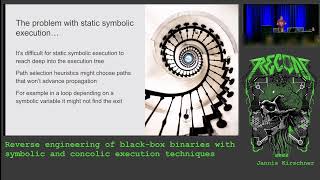
Reverse Engineering of Black Box Binaries with Symbolic and Concolic Execution Technique
Explore symbolic and concolic execution techniques to simplify reverse engineering of complex binaries. Learn to use the angr framework for efficient crackme solving and deobfuscation.
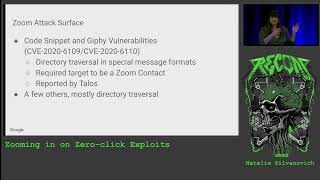
Zooming in on Zero Clicks Exploits
Dive into Zoom's security analysis, exploring reverse engineering challenges, large system understanding, and fuzzing techniques for non-relocatable binaries in video conferencing software.
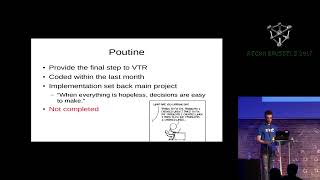
Poutine - Dusting Forgotten Lore
Explore forgotten reverse engineering techniques for analyzing malware and understanding complex systems, with insights from Yannick Lamarre's research on legacy analysis methods.
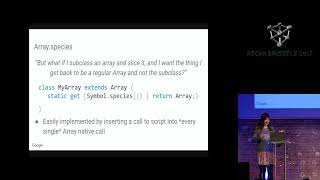
Your Chakra Is Not Aligned
Exploring Microsoft Chakra's JavaScript engine implementation, its vulnerabilities, and techniques for identifying bugs in new ECMAScript engines to enhance browser security.
MiLazyCracker
Demonstration of easy Mifare card cloning using miLazyCracker tool, highlighting vulnerabilities in smart card security and potential risks for organizations using these systems.
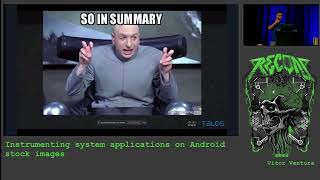
Instrumenting System Applications on Android Images
Instrumenting Android system apps on stock images using Frida for dynamic analysis. Explores various approaches, their limitations, and a successful method for analyzing Google Play Protect Services.
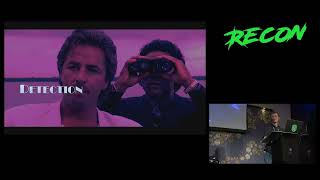
PreVice - Static Detection of Hooking Capabilities in Machine Code
Explore static analysis techniques for detecting hooking capabilities in Windows executables, including Detours, import, and syscall hooking, with insights from scanning millions of files.
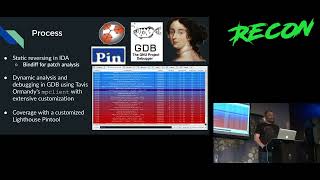
Reverse Engineering Windows Defender Part II
Deep dive into Windows Defender's binary emulator, exploring its internals, virtual environment, and integration with antivirus features. Gain insights on reverse engineering techniques for advanced malware analysis.
Breath of the RF Field
Explore Amiibo technology, reverse engineering, and NFC protocol vulnerabilities in Nintendo consoles using software-defined radio and a custom simulator for security research.
Meet Salinas - The First Ever SMS-Commanded Car Infotainment RAT
Discover how researchers created the first SMS-controlled malware for car infotainment systems, exploring vulnerabilities and potential threats in modern vehicle technology.
Pwning Intel PIN
Exploring vulnerabilities in Intel PIN's dynamic binary instrumentation framework, challenging assumptions of isolation and stealthiness, and demonstrating potential security risks in instrumented programs.
Building a Damned Good Watch
Cloning a calculator watch with added radio capabilities for Morse code transmission, frequency detection, and remote control signal replication. Includes practical insights and open-source code.