An Offensive Approach to Analyzing Huge and Complex Big Data Infrastructures
Explore attack vectors in Big Data stack layers: ingestion, storage, processing, and access. Learn methodologies to identify vulnerabilities in complex infrastructures handling massive data volumes.

Wibbly Wobbly, Timey Wimey – What's Really Inside Apple's U1 Chip
Explore Apple's U1 Ultra Wideband chip, its capabilities, and potential applications. Dive into firmware, kernel components, and user space modifications for this cutting-edge technology.
Rope - Bypassing Behavioral Detection of Malware with Distributed ROP-Driven Execution
Explore a novel covert distributed execution technique for malware that challenges behavioral detection by AV and EDR solutions, using ROP-driven execution across multiple processes.

Uncovering Planned Obsolescence Practices in Robotics and What This Means for Cybersecurity
Explore systematic "robot teardown" to understand and repair robots, uncovering planned obsolescence practices and their implications for cybersecurity in robotics.
Windows Heap-backed Pool - The Good, the Bad, and the Encoded
Explore Windows kernel pool's evolution, new design complexities, and potential vulnerabilities. Learn about structure changes, exploitation techniques, and analysis tools for kernel pool security.
Typhoon Mangkhut - One-click Remote Universal Root Formed with Two Vulnerabilities
Exploit chain for remote Android root using Chrome and Binder vulnerabilities. Demonstrates bypassing security mitigations to achieve one-click root access on modern Pixel devices.
Smashing the ML Stack for Fun and Lawsuits
Explore legal risks and ethical considerations of testing commercial ML systems' security, with insights on potential lawsuits and regulatory implications for researchers.
Put in One Bug and Pop Out More - An Effective Way of Bug Hunting in Chrome
Discover effective bug hunting techniques in Chrome, leveraging historical vulnerabilities to uncover new ones. Learn to identify shared code patterns and exploit codebase complexity for enhanced security testing.
Sleight of ARM - Demystifying Intel Houdini
Explore Intel's Houdini binary translator for running ARM on x86, its architecture, security implications, and comparison with Apple's Rosetta 2, focusing on Android emulation and Chromebooks.

The Case for a National Cybersecurity Safety Board
Explores the need for a National Cybersecurity Safety Board to investigate and prevent cyber attacks, drawing parallels with the NTSB and addressing critical infrastructure vulnerabilities.

President's Cup Cyber Competition - Finding the Best Cyber Talent in the US Government
Explore the behind-the-scenes story of the President's Cup Cybersecurity Competition, designed to identify and challenge top US government cyber talent.
Bringing the Power of Symbolic Execution to the Fight Against Malicious Excel 4 Macros
Explore Symbexcel, a tool using symbolic execution to analyze and detect malicious Excel 4.0 macros, enhancing cybersecurity against this common attack vector.
The Dark Age of Memory Corruption Mitigations in the Spectre Era
Explores how speculative execution attacks can bypass memory corruption defenses, challenging established security measures and revealing vulnerabilities in modern computer systems.
Your Software IS - NOT Vulnerable - CSAF, VEX, and the Future of Advisories
Explore the future of software security advisories, focusing on CSAF and VEX, and learn how to manage the increasing volume of vulnerability information effectively.

How I Used a JSON Deserialization 0day to Steal Your Money on the Blockchain
Explore a JSON deserialization vulnerability in Fastjson, its exploitation for remote code execution, and implications for blockchain security.
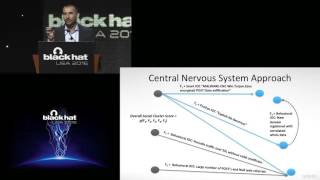
From False Positives to Actionable Analysis
Modeling human behavior in network traffic to automatically label security events, using distributed forensic AI for threat detection and response optimization.
Most Ransomware Isn't As Complex As You Might Think
Análisis de más de 1.300 muestras de ransomware revela que la mayoría no son tan sofisticados como se cree. Se discuten técnicas de detección y prevención, así como la evolución y características comunes de diferentes familias de ransomware.

Advanced IC Reverse Engineering Techniques - In Depth Analysis Of A Modern Smart Card
Explore advanced IC reverse engineering techniques through in-depth analysis of a modern smart card, focusing on hardware attacks, proprietary algorithms, and efficient analysis methods.

Automated Human Vulnerability Scanning With AVA
Explore automated human vulnerability scanning with AVA, a tool for mapping people's connectivity, testing security threats, and measuring behavior to address human security risks.
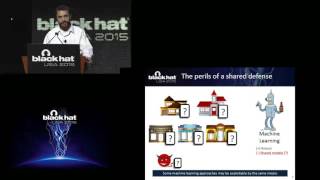
Defeating Machine Learning - What Your Security Vendor Is Not Telling You
Explore attacker strategies to defeat machine learning-based security defenses, analyze industry issues enabling these vulnerabilities, and discover novel data sourcing solutions for improved protection.
The NSA Playset - A Year of Toys and Tools
Explore NSA-inspired gadgets for USB, PCI Express, I2C, GSM, Bluetooth, and RF retroreflectors. Learn about tools mimicking intelligence agency capabilities for electronic device eavesdropping and surveillance.