A Tale of Two Postmortems - A Human Factors View
Explore the contrast between Safety I and Safety II approaches in incident reviews, using a fictional company's experience to demonstrate more effective postmortem practices for improved system reliability.
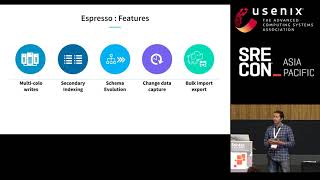
How We Used Kafka to Scale Database Infrastructure
Explore LinkedIn's NoSQL database scaling journey, from MySQL replication challenges to Kafka-based solutions, offering insights on reliable data delivery and infrastructure optimization.
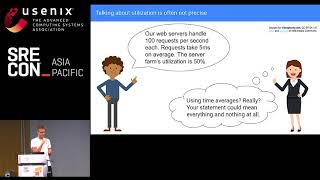
How to Trade off Server Utilization and Tail Latency
Explore the trade-offs between server utilization and tail latency in large-scale systems. Learn queueing theory basics, analyze typical outcomes, and gain practical insights for optimizing system performance.
Let's Build a Distributed File System
Explore the architecture of typical and distributed file systems, including key components and operations. Learn through a simple Python implementation of a basic distributed file system.
TCP - Architecture, Enhancements, and Tuning
Comprehensive exploration of TCP architecture, enhancements, and tuning, covering core concepts, connection establishment, flow control, congestion avoidance, and performance optimization techniques for network engineers.
Operating Elasticsearch with Ease at Scale
Discover strategies for operating Elasticsearch at scale, covering common issues, optimization techniques, and best practices for handling massive deployments with billions of ingests and millions of searches daily.

Yes, No, Maybe? Error Handling with gRPC Examples
Explore error handling in gRPC with practical examples, focusing on client-server discrepancies and effective code snippets for managing various response scenarios.

A Differentially Private Data Analytics API at Scale
LinkedIn's privacy system uses differential privacy to protect member data while providing audience engagement insights, enabling marketing analytics with user-level privacy guarantees and strict budget management.
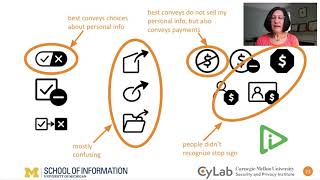
How to -In-Effectively Convey Privacy Choices with Icons and Link Text
Explore effective privacy communication through icons and text, examining research methods, findings, and lessons learned for clear, concise privacy choice conveyance.
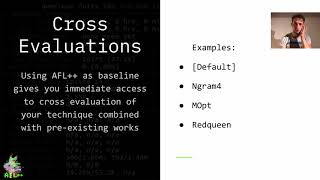
AFL++ - Combining Incremental Steps of Fuzzing Research
AFL++: A community-driven fuzzing tool combining state-of-the-art research, offering novel features like Custom Mutator API. Enhances fuzzing process, enables quick testing of new techniques, and evaluates effectiveness individually and in combination.
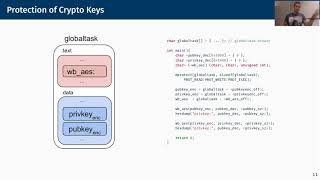
Unearthing the TrustedCore - A Critical Review on Huawei’s Trusted Execution Environment
Unveils critical security flaws in Huawei's TrustedCore, exposing vulnerabilities in trusted execution environments and demonstrating weaknesses in hardware-backed cryptography on mobile devices.

Confessions of a Systems Engineer - Learning from My 20+ Years of Failure
Insights from a seasoned systems engineer on designing and running large-scale online services, drawing from 20+ years of failures and lessons learned in the tech industry.
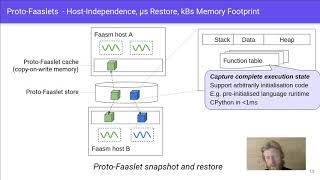
Faasm - Lightweight Isolation for Efficient Stateful Serverless Computing
Lightweight isolation technique for serverless computing, enabling efficient stateful processing and memory sharing between functions, resulting in improved performance and reduced resource usage.
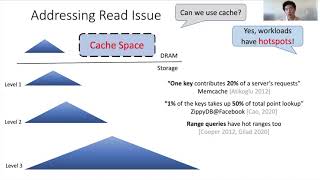
AC-Key - Adaptive Caching for LSM-based Key-Value Stores
Adaptive caching technique for LSM-based key-value stores, improving read performance by managing multiple cache components and adjusting sizes based on workload demands.
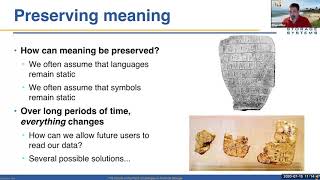
The Future of the Past - Challenges in Archival Storage
Explores challenges and advancements in long-term digital data preservation, discussing media technologies, data integrity, and semantic interpretation for future generations.
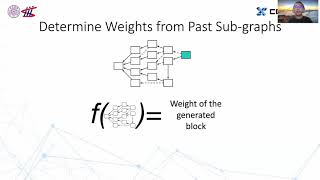
A Decentralized Blockchain with High Throughput and Fast Confirmation
Explore a novel blockchain system with high throughput and fast confirmation, featuring an optimistic consensus protocol and adaptive weight mechanism to enhance scalability and security.
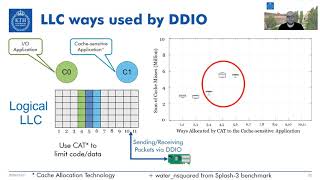
Reexamining Direct Cache Access to Optimize I-O Intensive Applications for Multi-hundred-gigabit Networks
Optimizing direct cache access for high-speed networks: Analyzes DDIO implementation, demonstrates latency reduction for 100 Gbps networks, and highlights challenges at 200 Gbps, offering insights for system optimization.

BatchCrypt - Efficient Homomorphic Encryption for Cross-Silo Federated Learning
Efficient homomorphic encryption system for cross-silo federated learning, reducing encryption and communication overhead while maintaining privacy and accuracy in collaborative machine learning.
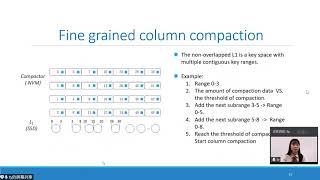
MatrixKV - Reducing Write Stalls and Write Amplification in LSM-tree Based KV Stores
Innovative LSM-tree based key-value store design using NVM to reduce write stalls and amplification. Introduces matrix container, column compaction, and cross-row hint search for improved performance in multi-tier storage systems.

BASTION - A Security Enforcement Network Stack for Container Networks
Innovative security enforcement network stack for containers, enhancing visibility and isolation while improving performance. Mitigates attacks and optimizes inter-container communication.
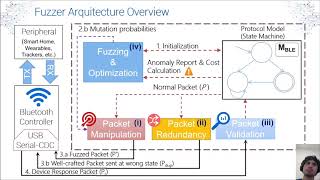
SweynTooth - Unleashing Mayhem over Bluetooth Low Energy
Explores vulnerabilities in Bluetooth Low Energy protocol implementations, presenting a systematic fuzzing framework that discovered 11 new vulnerabilities across various devices and IoT products.