
Exotic Functional Data Structures - Hitchhiker Trees
Explore functional data structures, B-trees, and fractal trees, leading to the innovative Hitchhiker tree for efficient, scalable, and persistent off-heap data storage in functional programming.
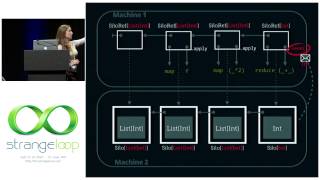
Function Passing Style - Typed, Distributed Functional Programming
Explore function-passing style for distributed programming, leveraging Scala's type system and language features to enable safe, asynchronous computation on immutable data across distributed environments.
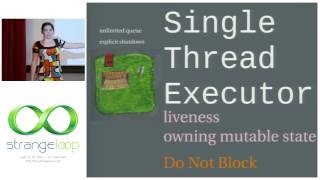
Concurrency Options on the JVM
Explore JVM concurrency options, from Java's ExecutorService to Scala's akka actors and Clojure's core.async. Learn design strategies for deadlock-free, efficient concurrent applications.
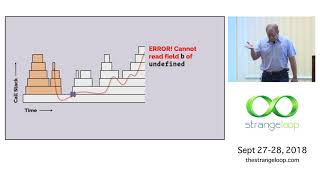
Contracts for Getting More Programs Less Wrong
Explore contracts in programming: preconditions, postconditions, and invariants. Learn to write correct algorithms, improve testing, and use tools like JML and C0 for better code quality.
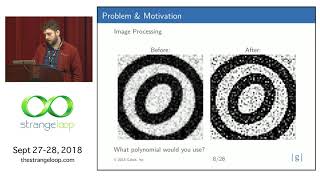
Your Secrets Are Safe with Julia - A Compiler for Secure Computation
Explore Ramparts, a compiler translating Julia code for homomorphic encryption, enabling secure computation on encrypted data without cryptography expertise.
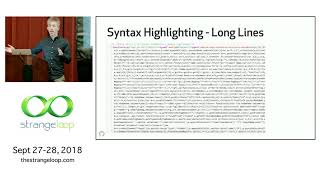
Tree-sitter - A New Parsing System for Programming Tools
Explore Tree-sitter, a powerful parsing system for multi-language developer tools. Learn about its features, integration, and potential applications in GitHub and Atom for improved code analysis.

Justice for Sale
Exploring how technology can address inequalities in the criminal justice system, focusing on mass incarceration and providing affordable legal tools to balance access to justice.
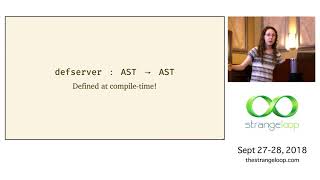
Hackett - A Metaprogrammable Haskell
Explore Hackett, a language combining Haskell's type system with Racket's macro system. Learn about interleaved macroexpansion and typechecking, and discover new possibilities for metaprogramming and DSLs.
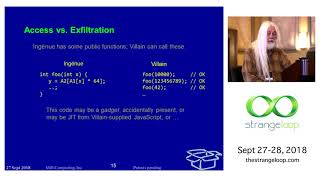
Mill vs. Spectre - Performance and Security
Explore CPU architecture vulnerabilities, focusing on Meltdown and Spectre attacks. Learn about the Mill architecture's unique approach to performance and security without hardware speculation.
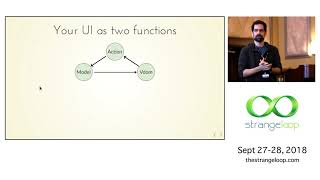
Data Driven UIs, Incrementally
Explore efficient data-driven UI development using Incremental, an OCaml library for dynamic computations. Learn techniques for building responsive applications that handle large data streams in real-time.
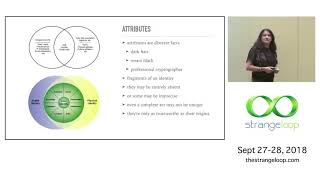
Identity & Trust in Monitored Spaces
Explore privacy, identity, consent, and data protection in monitored spaces. Learn to design systems that respect user rights and comply with regulations while ensuring security and trust.
Democratizing AI - Back-Fitting End-to-End Machine Learning
Explore LinkedIn's journey in democratizing AI, enhancing modeler efficiency, and scaling machine learning across engineering teams through innovative infrastructure and practices.

Learning from Machines
Explore cognitive models inspired by machine learning, offering insights into perception, expertise, and trauma. Gain a new perspective on human cognition and self-awareness.
Running With Scissors - Live Coding With Data
Explore Clojure's unique features for effective programming and development processes through live coding demonstrations and practical examples.
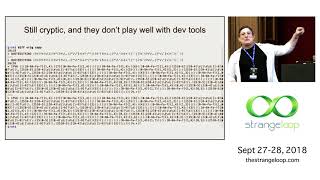
Rosie Pattern Language - Improving on 50-Year Old Regular Expression Technology
Explore Rosie Pattern Language, an alternative to regular expressions offering improved scalability, readability, and composability for efficient data processing and pattern matching.
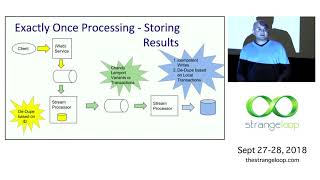
Chasing the Stream Processing Utopia
Explore stream processing challenges and solutions at internet scale, covering event ingestion, real-time data processing, and performance optimization techniques for large-scale applications.
Reactive Programming - A Better Way To Write Frontend Applications
Explore functional reactive programming for simplified frontend development, treating data as asynchronous streams and transforming values over time to handle events more effectively.

The Hard Parts of Open Source
Explore open source community dynamics, online communication patterns, and strategies for fostering civil discourse in digital spaces through historical and cultural perspectives.
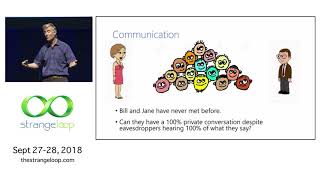
Shaping Our Children's Education in Computing
Exploring the revolution in computing education, its challenges, and how we can actively shape it for our children's future in a rapidly changing technological landscape.
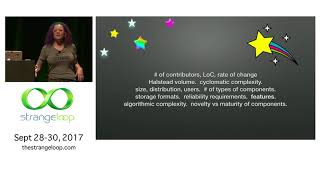
Observability for Emerging Infra - What Got You Here Won't Get You There
Explore modern infrastructure challenges and the shift from traditional monitoring to observability. Learn about event-driven approaches, complexity management, and the future of debugging distributed systems.
How Supporting Right-to-Left Can Expose Your Bad UX
Explore how supporting right-to-left languages can reveal UX issues and improve interfaces for all users. Learn challenges and solutions in internationalization for inclusive software design.