Just-So Stories for AI - Explaining Black-Box Predictions
Explore state-of-the-art strategies for explaining black-box AI predictions, discussing interpretability challenges and insights into human decision-making and ethical implications.
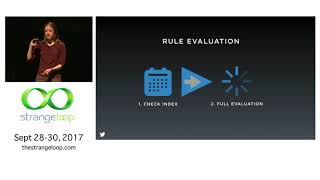
Inside Twitter's Realtime Delivery of Tweets for Enterprise Customers
Explore Twitter's PowerTrack architecture for real-time Tweet filtering, addressing challenges in scalability, redundancy, configuration changes, and data backfilling for enterprise customers.
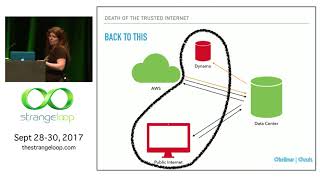
Death of the Trusted Internet
Explore the challenges and solutions in modernizing government IT security, focusing on the Trusted Internet Connection policy and the shift towards cloud-based, zero-trust networks.
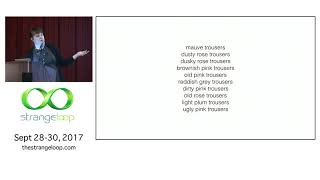
Experimental Creative Writing with the Vectorized Word
Explore experimental creative writing using vector representations of language, blending computational techniques with poetic expression for unique semantic and phonological effects.

Antics, Drift, and Chaos
Explore how large-scale cloud systems evolve, fail, and can be improved through Chaos Engineering. Learn strategies to detect vulnerabilities and prevent outages in complex software environments.
So You Wanna Go Fast
Explore Go's performance optimization techniques for latency-sensitive systems, including channels, interfaces, and mechanical sympathy, with insights on trade-offs and lessons learned.
PyTorch - Fast Differentiable Dynamic Graphs in Python
Explore PyTorch's dynamic deep learning framework, its high-performance design, and tensor compiler for faster AI research and development using GPUs and CPUs.
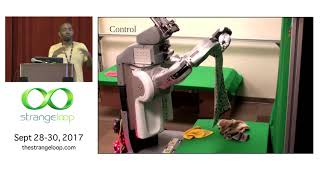
Running Programs in Reverse for Deeper A.I.
Explore inverse simulation for AI advancement, covering mental simulation, animation, and a novel approach using ReverseFlow to compile programs into their inverses, enhancing vision and planning capabilities.

Haxl - A Big Hammer for Concurrency
Explore Haxl, Facebook's framework that flips the default from sequential to concurrent programming, enhancing I/O, concurrency, testing, and debugging in software development.
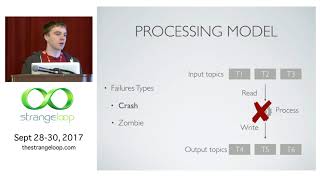
EoS in Kafka - Listen Up, I Will Only Say This Once
Explore Kafka's exactly-once semantics, including idempotence and transactions. Learn about distributed transaction mechanics, two-phase commit protocols, and future improvements for stream processing.
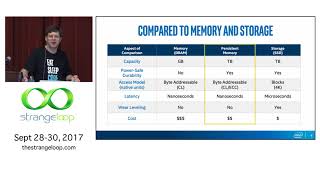
Promise and Pitfalls of Persistent Memory
Explore persistent memory's impact on cloud software, its unique characteristics, and key strategies for effective implementation in modern computing environments.

Building a Distributed Task Scheduler With Akka, Kafka, and Cassandra
Explore building a resilient distributed task scheduler using Akka, Kafka, and Cassandra, addressing challenges like dynamic load adjustment, task ordering, and datacenter outages.
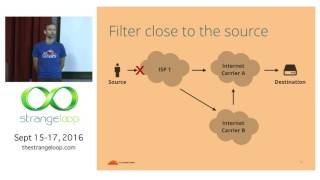
Are DDoS Attacks a Threat to the Decentralised Internet?
Explore DDoS attacks, IP spoofing, and mitigation techniques with CloudFlare's expert. Learn about L3 attacks, tracing methods, and potential solutions for a safer decentralized internet.
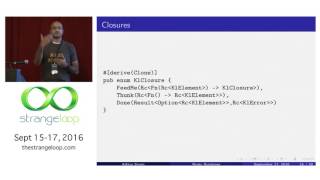
Building Languages in Rust
Explore building a Scheme-like language compiler in Rust, comparing its performance with C-based implementations and discussing the pros and cons of using Rust for language development.

Sketch-n-Sketch - Interactive SVG Programming with Direct Manipulation
Interactive SVG programming system combining direct manipulation and coding for efficient design prototyping and iterative structuring, with semi-automatic program rewriting to preserve relationships during edits.

Tulip - A Language for Humans
Explore Tulip, a new programming language with ML-like syntax and Erlang-inspired runtime, designed for REPL ergonomics and emphasizing minority language designers.

Building Secure Cultures
Learn strategies for fostering a secure organizational culture from Slack's Security Engineer. Explore processes, tools, and best practices to enhance cybersecurity across teams and departments.
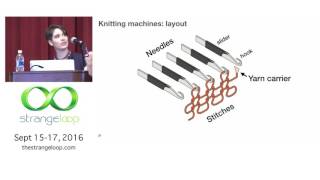
Languages for 3D Industrial Knitting
Explore programming languages for 3D industrial knitting machines, from low-level operations to advanced compilers. Learn about knittability, constraints, and production optimization for seamless fabric objects.
Poetry - Teaching Versification to a Neural Network
Explore poetry generation using neural networks, balancing constraints and expression. Learn techniques to spot and create poetry with minimal assumptions, touching on classical rules and deep learning models.
Building a Distributed Build System at Google Scale
Explore the evolution and challenges of distributed build systems, focusing on Google's scalable solutions for fast and resilient development workflows.
Lies, Damn Lies, and Metrics
Explore the pitfalls of metrics analysis and learn strategies to extract actionable insights beyond raw numbers in software development and operations.