
Clojure Core.async
Explore core.async in Clojure: Learn about independent threads, queue-like channels, and efficient communication between components. Discover how to build more manageable and scalable systems.
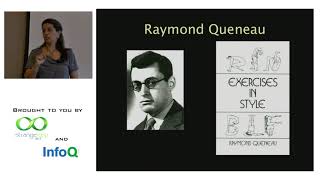
Exercises in Style
Explore diverse programming styles through one simple program, showcasing the richness of computational thought and its impact on large-scale systems design.

Taking PHP Seriously
Exploring PHP's unique design choices in programmer workflow, concurrency, and shared state, highlighting its strengths and impact on successful projects like Facebook and WordPress.
The Trouble With Types
Exploración de sistemas de tipos estáticos y dinámicos, sus ventajas y desventajas, y el diseño de lenguajes de programación, con énfasis en Scala y futuros desarrollos.
Machine Learning for Relevance and Serendipity
Explore machine learning for personalized content discovery, featuring real-time relevance models, topical classification, and targeted serendipity in news recommendation systems.

Humanity 2.0
Explore humanity's journey through technological progress, from our origins to future brain augmentation, and understand the role of technology in our evolution and survival.
Building a Unified Cancer Immunotherapy Data Library
Explore a unified cancer immunotherapy data library leveraging Datomic for efficient storage, querying, and collaboration. Learn about CANDEL's innovative approach to managing complex research data.
Privacy Governance and Explainability in ML - AI
Explore privacy governance in ML/AI, addressing GDPR compliance, explainability challenges, bias identification, and strategies for enhancing consumer trust in complex data-driven decision-making processes.
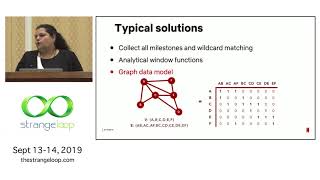
Pattern Matching at Scale Using Finite State Machine
Explore pattern matching at scale using finite state machines for big data analysis. Learn to build a framework for expressing user journey patterns and applying them across billions of events using Spark.

A Better Story for Kubernetes Secrets
Explore techniques for securing Kubernetes secrets, including encryption, KMS plugins, and HashiCorp Vault. Learn the tradeoffs of each approach to enhance cluster security.
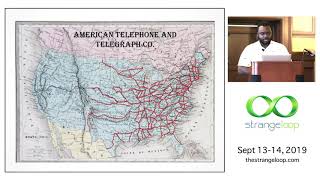
Apache Pulsar and the Legacy of Telegraphy
Explore the parallels between wireless telegraphy and Apache Pulsar, uncovering design principles for distributed, low-latency messaging systems. Gain insights into Pulsar's architecture, features, and future potential.
Lang Wishful Thinking
Explore language design and metaprogramming with Racket, implementing FastCGI protocol using innovative techniques like metatables, custom syntax, and domain-specific languages for efficient problem-solving.
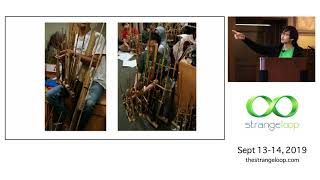
Enhancing Angklung Music Rehearsals with Modern Tech
Explore how technology enhances Angklung orchestra rehearsals, from automating team formation to optimizing note distribution, improving efficiency and musical quality.
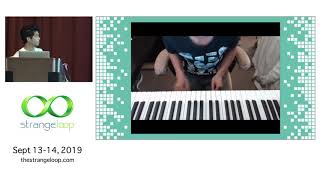
Deterministic Docker Images with Go Microservices
Explore deterministic Docker image building for Go microservices, covering challenges in infrastructure, code patterns, and design to achieve faster, more efficient deployments.
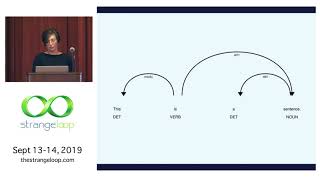
Improving Law Interpretability Using NLP
Explore NLP techniques for extracting rules, identifying compliance entities, and organizing legal texts to improve accessibility and interpretation of laws for the public.
Dive into Streams with Brooklin
Explore LinkedIn's Brooklin: a scalable, extensible data streaming service supporting multiple sources and destinations for near real-time data movement and change data capture.
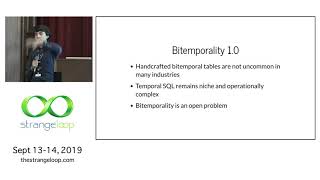
Temporal Databases for Streaming Architectures
Explore Crux, an open-source document database with bitemporal graph queries. Learn about its design, implementation, and future directions for efficient temporal data management in streaming architectures.
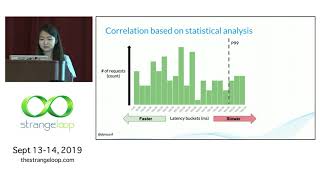
Beyond Traces - The Insights in Trace Aggregates
Explore how aggregating distributed traces reveals system-wide insights, enabling performance improvements through statistical analysis, latency anomaly detection, and resource contention identification.
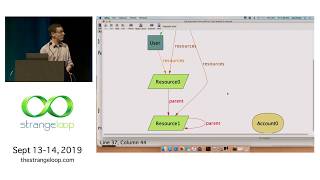
Finding Bugs Without Running or Even Looking at Code
Discover how model checkers like Alloy can find complex bugs and validate architectural proposals without running or viewing code, through formal specifications and simulations of system operations.
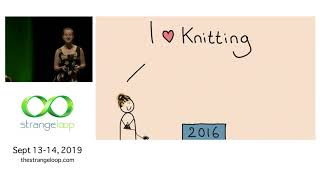
How to Teach Programming - and Other Things
Explore effective programming education strategies, from exploratory methods to rote learning, and discover innovative approaches to teach coding more efficiently based on research into misconceptions and code phonology.
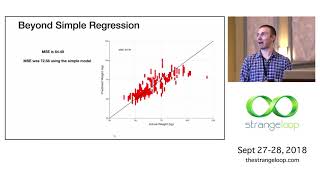
Scala DSLs and Probabilistic Programming
Explore ScalaStan, a type-safe DSL for statistical modeling with Stan, enabling programmatic manipulation and generation of Stan programs within Scala for efficient Bayesian inference and data analysis.