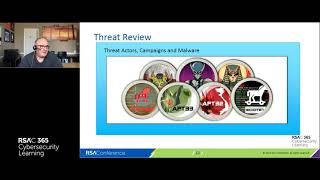
Threat Informed Defense
Explore Threat Informed Defense to prioritize and focus cybersecurity efforts. Learn to create threat models, leverage behavior-based detections, and efficiently protect evolving organizations against complex threats.
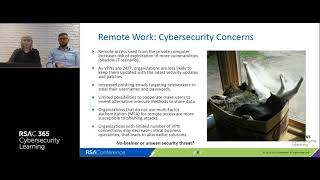
Modern Identity Hacking - Have Hackers Really Adjusted to Constant Remote?
Explore modern identity hacking techniques, including MFA bypasses and attacks on authentication protocols, in the context of remote work and cloud-based solutions.
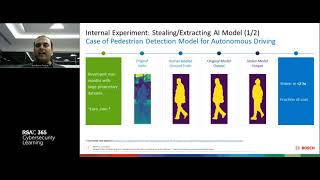
Fighting New Era Bandits Who Are Plundering Your AI - ML Application
Explore techniques used by adversaries to steal AI/ML models, their implications, and learn detection measures and defenses to protect valuable intellectual property.
Cloud Threat Modeling - From Architecture Design to Application Development
Learn cloud threat modeling techniques to identify and mitigate security risks in architecture design and application development, focusing on determining attack surfaces and eliminating common flaws.
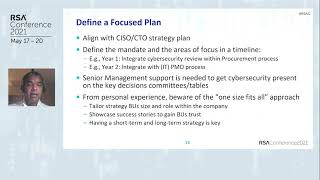
The Rise of the BISO Role
Explore the emerging BISO role, its importance in bridging security and business, and strategies for integrating security across all organizational levels.
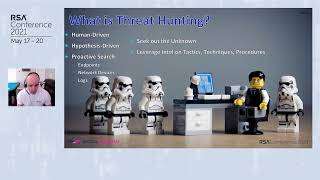
Hunt and Gather - Developing Effective Threat Hunting Techniques
Explore innovative threat hunting techniques to stay ahead of hackers. Learn to plan, develop, and execute effective strategies for proactive cybersecurity and advanced threat detection.
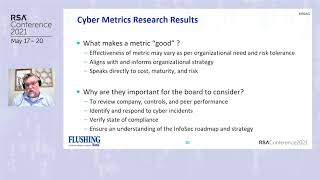
Cybersecurity Metrics Development for Board and Risk Committee Reporting
Develop customized cybersecurity metrics for risk reporting, focusing on data collection, analysis, and presentation for effective board communication across various industries.
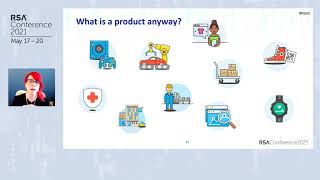
Infosec Makeover - Love it or Leave it, Product Security is Here to Stay
Explore the emerging field of Product Security, its importance in organizations, and strategies for building effective teams, including insights on hiring Product Security Engineers in Central Europe.
Cryptography in Distributed Systems
Explore advanced cryptographic techniques for distributed systems, including multi-party revocation, privacy-preserving blockchain identity management, and signature aggregation for improved efficiency.
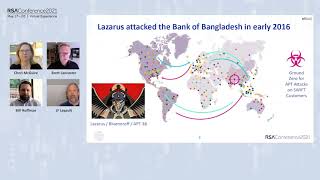
Reducing Payment Fraud with SWIFT Customer Security Controls Framework
Explore SWIFT's Customer Security Program: its impact on reducing payment fraud, enhancing cyber hygiene, and evolving to meet future challenges in the global financial ecosystem.
Impact of Log4j
Explore the impact of log4j vulnerability, its industry-wide effects, and strategies for mitigating similar threats in 2022 with experts Alvaro Munoz and Joe Slowik.
Bhadra Framework - Threat Modeling for Mobile Communication Systems
Explore the Bhadra framework for threat modeling in mobile communication systems, addressing complex security challenges and providing a structured approach to analyze adversarial behaviors in telecom networks.
Ransomware Unlocked
Comprehensive overview of ransomware, including history, current attacks, hacker groups, and defense strategies. Explores cyber security frameworks and principles for effective recovery and protection.
The Crash Course - A Non-Programmer's Guide to Fuzzing
Hands-on workshop for non-programmers to learn fuzzing techniques. Covers environment setup, tools like AFL and Honggfuzz, instrumentation, input selection, and crash analysis. Suitable for beginners to intermediate level.
Migrate Securely from On Prem to Azure Cloud
Learn strategies for secure migration from on-premise to Azure Cloud, focusing on real-time scenarios, architecture design considerations, and Azure services for seamless transition while addressing security challenges.
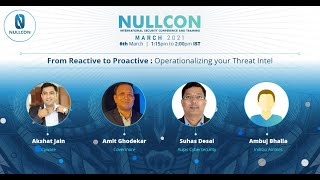
From Reactive to Proactive - Operationalizing Your Threat Intel
Cybersecurity experts discuss operationalizing threat intelligence, moving from reactive to proactive approaches, and addressing challenges in cloud adoption and workforce training for enhanced security.
Deep Dive into ART - Android Runtime for Dynamic Binary Analysis
Explore Android Runtime's evolution, optimization techniques, and structure. Learn to analyze apps by modifying ART to extract real-time information and develop effective analysis techniques without code access.
An Azure Sphere Security Breakdown
Explore Azure Sphere IoT security features, vulnerabilities discovered during Microsoft's research challenge, and a privilege escalation chain for acquiring Azure Sphere Capabilities.
Telecom Security Challenges in 5G
Explore 5G telecom security challenges, improvements, and implementation issues. Learn about virtualization risks, DDOS threats, and industry initiatives like NESAS in this comprehensive overview.
Security Research and Disclosure - The Unauthorized Biography
Explore the evolution of security research and disclosure, from historical "unbreakable locks" to modern challenges in IoT, blockchain, and AI, with insights on ethical hacking and vulnerability reporting.
Exploiting XPC in AntiVirus Software
Explore vulnerabilities in macOS antivirus software through XPC exploitation, uncovering security flaws and providing guidance for developers to create secure XPC services.