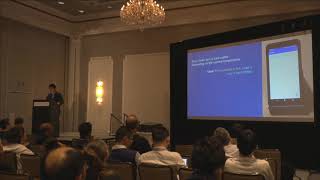
PUMICE - A Multi-Modal Agent that Learns Concepts and Conditionals from Natural Language and Demonstrations
Explore PUMICE, a multi-modal agent that combines natural language and demonstrations to learn concepts and conditionals, enabling end users to teach new tasks effectively.
Minecraft as AI Playground and Laboratory
Explore Minecraft as an AI research platform, focusing on Project Malmo and the MineRL competition to advance sample-efficient reinforcement learning and tackle complex decision-making challenges.
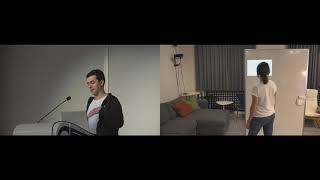
SpaceState - Ad-Hoc Definition and Recognition of Hierarchical Room States for Smart Environments
SpaceState: sistema para diseñar interfaces que se adaptan a cambios en el diseño físico de una habitación. Utiliza cámaras de profundidad para medir el entorno y permite definir estados globales y locales en tiempo real.
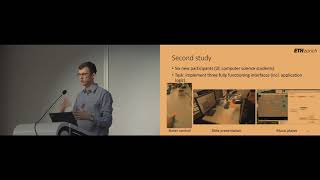
Tailored Controls - Creating Personalized Tangible User Interfaces from Paper
Innovative method for creating personalized paper-based tangible user interfaces, allowing dynamic customization and control through simple shape manipulation, backed by user studies and real-world applications.
Finding the Sweet Spot - Analyzing Unrestricted Touchscreen Interaction In-the-Wild
Explore smartphone touchscreen interaction patterns through in-the-wild studies, revealing optimal input areas and confirming previous lab-based models for improved user interface design.
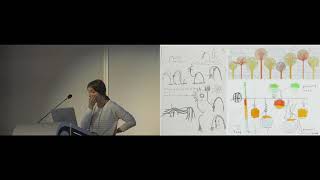
Feel the Water - Expressing Physicality of District Heating Processes in Functional Overview Displays
Exploring innovative visual interfaces for district heating systems, focusing on expressing physicality through design to enhance operator understanding and efficiency.
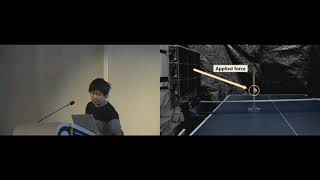
Hopping-Pong - Changing Trajectory of Moving Object Using Computational Ultrasound Force
Explore computational ultrasound force to change trajectories of moving objects, expanding computer-controlled real space. Proof-of-concept demonstrates altering Ping-Pong ball flight paths, with potential applications in augmented sports and HCI.
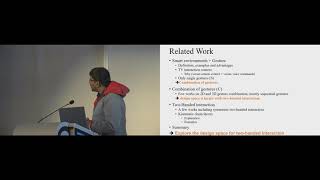
On Gesture Combination - An Exploration of a Solution to Augment Gesture Interaction
Explores combining 3D gestures for smart environment interaction, proposing a design space and reporting on user studies that reveal improved memorability and user preferences for gesture combinations.
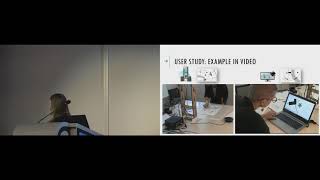
Creating Accessible Interactive Audio-Tactile Drawings Using Spatial Augmented Reality
Explore Spatial Augmented Reality for creating interactive audio-tactile drawings, enhancing accessibility for visually impaired individuals. Learn about system development, user studies, and efficiency improvements.
Ubiety, Mobility & Transitions - The Quest for Ecological Intelligence
Exploring the shift from device-centric to ecosystem-focused HCI, emphasizing seamless transitions, ubiety, and the importance of place in human-technology interactions for achieving flow in compound tasks.
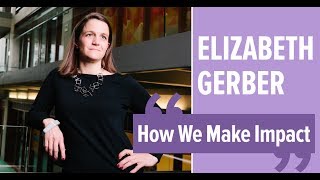
How We Make Impact
Exploring diverse design approaches beyond technology to create impactful solutions for societal challenges, emphasizing broader perspectives in problem-solving and innovation.
Homo Cyberneticus - The Era of Human-AI Integration
Explore the future of human-AI integration, discussing neural networks, symbiosis, and the potential consequences and benefits of AI augmentation for humanity.
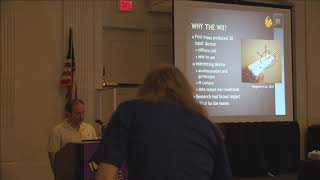
Gesture Recognition - Key Insights and Future Directions
Explore key insights and future directions in gesture recognition, focusing on increasing accuracy, robust recognition systems, and ecological validity in evaluations. Learn from decades of research and challenges.
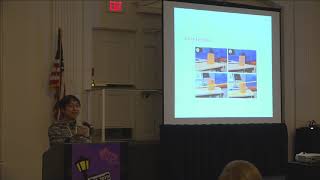
Gaze Direction Visualization Techniques for Collaborative Wide-Area Model-Free Augmented Reality
Novel gaze direction visualization techniques for wide-area AR collaboration. Evaluates Double Ray and Parallel Bars methods to improve target identification in large outdoor spaces without environmental models.

From Nanostructured to Thin-Film Perovskite Solar Cells
Explore advancements in perovskite solar cells, from nanostructured to thin-film designs. Learn about efficiency improvements, processing techniques, and future prospects in this cutting-edge photovoltaic technology.
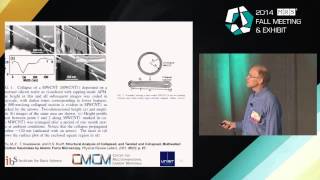
Synthesis, Structure and Properties of Carbon Nanostructures
Explore carbon nanostructures' synthesis, structure, and properties, focusing on mechanical aspects. Insights into fullerenes, nanotubes, graphene, and more from pioneering researcher Rodney S. Ruoff.
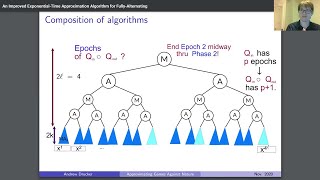
An Improved Exponential-Time Approximation Algorithm for Fully-Alternating Games Against Nature
Explore improved exponential-time approximation algorithms for fully-alternating games against nature, covering adversarial versions, MA formulas, and steepener algorithms.
Computation in the Brain Tutorial - Part 2
Explore neural computation models, focusing on assembly calculus and its applications in language processing, with insights from leading researchers in computational neuroscience.
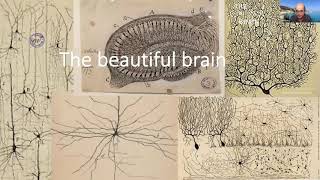
Computation in the Brain - Part 1
Explore neural computation through a historical lens, from ancient theories to modern discoveries in neuroscience, covering key concepts like synapses, neurotransmitters, and brain structures.
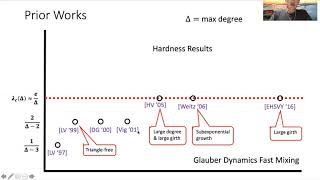
Spectral Independence in High-Dimensional Expanders and Applications to the Hardcore Model
Explore spectral independence in high-dimensional expanders and its application to the hardcore model, focusing on Glauber dynamics, complexity phase transitions, and future research directions.
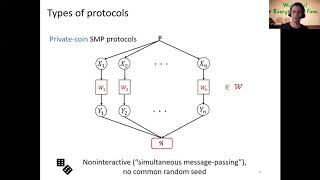
Cookbook Lower Bounds for Statistical Inference in Distributed and Constrained Settings - Part 1
Explore statistical inference in distributed and constrained settings, focusing on lower bounds, protocols, and models for discrete distributions and high-dimensional domains.