
A Practice-Led Account of the Conceptual Evolution of UX Knowledge
Análisis de la evolución conceptual del conocimiento UX a través de Stack Exchange, utilizando procesamiento de lenguaje natural y análisis cualitativo para identificar vocabulario y trayectorias disciplinarias en 9 años.

HCI and Affective Health - Taking Stock of a Decade of Studies and Charting Future Research Directions
Explores a decade of HCI research on affective health, highlighting trends in automated diagnosis and self-tracking, ethical concerns, and the need for more clinical evaluations to inform future technology design.

What Happens After Disclosing Stigmatized Experiences on Identified Social Media - Individual, Dyadic, and Social - Network Outcomes
Exploring outcomes of disclosing stigmatized experiences on social media, focusing on pregnancy loss. Highlights network connections, relationship changes, and support roles.

Rigor, Relevance and Impact - The Tensions and Trade-Offs Between Research in the Lab and in the Wild
Explore tensions between lab and field research in HCI, discussing scientific rigor, real-world relevance, and impact. Experts debate diverse research practices to enhance mutual understanding within the CHI community.

Explorations on Single Usability Metrics
Explores challenges in developing a Single Usability Metric at Microsoft, discussing error rates, time-on-task targets, and scale anchoring. Proposes alternative metric using simple thresholds from anchor text and inter-metric correlations.

Understanding the Boundaries between Policymaking and HCI
Explores the intersection of HCI research and policymaking, discussing evidence translation, privileged forms of data, and strategies for researchers to effectively communicate findings to policymakers.

Triptech - A Method for Evaluating Early Design Concepts
Explore Triptech, a method for evaluating early design concepts in UX, focusing on user needs, desirability, and usefulness. Learn its application in tech-driven innovation practices.

What Makes a Good Conversation? Challenges in Designing Truly Conversational Agents
Explores challenges in designing truly conversational AI agents, examining human conversation qualities and how they should be applied to create more natural and effective human-agent interactions.

Pulp Friction - Exploring the Finger Pad Periphery for Subtle Haptic Feedback
Innovative haptic feedback technique using finger pad periphery for subtle, nuanced interactions. Explores design space, evaluates human factors, and presents guidelines for enhanced tactile experiences in handheld devices.

Social Media as a Passive Sensor in Longitudinal Studies of Human Behavior and Wellbeing
Explore social media as a passive sensor for studying human behavior and wellbeing in longitudinal research, examining data collection methods, challenges, and implications for HCI studies.

Building Together - When Research Went Viral at Uber
Explore Uber's innovative research approach during their driver app redesign, combining ethnographic methods with social media to engage stakeholders and drive impactful product development.
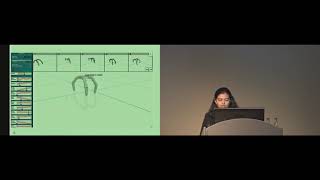
Geppetto - Enabling Semantic Design of Expressive Robot Behaviors
Explore semantic design for expressive robot behaviors using Geppetto, a data-driven system combining physics simulation and crowd-powered framework to enable intuitive editing of complex motion parameters.

Interferi - Gesture Sensing using On-Body Acoustic Interferometry
Innovative on-body gesture sensing technique using acoustic interferometry for hands and face, enabling accurate recognition of multiple gestures and continuous tracking of facial expressions and hand movements.

VoiceAssist - Guiding Users to High-Quality Voice Recordings
VoiceAssist: Real-time visual feedback system helping inexperienced users produce high-quality voice recordings by addressing reverberation and background noise issues through interactive human-machine feedback loop.

Lab Hackathons to Overcome Laboratory Equipment Shortages in Africa - Opportunities and Challenges
Exploring LabHackathons as innovative events to address laboratory equipment shortages in Africa, fostering open-source design and STEM education through frugal, reproducible solutions.

Will You Accept an Imperfect AI? Exploring Designs for Adjusting End-user Expectations of AI-powered Systems
Explore strategies for adjusting user expectations of AI systems, focusing on a Scheduling Assistant case study to improve acceptance of imperfect AI technologies.
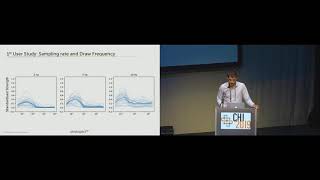
Sampling Strategy for Ultrasonic Mid-Air Haptics
Explores optimal sampling strategies for ultrasonic mid-air haptics, revealing unexpected effects of update rates on pattern perception and providing insights for improved tactile interface design.

Design Guideline for Developing Safe Systems that Apply Electricity to the Human Body
Guidelines for safely developing systems that apply electricity to the human body, covering electrical stimulation, safety parameters, hazards, and industrial standards.

PinchList - Leveraging Pinch Gestures for Hierarchical List Navigation on Smartphones
Innovative smartphone interaction design using pinch gestures for efficient navigation of hierarchical lists, demonstrating faster access to multi-level items compared to traditional interfaces.

Co-Performing Agent - Design for Building User-Agent Partnership in Learning and Adaptive Services
Explores design strategies for intelligent agents that collaborate with users, enhancing personalized experiences through partnership-building and cooperative learning in adaptive services.
Socio-technical Dynamics - Cooperation of Emergent and Established Organisations in Crises and Disasters
Exploring socio-technical dynamics in crisis management, focusing on cooperation between emergent citizen groups and established organizations during the 2015 European migration crisis.